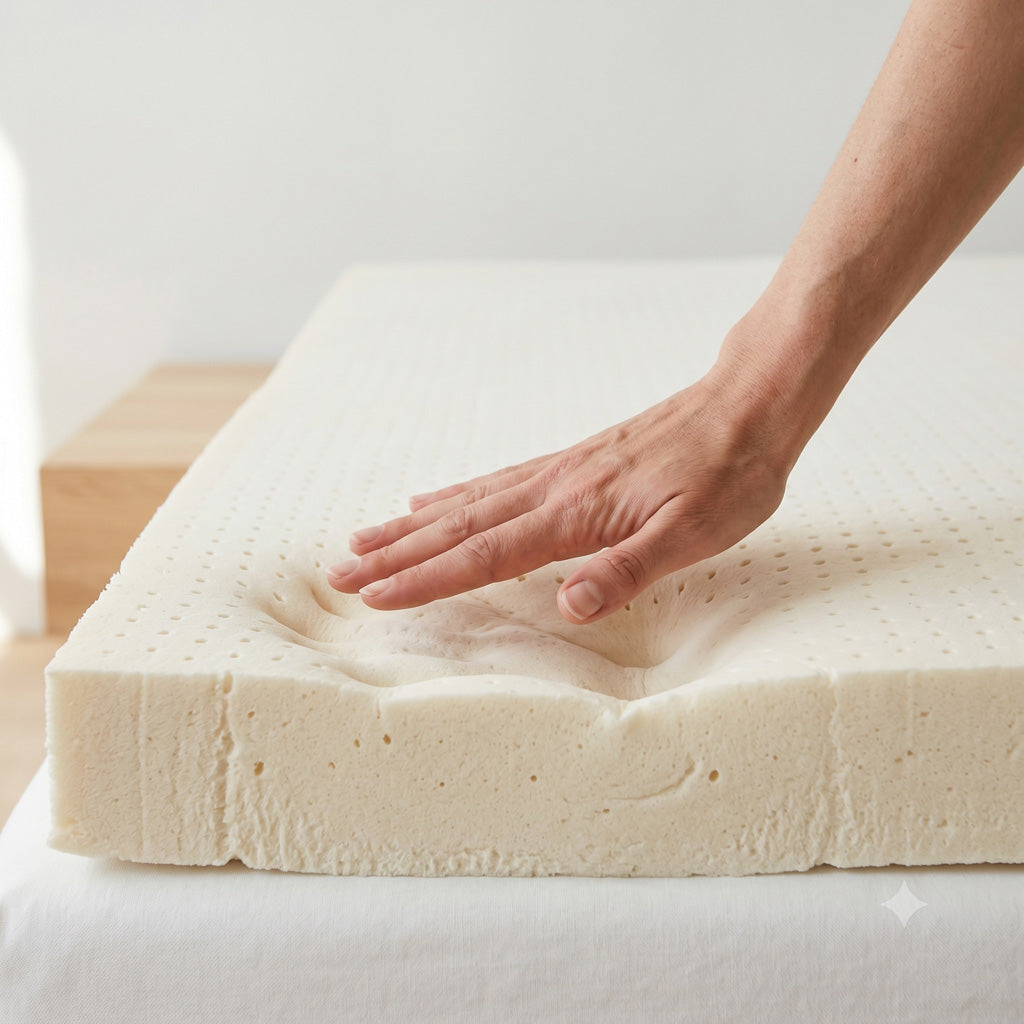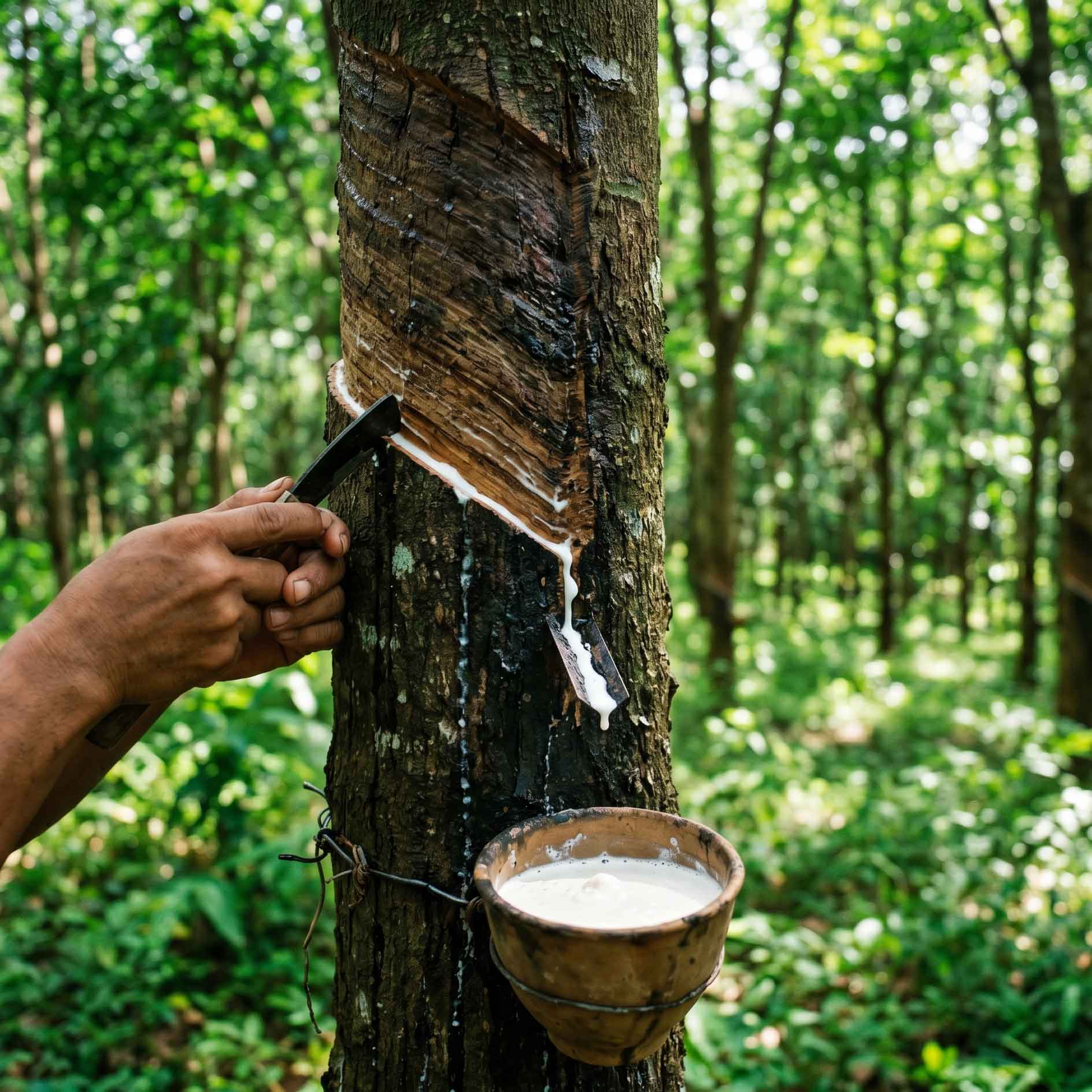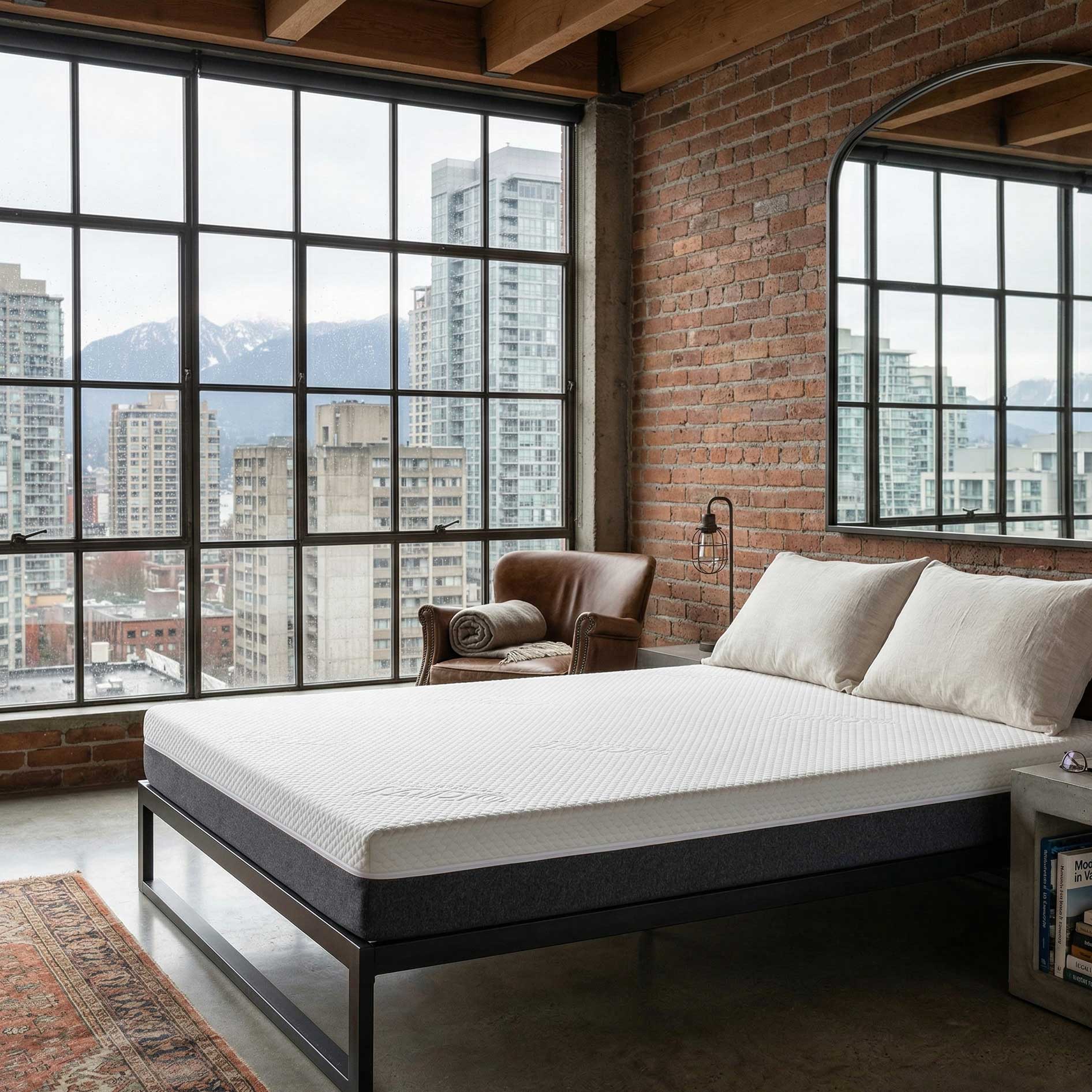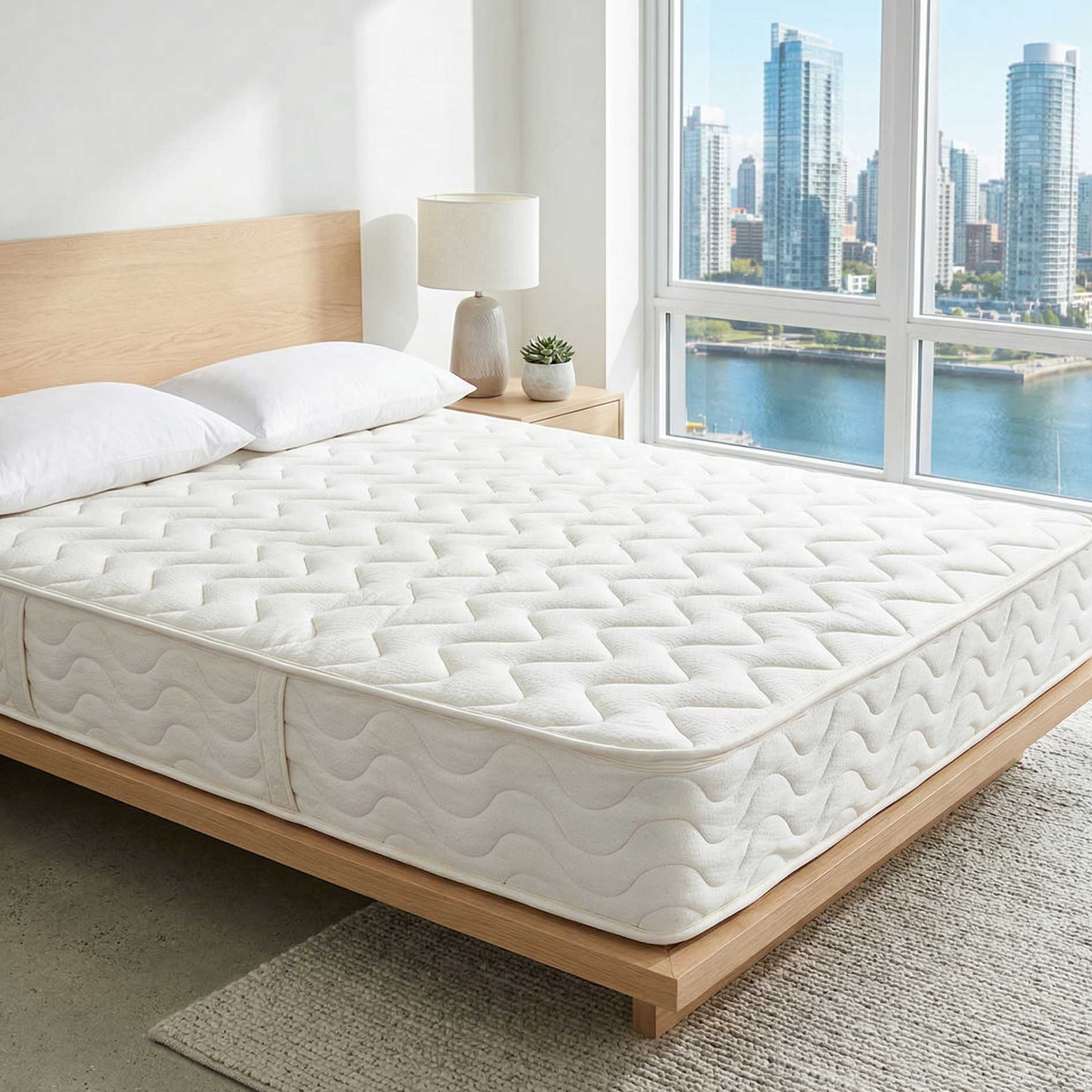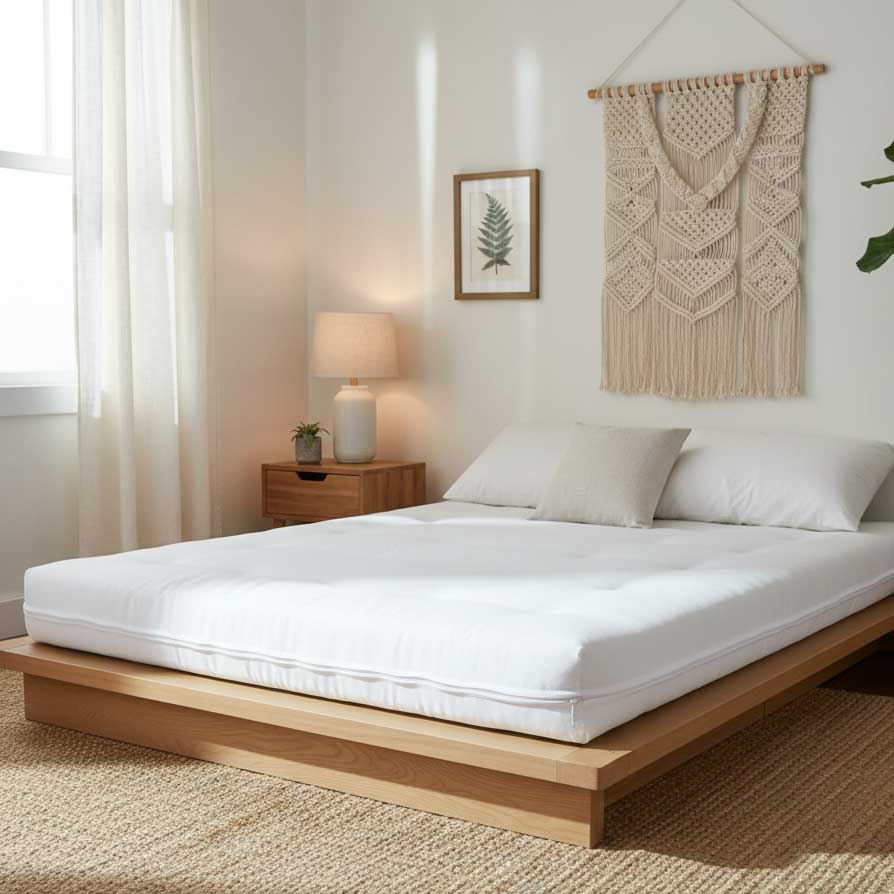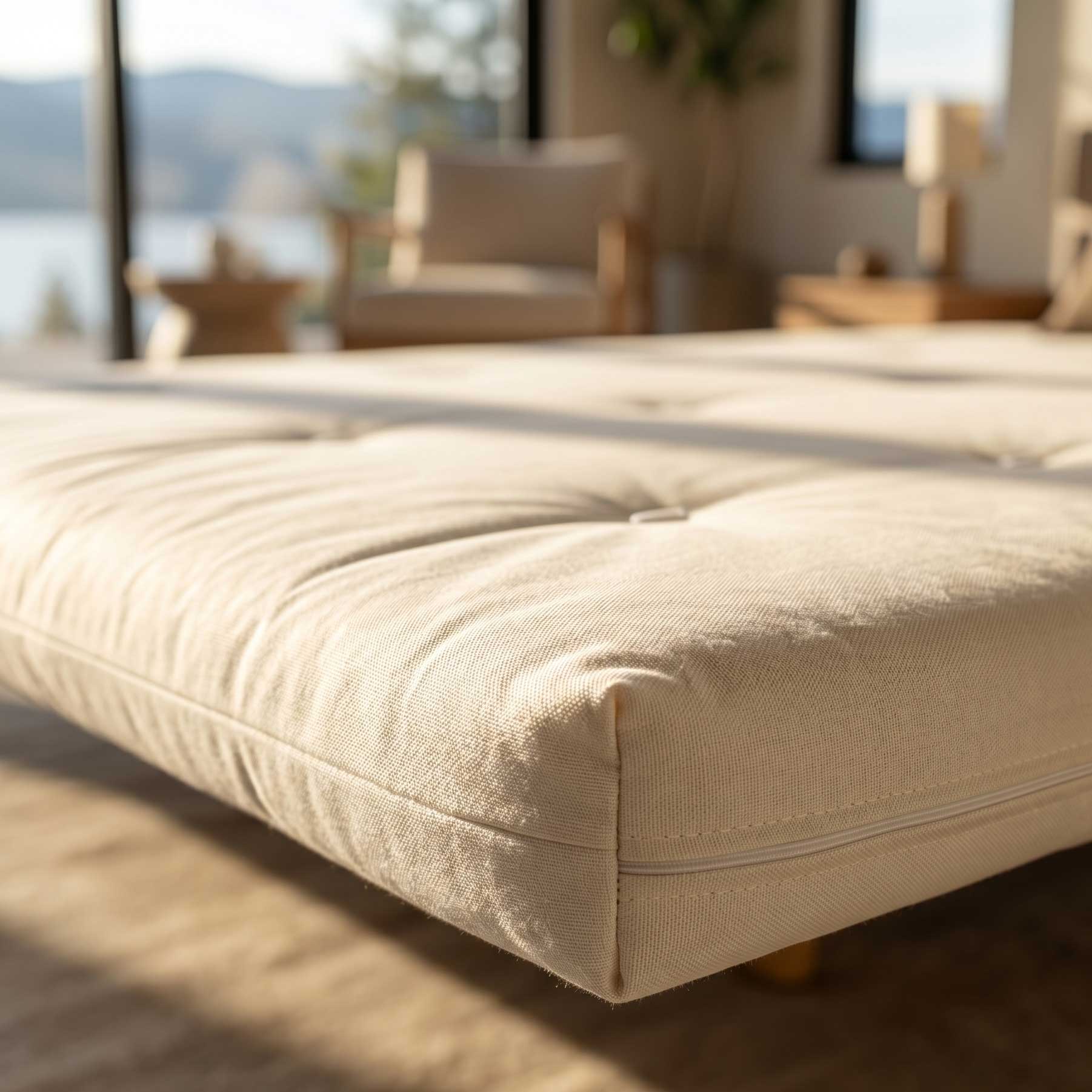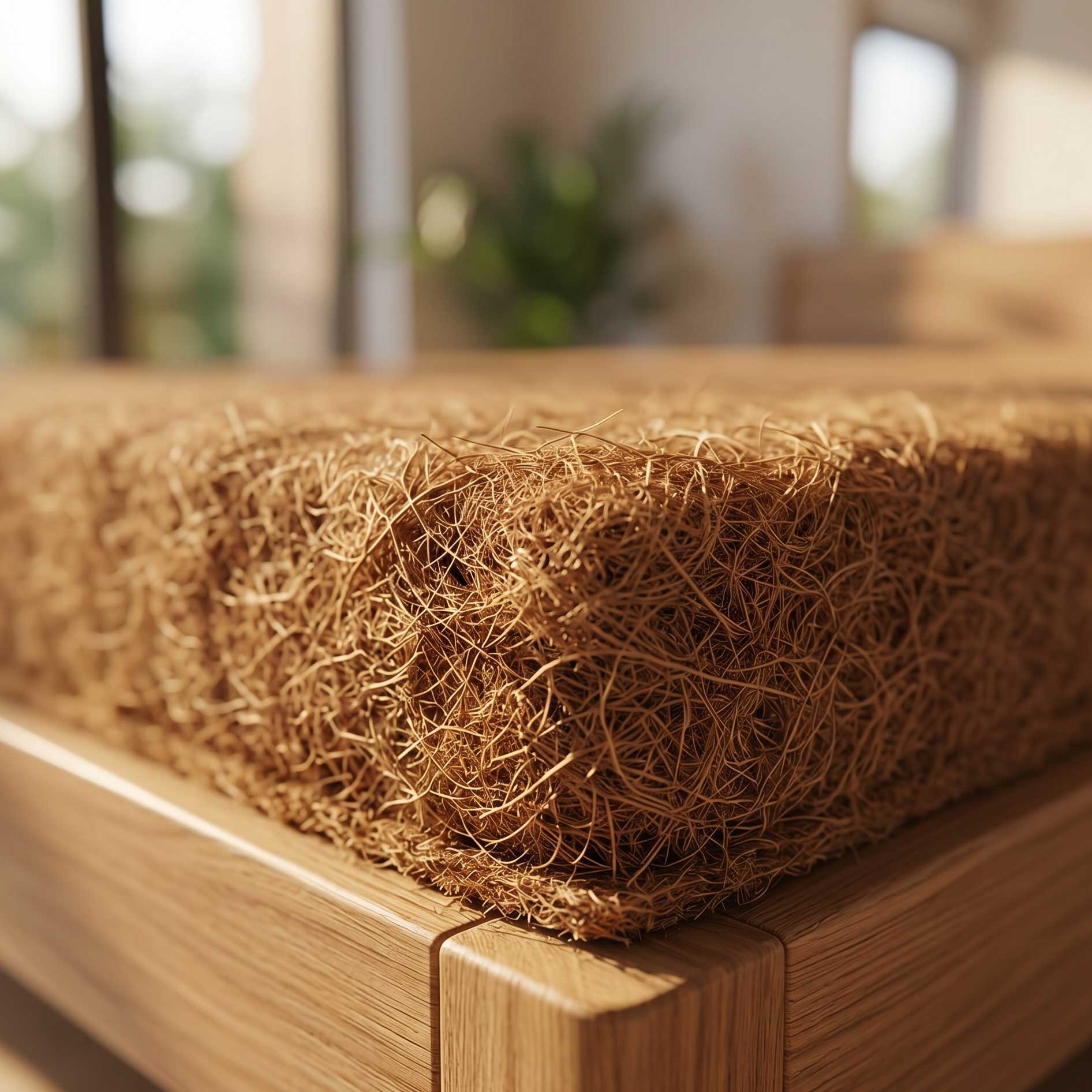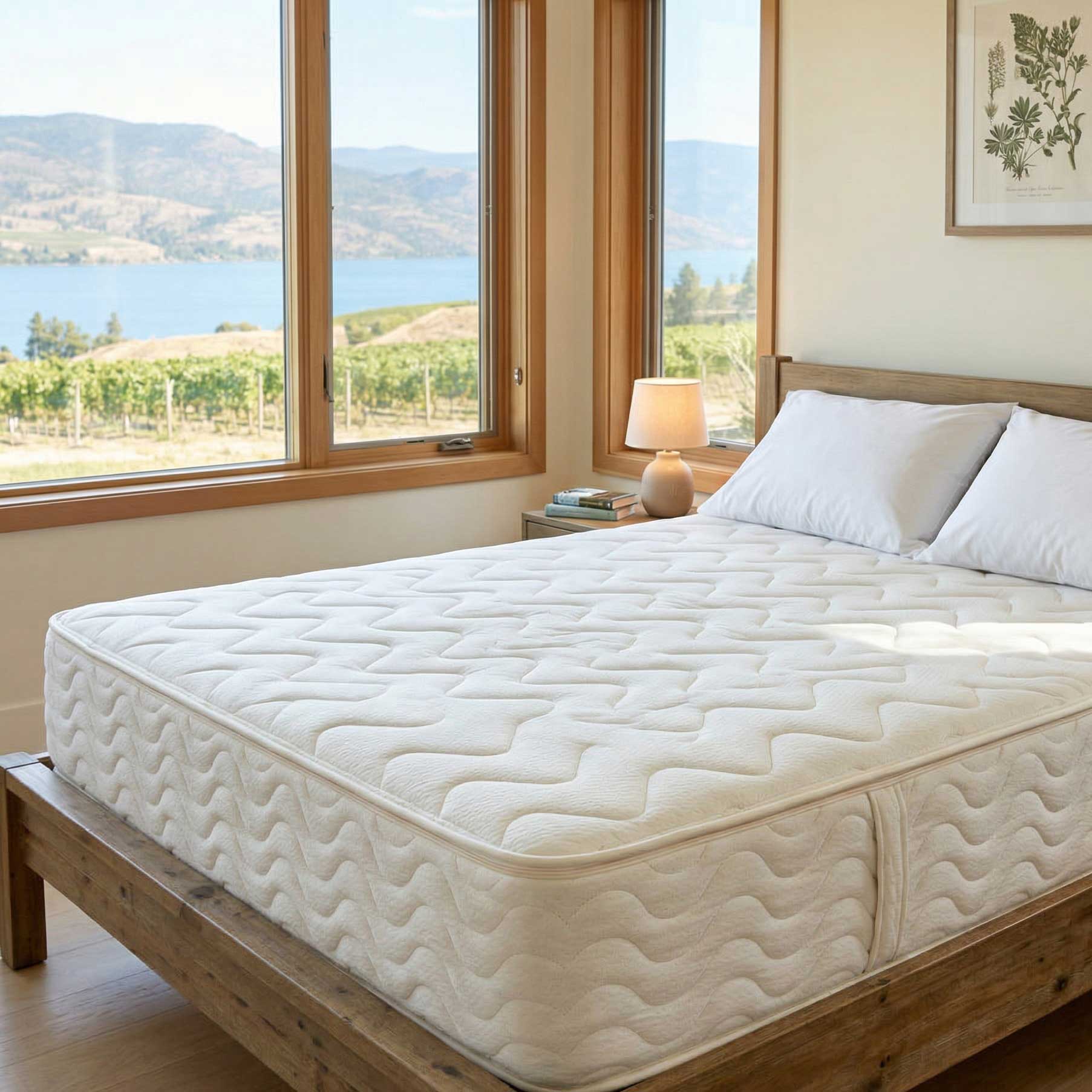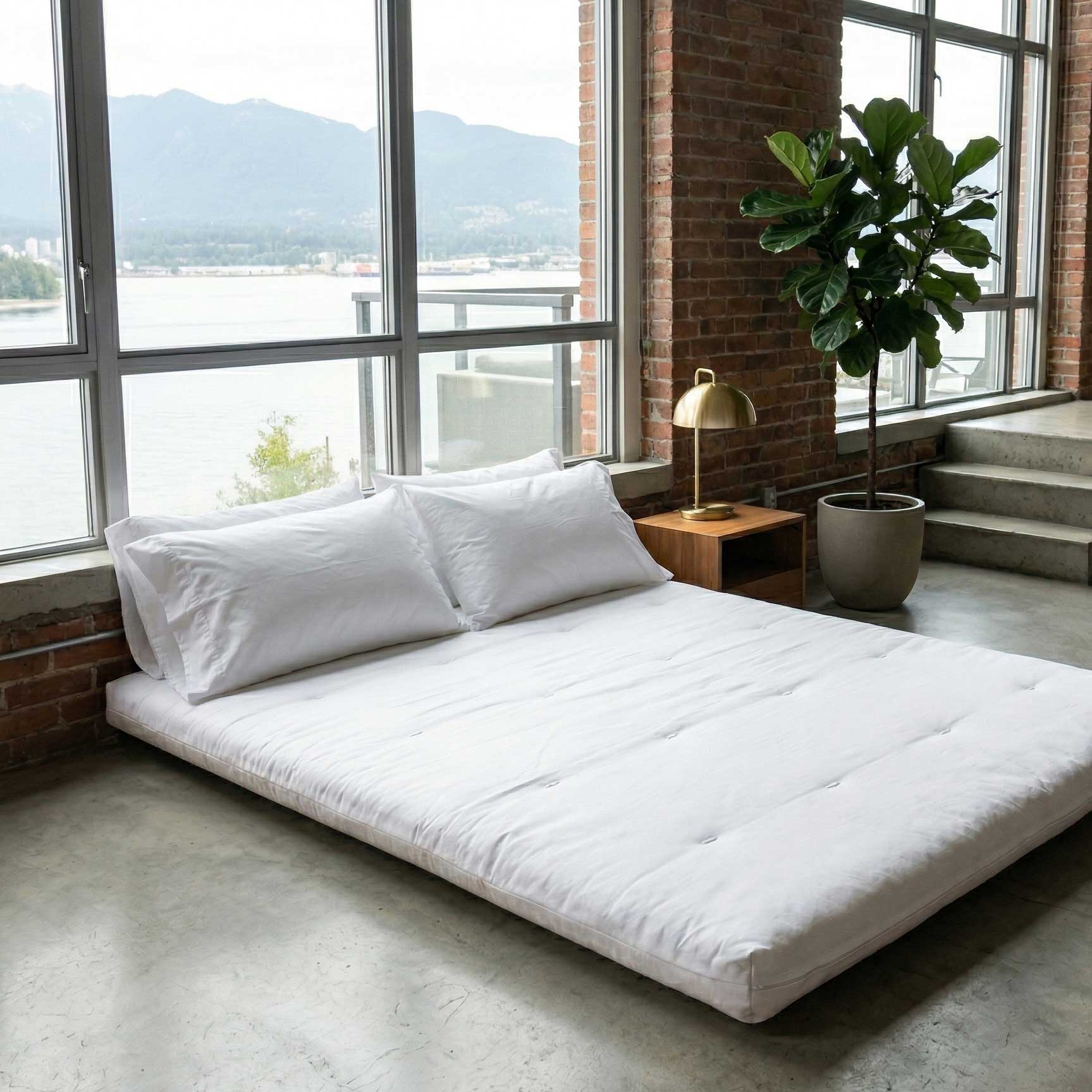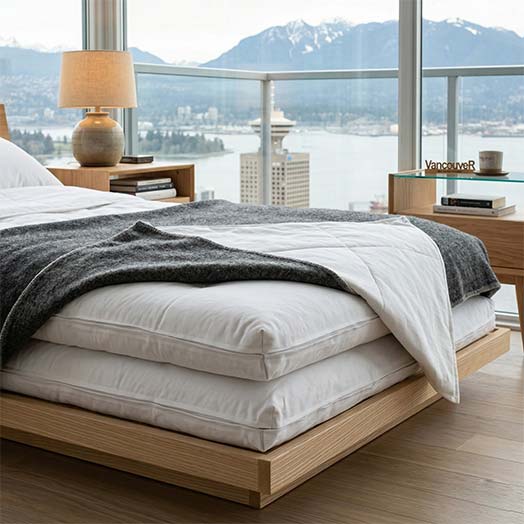
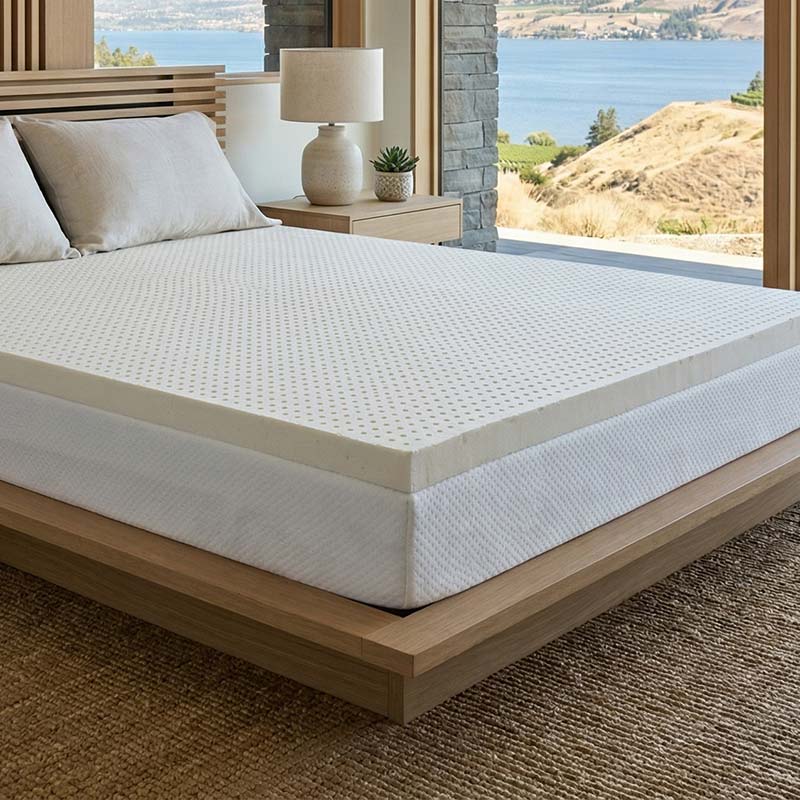
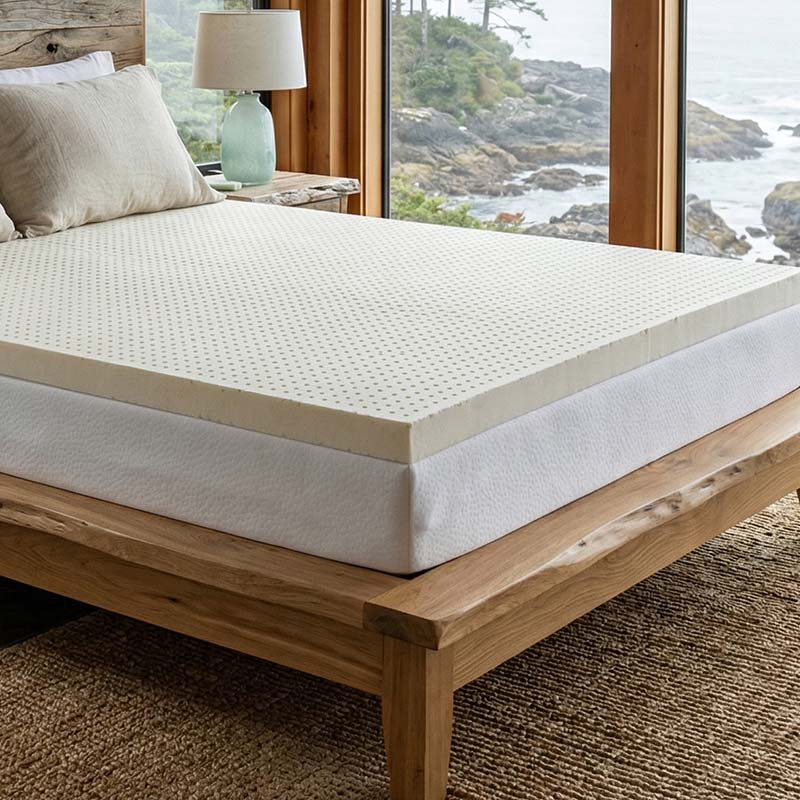
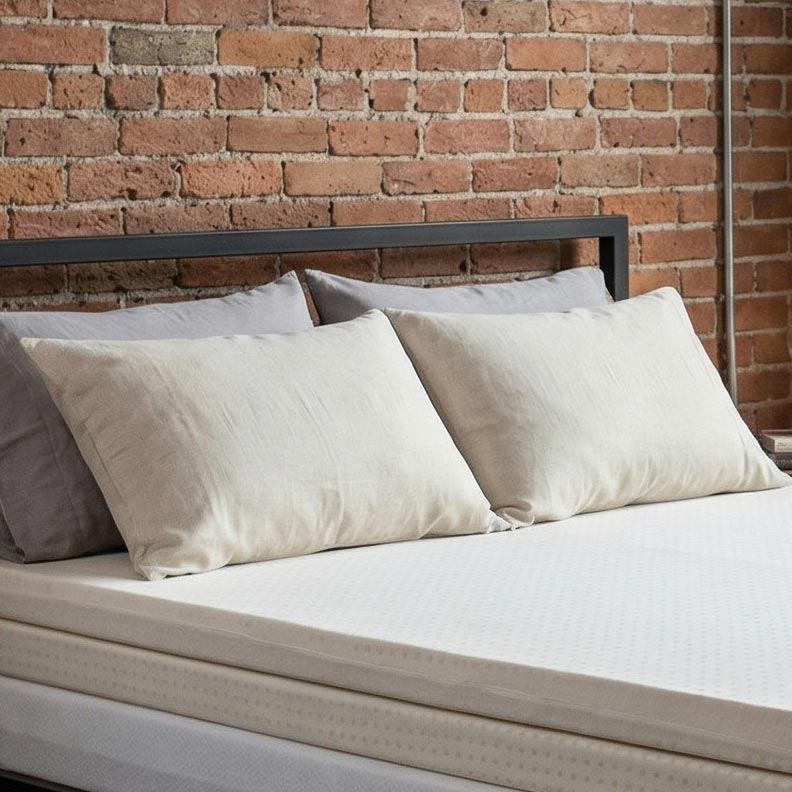
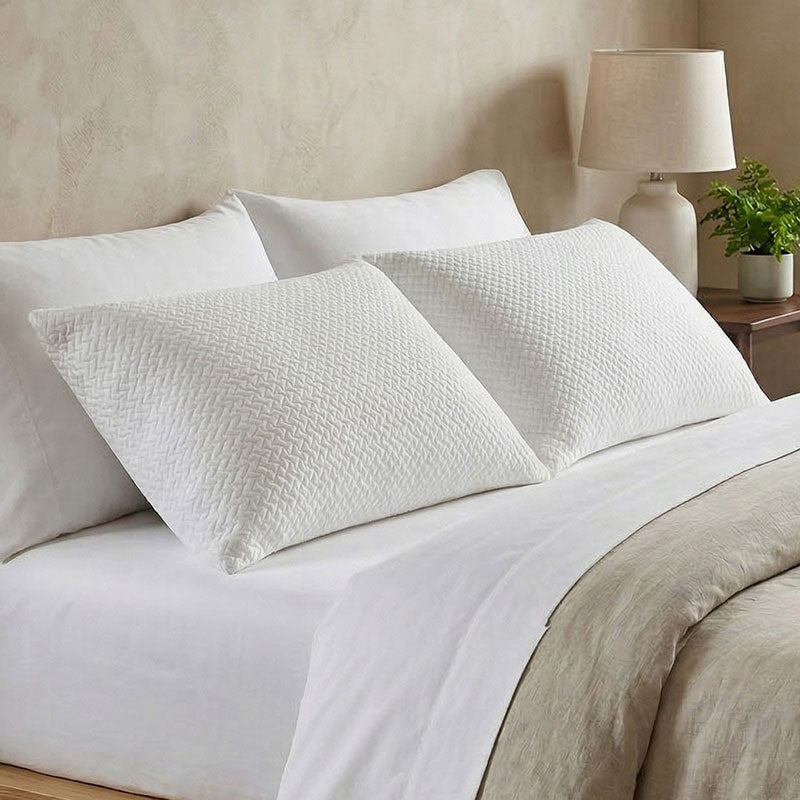
Most buyers spend a lot of time thinking about what's inside a latex mattress — the latex type, the ILD rating, the layer configuration — and very little time on what covers it. That's understandable. The cover doesn't change the fundamental support properties of the latex. But it does affect how the mattress feels to sleep on, how it handles body heat overnight, and how it meets the flammability requirements that every mattress sold in Canada must satisfy.
The difference between a Tencel cover and an Organic Cotton and Wool cover is more significant than product pages typically suggest. Understanding the distinction changes the cover decision from an afterthought into a genuine part of the mattress configuration.
What a Mattress Cover Actually Does
The cover on a latex mattress has four jobs. It protects the latex from light, moisture, and prolonged direct contact. It contributes to the first layer of tactile feel when you lie down. It affects how the sleep surface breathes and handles the thermal environment overnight. And it serves as the fire protection layer that Canadian regulations require every mattress to include.
That last point is where cover construction becomes genuinely interesting. The choice of fire protection material isn't just a regulatory checkbox. It's a material decision that affects what else is in the cover, how it performs, and what it costs.
The Tencel Cover
Tencel is a branded fibre produced from wood pulp, typically eucalyptus, through a closed-loop process that recovers and reuses the solvents used in production. The result is a smooth, moisture-wicking fibre that's cooler to the touch than cotton and softer at equivalent thread counts. It's plant-based and produced with lower environmental impact than conventional cotton.
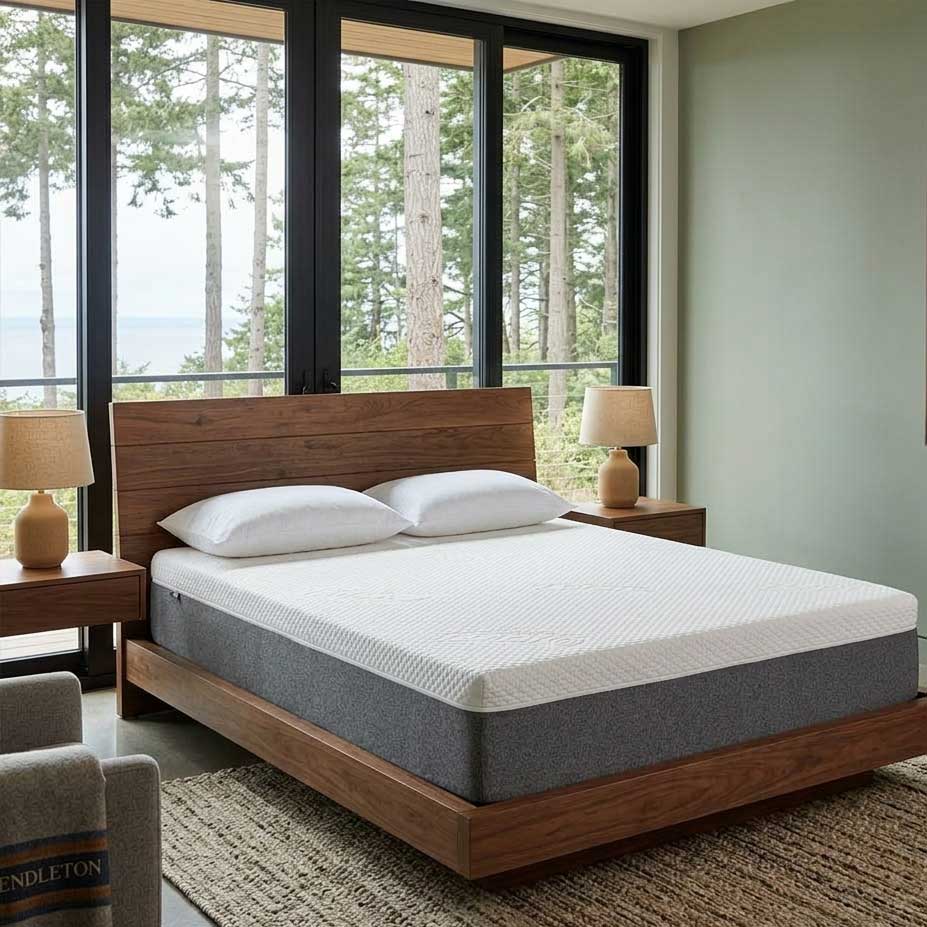
On a latex mattress, the Tencel cover is the more affordable option. The fibre breathes well and the cool, slightly silky surface feel suits sleepers who run warm. It's the standard cover on 100% latex mattresses. The Essential Hybrid (9") also uses a Tencel cover.
Fire protection in a Tencel cover is built into the cover's construction through a barrier layer. On the Essential Hybrid (9"), this is rayon and polyester fibre. This is a compliant approach, widely used across the mattress industry, and it meets Canadian flammability standards. The fire protection is present; the materials used to achieve it are synthetic.
The Organic Cotton and Wool Cover
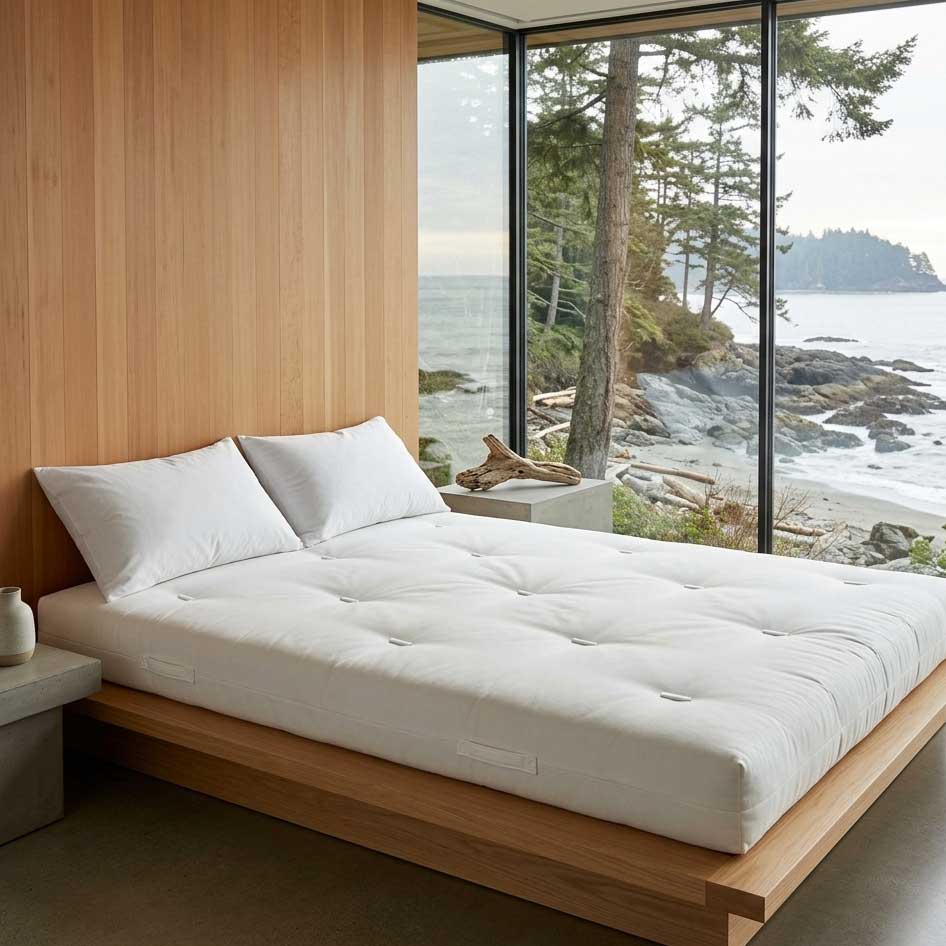
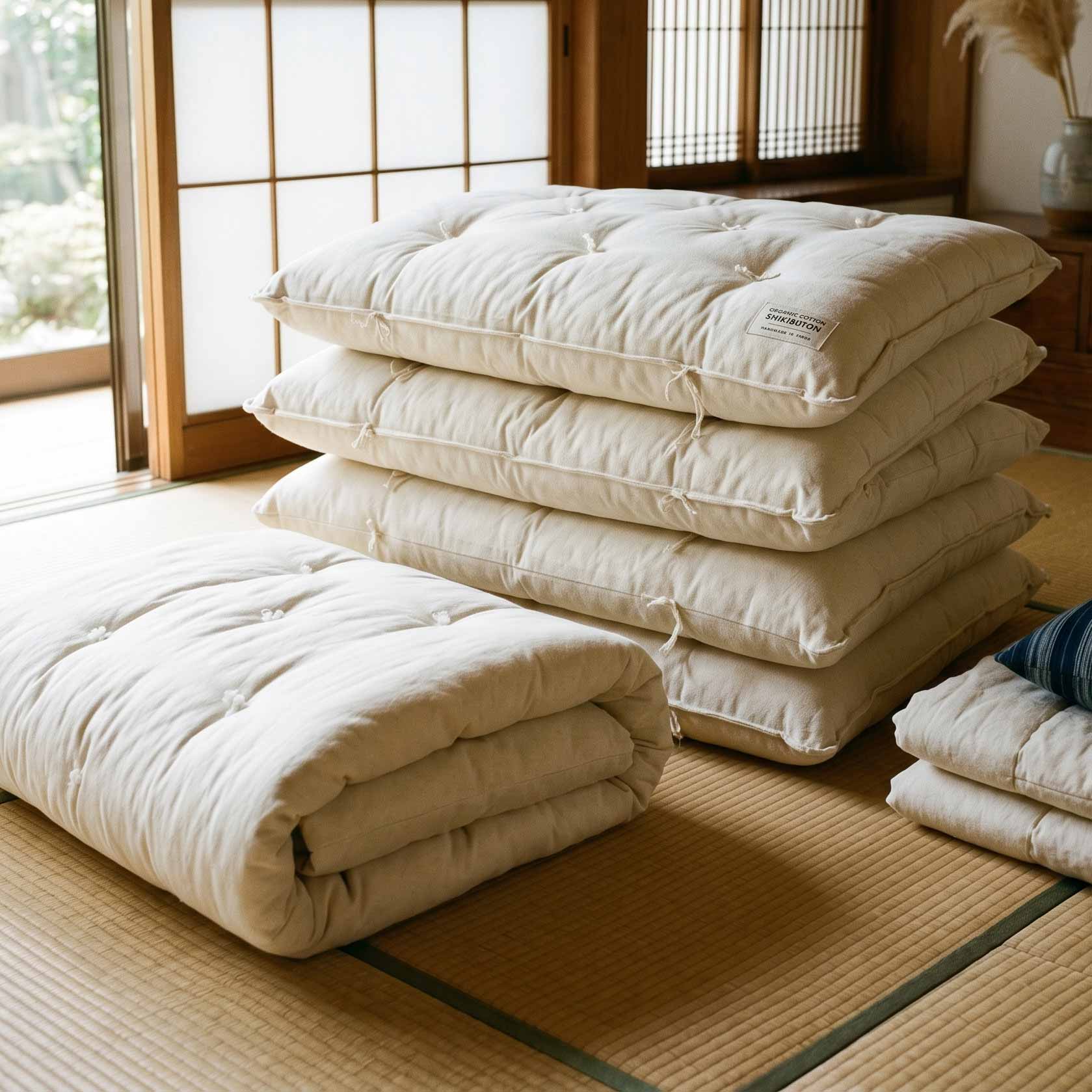
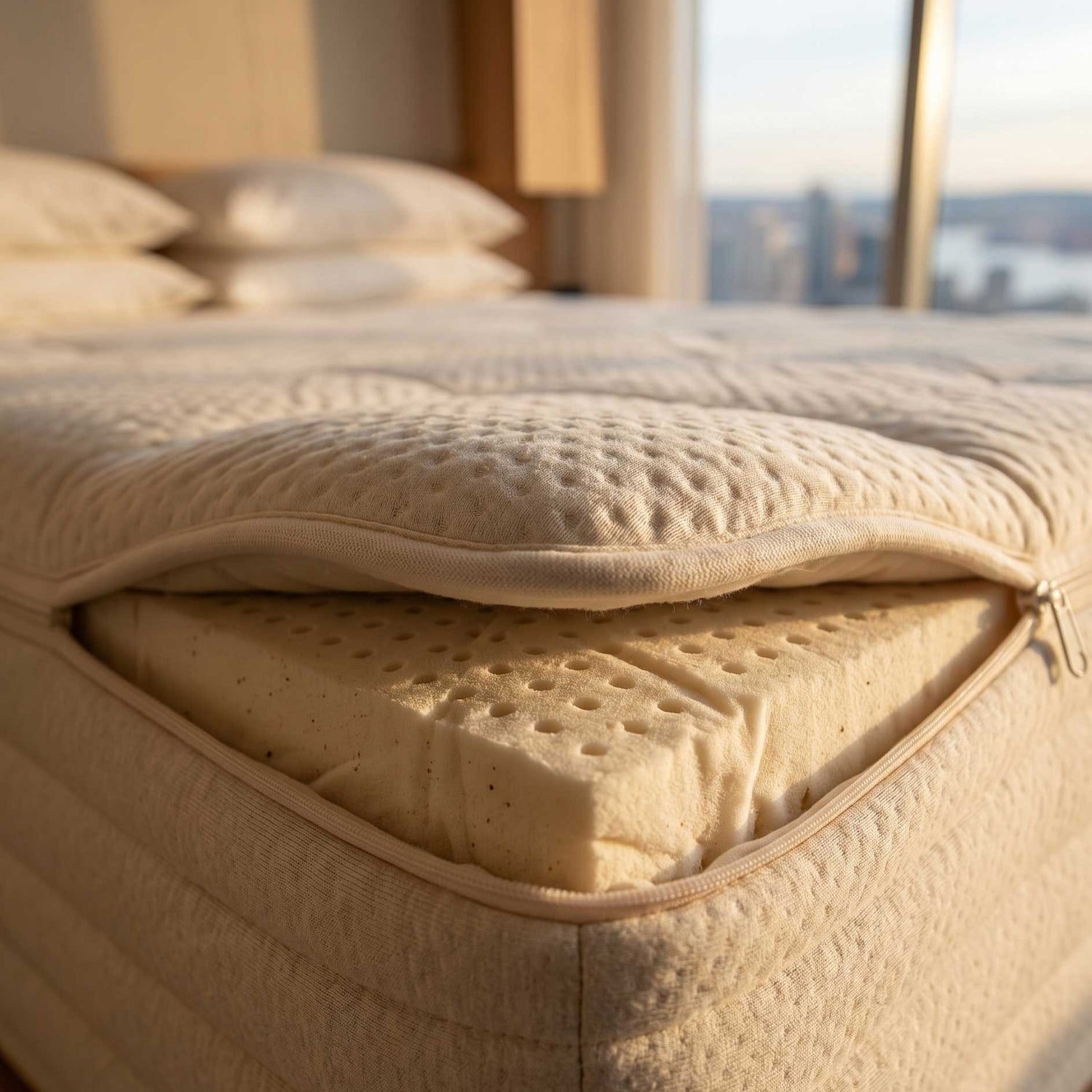
The Organic Cotton and Wool cover is a different construction. The outer layer is organic cotton. The fire protection is wool, quilted into the cover rather than achieved through synthetic barrier materials.
Wool provides natural fire protection because of how the fibre behaves under heat. Wool chars and self-extinguishes rather than sustaining a flame, which is the physical property that makes it suitable for fire protection applications. This isn't a chemical treatment applied to the wool — it's the wool's own behaviour. The Organic Cotton and Wool cover achieves Canadian flammability compliance through this wool layer without using rayon, polyester fibre, or chemical treatments.
This matters to buyers who want to know what is in their mattress. The Organic Cotton and Wool cover is the only construction that achieves fire compliance entirely through natural materials. The wool wrap does the same job as the synthetic barrier in the Tencel cover, and it does it without adding synthetic content to the cover stack.
Temperature Regulation: What the Difference Feels Like
Tencel and wool regulate temperature differently, and the difference is noticeable overnight.
Tencel wicks moisture away from the sleep surface quickly. The sensation is a consistent coolness: heat and moisture are moved away rapidly rather than moderated gradually. For sleepers who run very warm, this is often the right choice.
Wool moderates temperature more gradually. Wool fibres absorb and release moisture as humidity levels change, which tends to maintain a more stable thermal environment across the full night rather than just the initial contact. The warmth isn't static: wool responds to the sleeper's body heat and the ambient conditions rather than simply insulating or dispersing.
Neither approach is categorically better. They're different thermal mechanisms that suit different sleepers. Side sleepers who run warm and want immediate relief tend to prefer Tencel. Sleepers who run cool, or who notice temperature changes during the night, often find the Organic Cotton and Wool cover more consistent.
Surface Feel
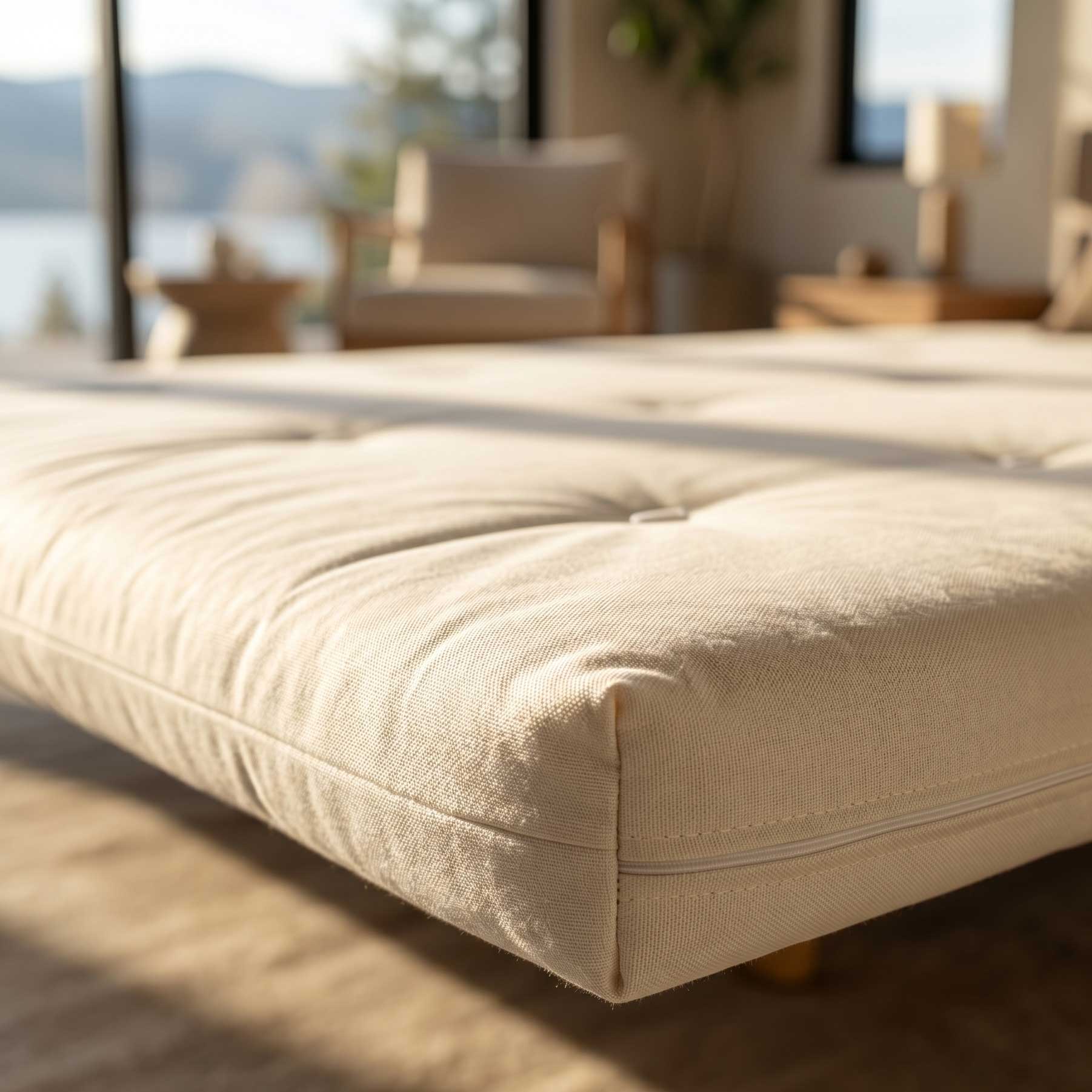
The surface feel of the two covers is distinct even through sheets. Tencel has a smooth, slightly cool initial feel. The Organic Cotton and Wool cover has a softer, more quilted texture. The wool quilting adds a slight loft that Tencel doesn't have, and the organic cotton outer layer has a different hand than Tencel's silkier surface.
Over time, the Organic Cotton and Wool cover tends to feel more consistent. The wool quilting distributes surface feel evenly and doesn't develop the slight slipperiness that Tencel can exhibit at higher thread counts. For sleepers who find that quality distracting, the cotton and wool cover is usually the better fit.
Care Differences
The Organic Cotton and Wool cover cannot be washed. Spot cleaning only. This is a material constraint: wool shrinks and distorts when machine-washed, and quilted wool constructions don't recover from it. The cover is built to last with appropriate care, not to be laundered on a regular cycle.
Tencel covers are more tolerant of cleaning, though the specific care instructions vary by construction. For both cover types, keeping the mattress dry is the primary care priority. Latex does not handle sustained moisture well, and the cover is the first line of defence against it.
Which Cover for Which Mattress
The Tencel cover is standard on 100% latex mattresses and is the more affordable option. It's the right choice for buyers prioritising value and a cooler sleep surface.
The Organic Cotton and Wool cover is available as an upcharge on 100% latex mattresses — not listed online, so contacting Sleep Majestic directly is how to arrange it. It comes standard on the DIY Hybrid (11"). The Essential Hybrid (9") uses a Tencel cover with rayon and polyester fire protection and has no wool cover option.
For most buyers the decision comes down to two things: whether natural fire protection materials matter to the purchase, and whether wool's thermal regulation is worth the additional cost for their specific sleep situation. Both covers are genuinely good products. The difference is in what the construction prioritises.
FAQs
Does the wool layer in an Organic Cotton and Wool mattress cover make the surface feel noticeably different?
The wool layer in an Organic Cotton and Wool cover is quilted into the construction rather than sitting on top, so what you notice is a subtle loft and a softer, more even surface rather than the texture of raw wool. The thermal effect is more noticeable than the texture: most sleepers find the Organic Cotton and Wool cover moderates temperature more gradually through the night compared to Tencel's faster moisture-wicking surface. The difference is more apparent after a full night's sleep than at first contact.
Can I choose the Organic Cotton and Wool cover when ordering a 100% latex mattress, or is it only available on certain models?
The Organic Cotton and Wool cover is available as an upcharge on 100% latex mattresses, but it's not listed online. Contacting Sleep Majestic directly before ordering is how to arrange it. The DIY Hybrid (11") comes standard with the Organic Cotton and Wool cover at no extra charge. The Essential Hybrid (9") uses a Tencel cover with rayon and polyester fire protection and does not have a wool cover option. Cover choice is built into the mattress at production, so it's a decision made at the time of order.
Why does the Essential Hybrid use synthetic materials for fire protection instead of wool?
The Essential Hybrid (9") uses rayon and polyester fibre for fire protection in its Tencel cover. This is a standard, compliant approach used across most of the mattress industry and meets Canadian flammability requirements. Wool-based fire protection is more expensive to build into a cover construction, which is why it appears as an upcharge on 100% latex mattresses and as standard on the higher-priced DIY Hybrid (11"). Both approaches satisfy the same regulatory standard; the difference is in the materials used to meet it.
Cover choice is one of the decisions that's worth talking through before you order. Sleep Majestic works through the full configuration during a fitting — including which cover makes sense for your sleep situation. Please contact us for more information.