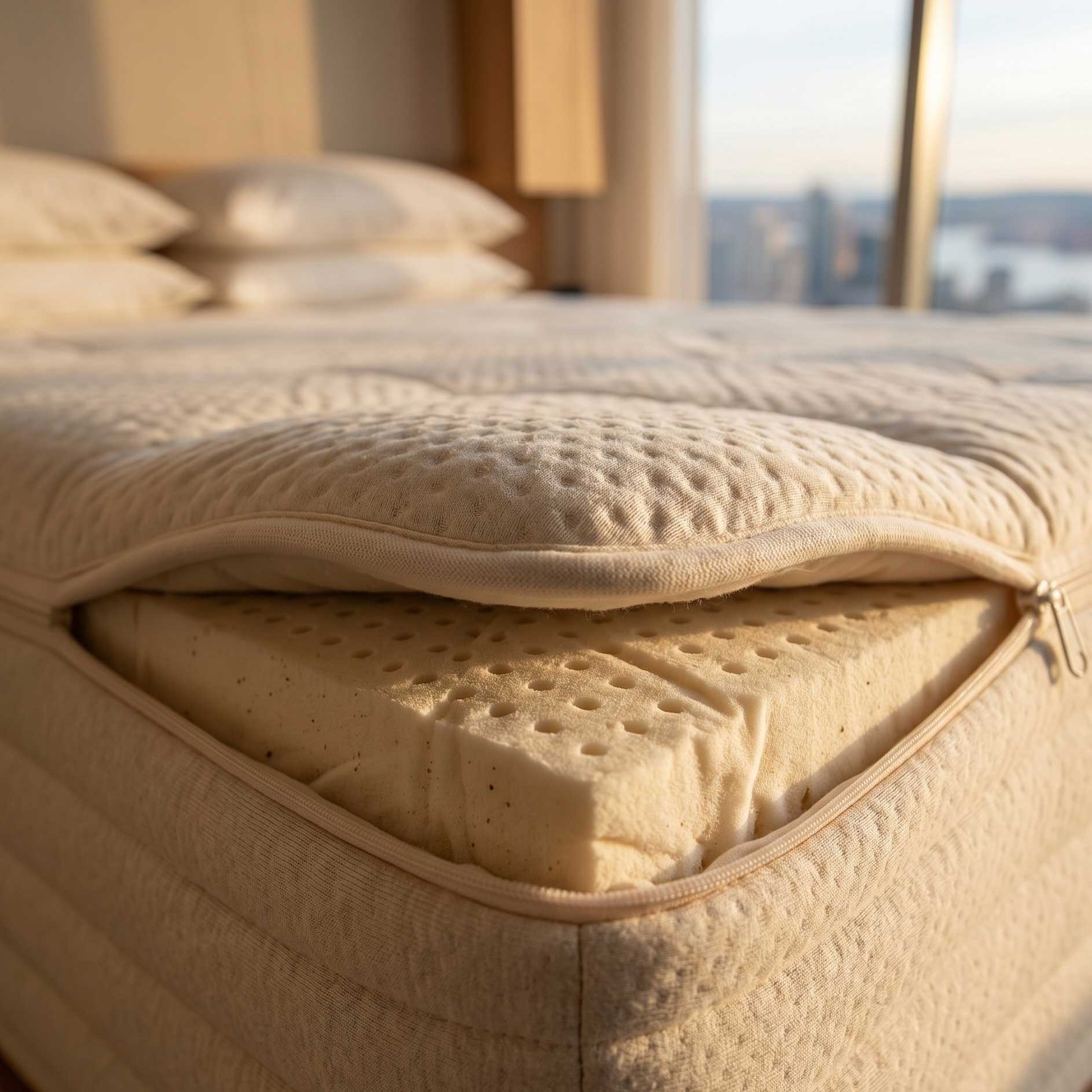
GOLS, Eco-Institut, and Oeko-Tex are the three certifications that matter most when evaluating a natural latex mattress. Each tests something different: GOLS verifies organic content at the source, Eco-Institut measures air emissions from the finished product, and Oeko-Tex confirms the absence of harmful substances. All three together represent the most independently tested foam category available.
The mattress industry has a greenwashing problem. The words 'natural' and 'organic' appear on products that contain significant synthetic content, and there is no legal obligation in Canada to back those claims with third-party verification. Certifications exist to fill that gap. Understanding what each one actually tests is the most useful thing you can do before buying a latex mattress.
GOLS: Organic Content at the Source
GOLS stands for Global Organic Latex Standard. It is the only internationally recognised certification specifically designed for organic latex products, administered by Control Union Certifications. To earn GOLS certification, a latex product must contain a minimum of 95 percent certified organic raw material by weight.
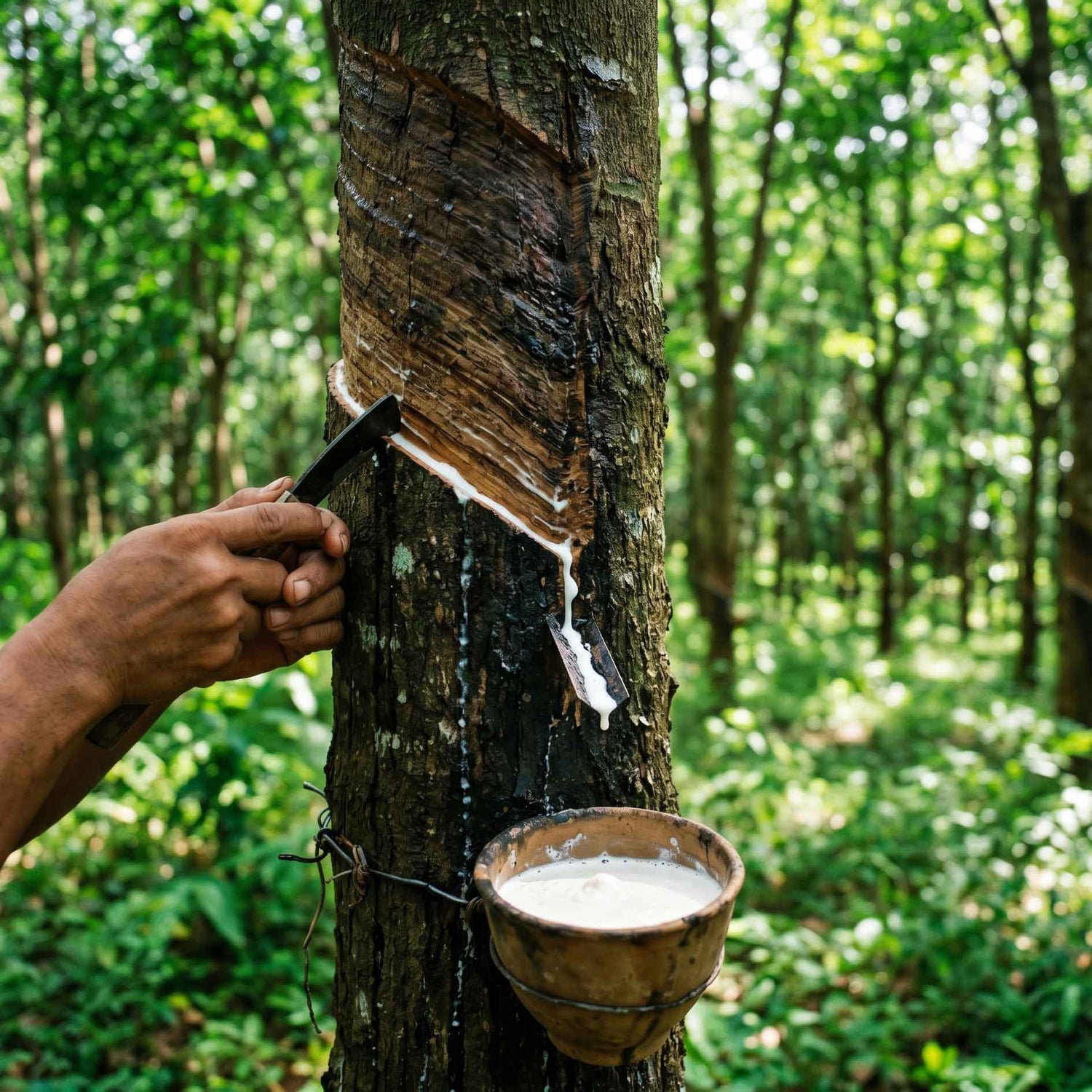
What GOLS actually audits is the full supply chain, from the rubber plantation where the Hevea brasiliensis trees are grown, through the processing facility where the sap is converted into latex foam, to the finished product. The certification verifies that the farming practices meet organic standards (no synthetic pesticides or fertilisers), that the processing uses only approved inputs, and that the chain of custody is documented at every step.
GOLS also sets limits on harmful substances in the final product and requires social compliance throughout the supply chain: fair labour practices, worker safety, and environmental management at the processing facility. It is recertified annually, which means a GOLS certificate on a product reflects current conditions, not a one-time audit from several years ago.
What GOLS does not cover: the cover materials on the mattress (cotton and wool covers require their own certifications), the processing aids used in vulcanisation if they fall within approved limits, or mattress components other than the latex layers themselves.
Eco-Institut: Emissions from the Finished Product
Eco-Institut is a German testing laboratory that measures volatile organic compound (VOC) emissions from finished products. Where GOLS verifies what goes into the latex, Eco-Institut measures what comes out of it after manufacturing.
All latex, including GOLS-certified organic latex, produces VOCs. This is a property of the material, not a sign of contamination. The question is not whether VOCs are present but whether they are present at levels that matter for human health. Eco-Institut certification confirms that the product passes stringent air quality emission limits set by the institute, measured under controlled laboratory conditions.
The certification is particularly relevant because the VOC profile of a new latex mattress is what most people describe as the natural latex odour. It is real, it dissipates over days to weeks depending on ventilation, and for GOLS-certified latex tested by Eco-Institut, the compounds responsible for that odour are present within limits that meet the most stringent air quality guidelines available for foam products. This is why the correct framing for concerns about latex odour is not that the odour is harmless by definition, but that it has been independently measured and found to pass the tightest available standard.
Eco-Institut tests the finished latex product, not the components. This means the test reflects the actual mattress material as it leaves production, including any variability introduced during manufacturing.
Oeko-Tex Standard 100: Harmful Substances in the Final Product
Oeko-Tex Standard 100 is a finished-product certification that tests for the presence of over 100 harmful substances, including pesticides, heavy metals, formaldehyde, phthalates, and certain chemical treatments. Unlike GOLS, it does not verify organic origin. Unlike Eco-Institut, it does not focus specifically on emissions. Its scope is the broadest of the three: does this product contain harmful substances at levels that would make it unsafe for direct skin contact?
The Oeko-Tex threshold is calibrated to the intended use of the product. For products in Class I (direct skin contact, including mattresses), the permitted limits are more stringent than for products with incidental contact. A mattress carrying Oeko-Tex Standard 100 certification has been tested and confirmed free of the specific harmful substances on the Oeko-Tex list at the applicable thresholds.
Oeko-Tex applies to the finished product, which means it covers components that GOLS does not, including cover materials. A Tencel cover on a latex mattress can carry its own Oeko-Tex certification independently of the latex layers. The certifications are complementary, not redundant.
Why All Three Together Matter
Each certification covers a different question. GOLS answers: is the organic claim real, and was the full supply chain managed to organic standards? Eco-Institut answers: what does this product actually emit, and is that within acceptable limits? Oeko-Tex answers: does the finished product contain harmful substances?
A mattress with all three certifications has been independently verified at the source, at the point of manufacture, and in the finished state. No single certification covers all three questions. GOLS alone does not tell you the emission levels of the finished product. Oeko-Tex alone does not verify that the organic content claim is accurate. Eco-Institut alone does not confirm supply chain integrity.
The combination is why GOLS-certified latex with Eco-Institut and Oeko-Tex testing represents the most rigorously verified foam category available. Conventional polyurethane foam carries none of these certifications, and the chemicals used in its manufacture and fire treatment are not subject to the same independent audit requirements.
CertiPUR-US: What It Is and What It Is Not
CertiPUR-US is a certification program administered by a North American foam industry association. It tests polyurethane foam for the absence of certain harmful substances: ozone depleters, heavy metals, formaldehyde, phthalates, and flame retardants from a specific prohibited list. Foam carrying the CertiPUR-US mark has been tested and confirmed free of those substances within the program's limits.
That is a legitimate and useful thing to certify. The problem is how the certification is sometimes used in marketing. CertiPUR-US applies exclusively to synthetic polyurethane foam. It cannot be applied to natural latex, organic cotton, wool, or any other natural material. A mattress promoted as CertiPUR-US certified is, by definition, a synthetic foam mattress. The certification says nothing about whether the product is natural, organic, or made from renewable materials. It says the synthetic foam it contains does not include specific harmful additives.
The greenwashing risk is in the framing. 'Certified foam' sounds like an organic or natural claim to a buyer who does not know what the certification covers. Some manufacturers lean into this, using CertiPUR-US alongside language like 'clean,' 'non-toxic,' or 'better for you' in ways that imply a natural product when the base material is petroleum-derived. A polyurethane foam mattress with CertiPUR-US certification is a safer synthetic foam mattress. It is not a natural mattress.
The comparison with GOLS is direct. GOLS certifies that the latex in a mattress is at least 95 percent certified organic material, grown without synthetic pesticides, processed to organic standards, and verified through the full supply chain. CertiPUR-US certifies that a synthetic foam does not contain specific harmful additives. These are not equivalent claims, and they are not comparable standards. One verifies organic origin. The other sets minimum safety thresholds for a synthetic material.
What Certifications Do Not Cover
Certifications verify specific claims under specific testing conditions. They do not tell you how a mattress will feel, how long it will last, or whether a given firmness configuration suits your sleep position. They do not cover the long-term performance of the product after years of use. And they do not guarantee that a mattress is right for you personally.
They also do not cover components outside their scope. GOLS on the latex layers says nothing about the cover materials. Oeko-Tex on the finished product does not mean the latex content is 95 percent organic. Reading certifications accurately means understanding what each one was designed to test and what sits outside its scope.
The practical implication is that certifications answer the materials and safety questions, but the fit question requires a different kind of information: your sleep position, body weight, whether you sleep with a partner, your existing bed frame, and your firmness preferences. A fitting is where that information gets applied.
Frequently Asked Questions
Does GOLS certification mean a latex mattress has no chemicals?
No. GOLS-certified latex is processed using approved vulcanisation agents and other inputs that meet the standard's requirements for organic production. The certification means the raw material is at least 95 percent certified organic latex and the supply chain meets organic farming and processing standards. It does not mean the product contains zero processing inputs. All latex foam, including GOLS-certified latex, produces VOCs and has a natural odour. Eco-Institut certification is the relevant standard for confirming those emissions fall within acceptable air quality limits.
Is Oeko-Tex the same as GOLS?
They test different things and neither substitutes for the other. GOLS verifies organic content and supply chain integrity for latex specifically. Oeko-Tex Standard 100 tests the finished product for the presence of over 100 harmful substances, regardless of whether the source material is organic or conventional. A product can carry Oeko-Tex without being organic, and GOLS certification without Oeko-Tex would leave the finished product untested for the specific substances on the Oeko-Tex list. Both together provide more complete coverage than either alone.
How do I know if a mattress sold in Canada actually holds these certifications?
Each certification body maintains a public registry. GOLS certificates are issued by Control Union and can be verified through their database using the certificate number. Oeko-Tex certifications are searchable at oeko-tex.com. Eco-Institut certificates are issued directly by the laboratory. A reputable manufacturer will provide the certificate number on request. If a product claims certification but the seller cannot produce a certificate number, treat the claim with caution. Certifications are annual and specific to the certified product, not a blanket endorsement of a company's full range.
Certifications answer the materials questions. A fitting covers everything else. Sleep Majestic works through layer configuration, firmness, and bed frame compatibility during in-person and phone fittings. Book online or call 604-731-8226.