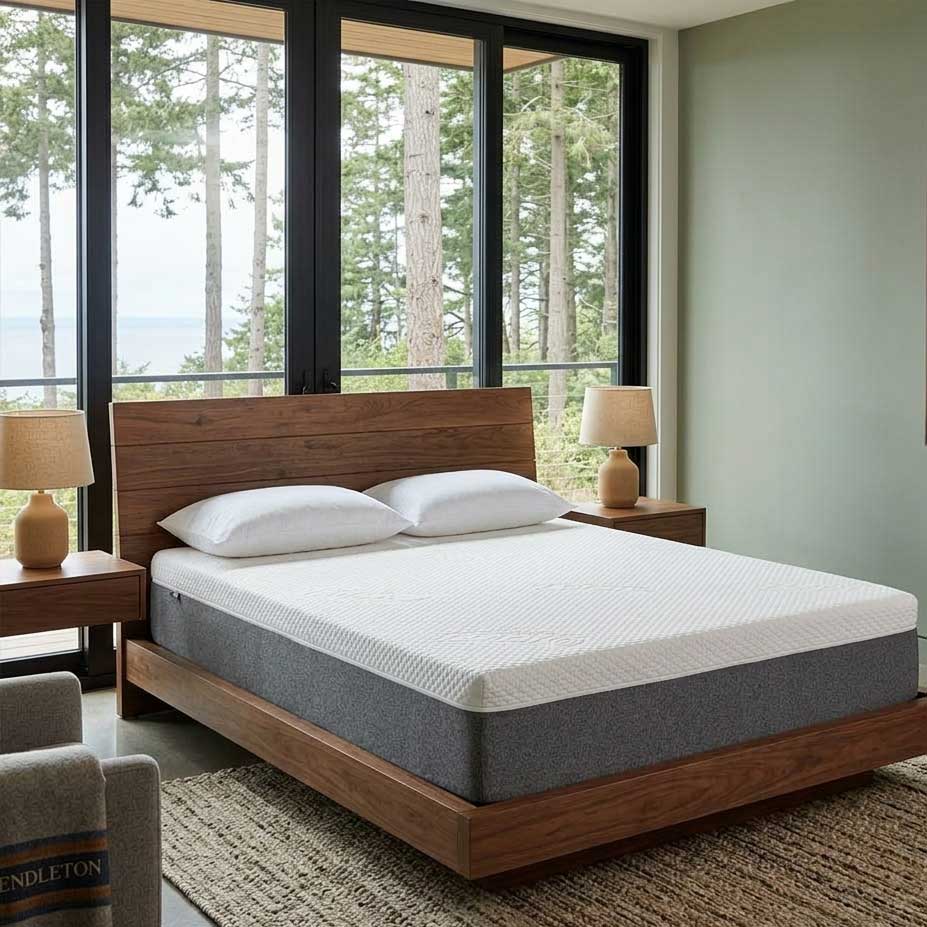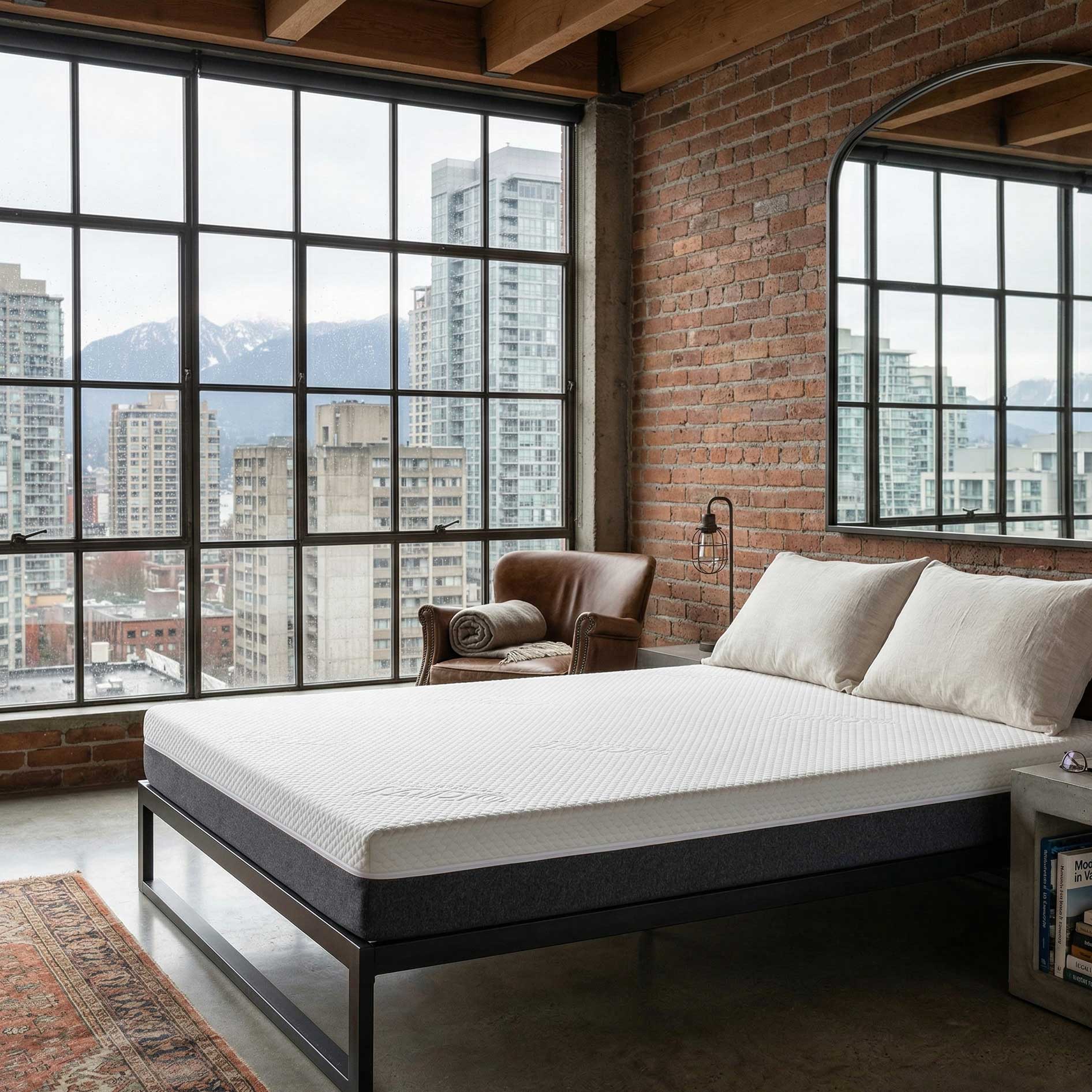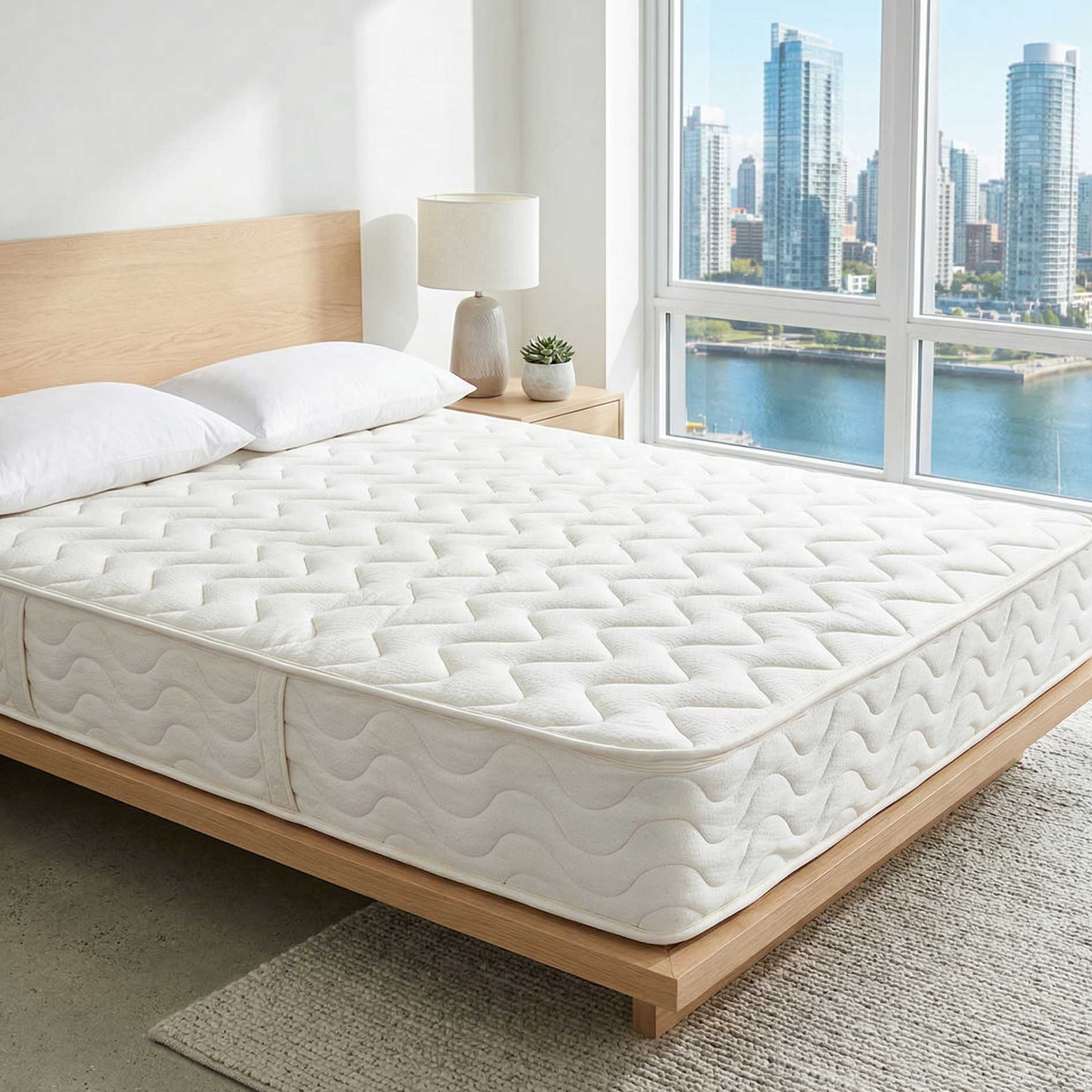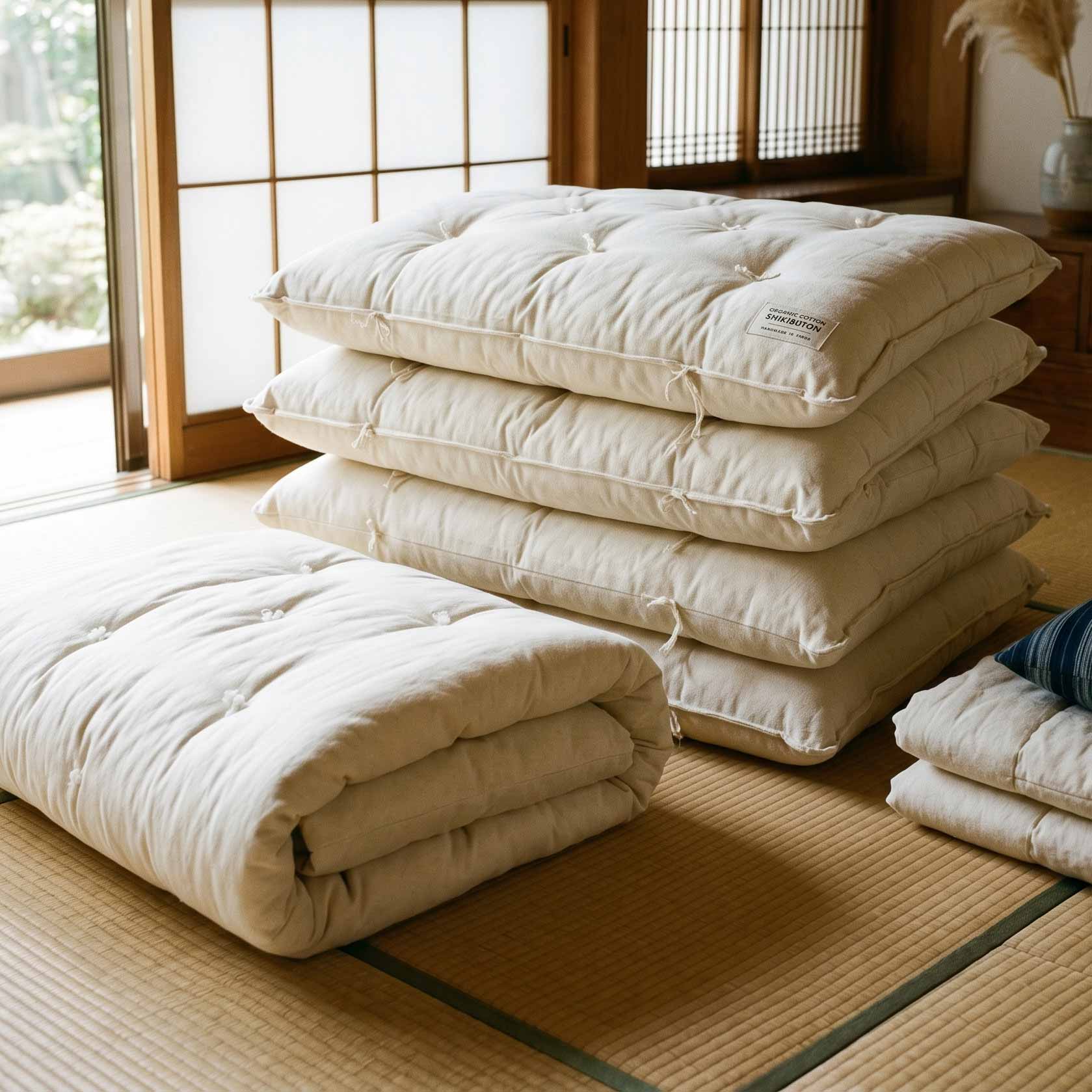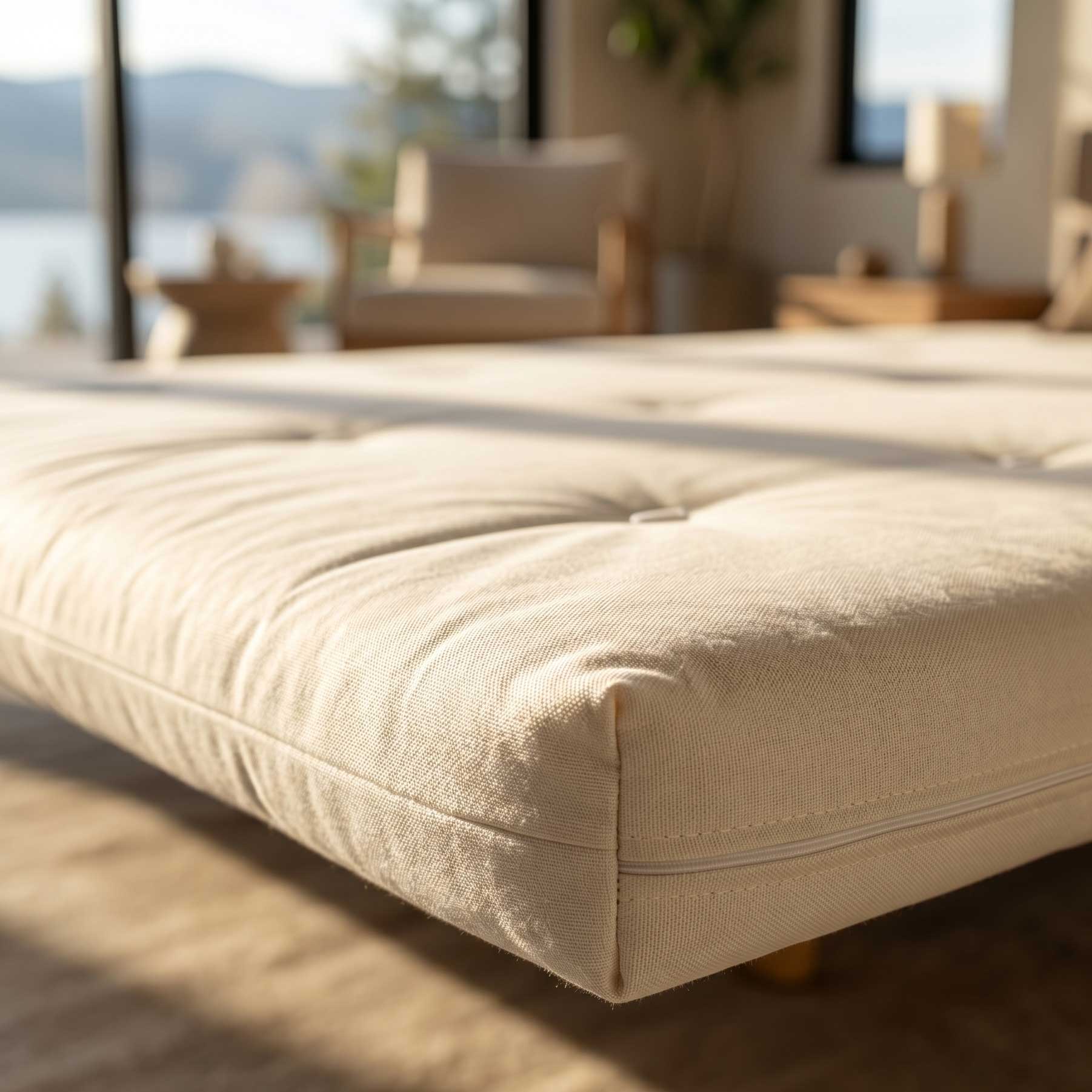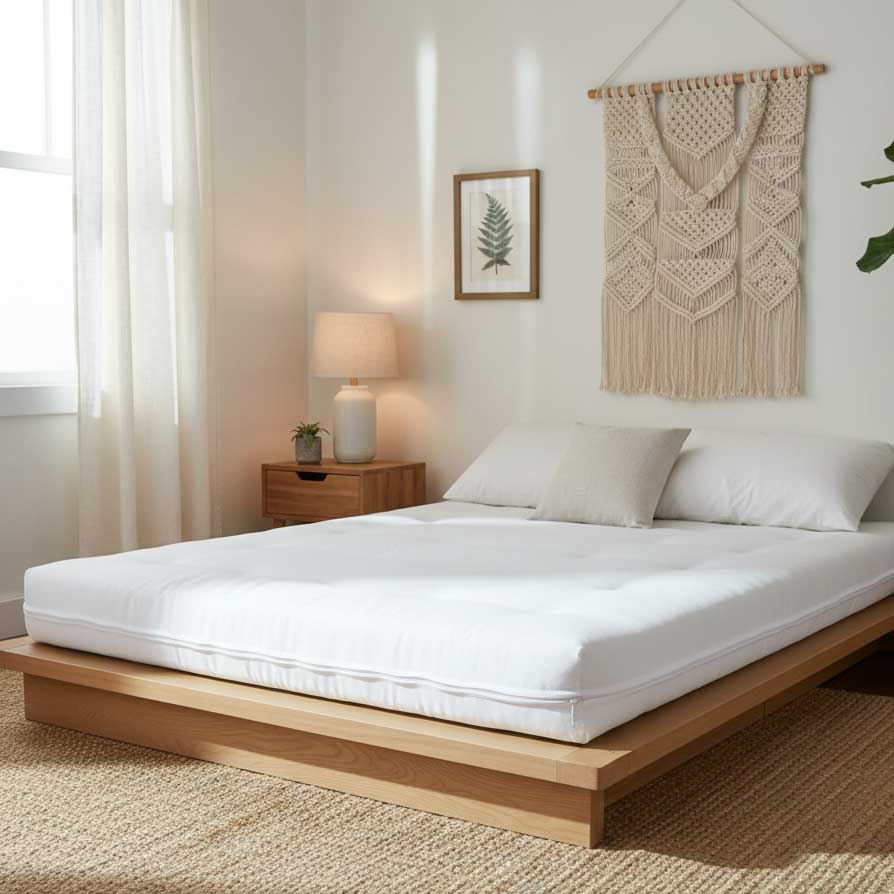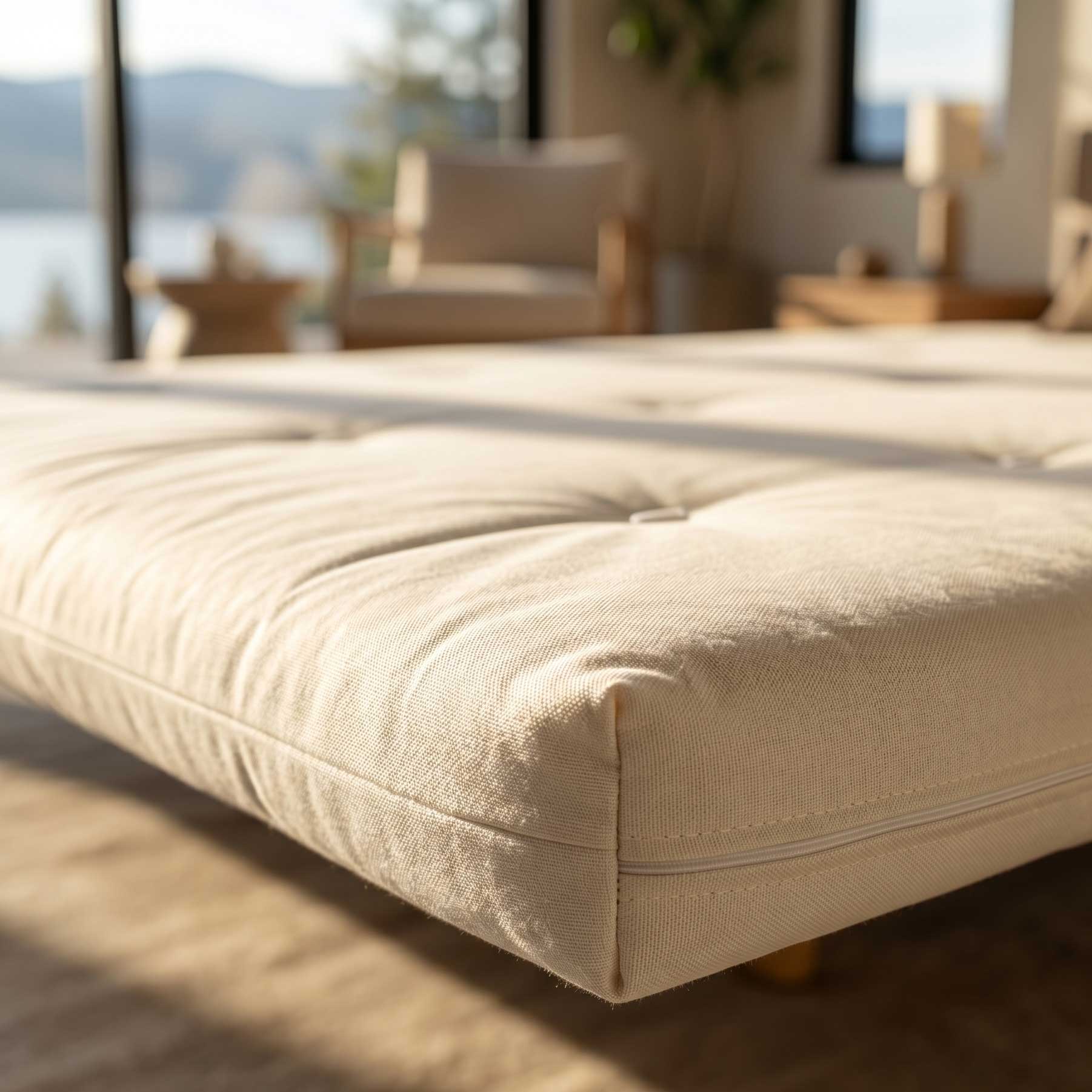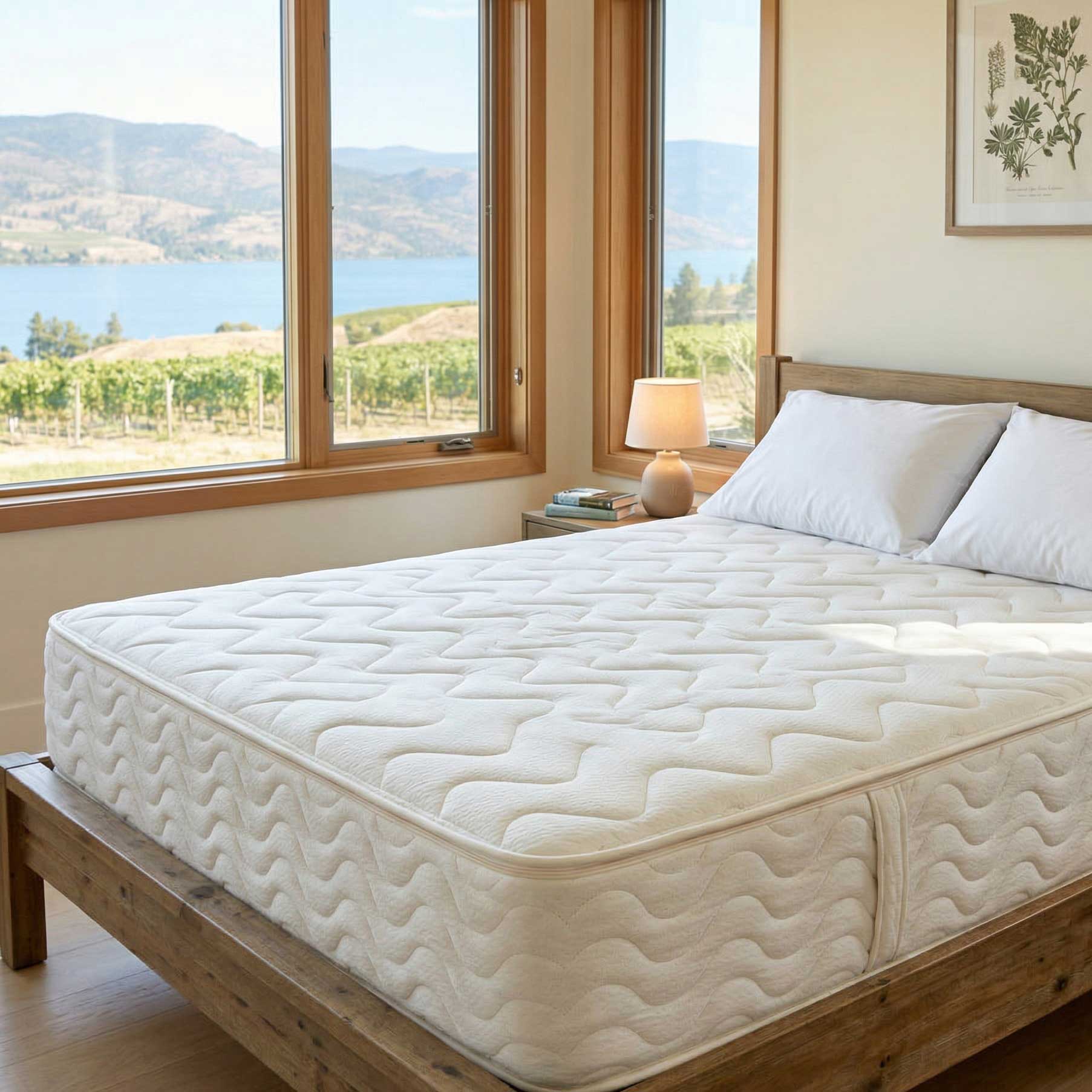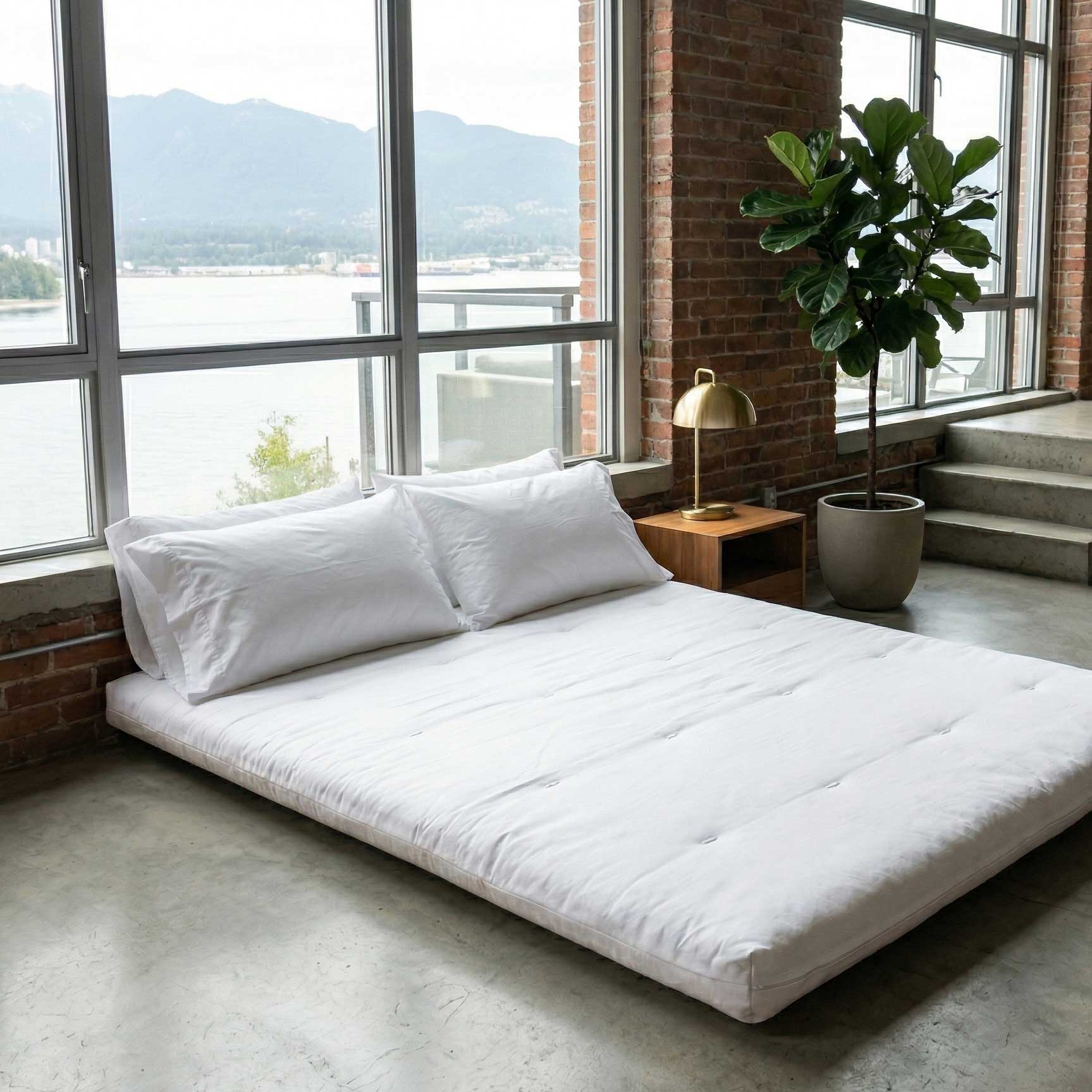

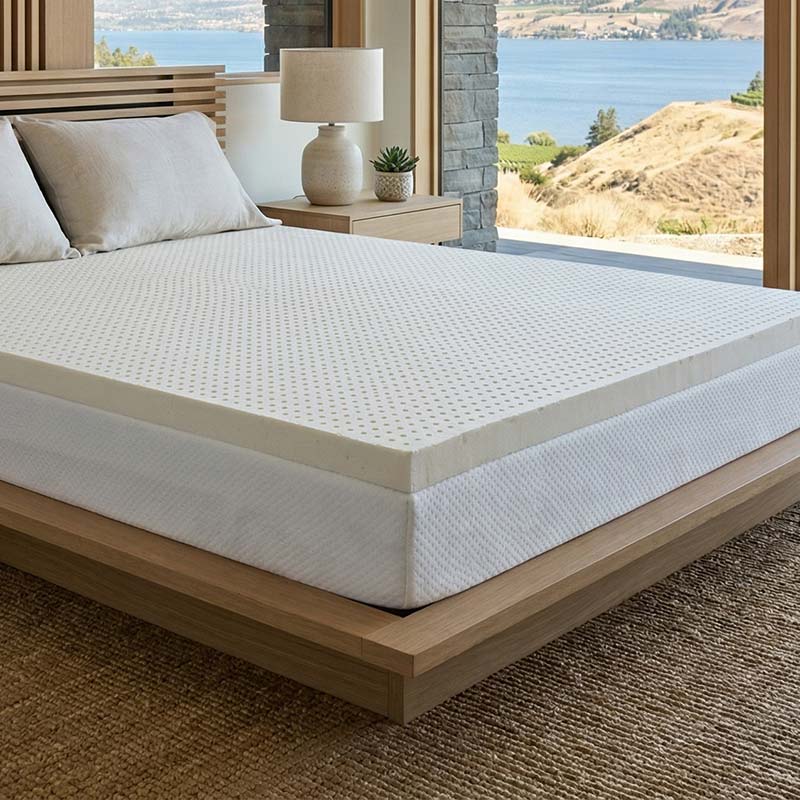
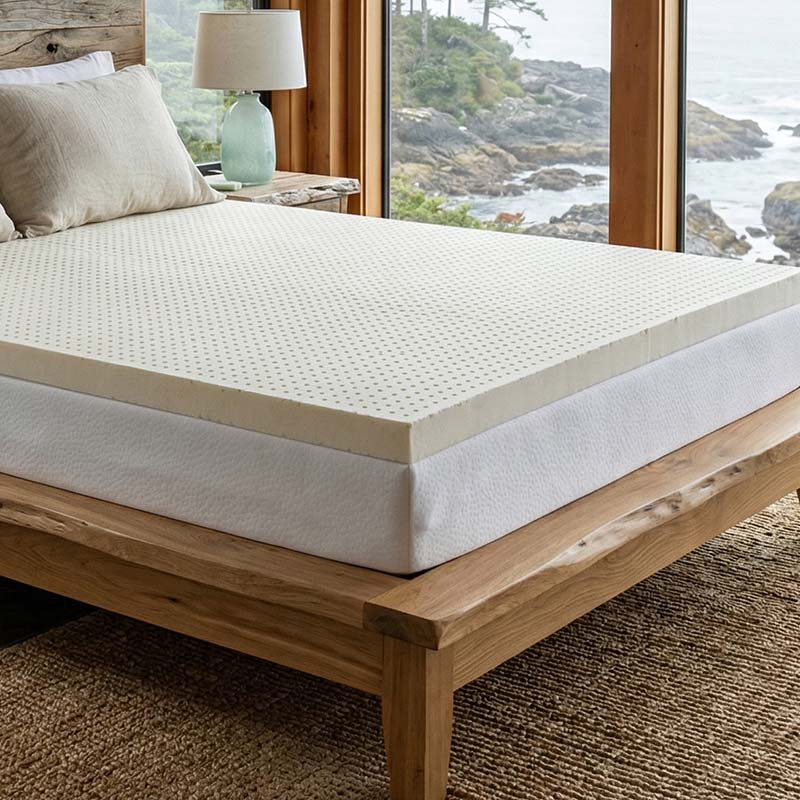
A natural latex mattress typically lasts around 15 years under normal conditions — roughly twice the lifespan of a conventional foam mattress. But that range is not guaranteed. Foundation, rotation habits, moisture exposure, and whether the latex is 100% natural or blended all affect how long the mattress actually holds up.
Most people ask this question while comparing latex against memory foam or a pocket coil hybrid. The longevity difference is real and comes down to the physical properties of the material. Understanding what drives it — and what shortens it — is more useful than a single number.
Why Latex Outlasts Conventional Foam
All foam — including latex — breaks down through oxidation over time. Exposure to air, body heat, and repeated compression gradually degrades the cell structure. The difference is how quickly. Polyurethane foam is noticeably softer at five years and significantly degraded by ten.
Natural latex oxidizes through the same process, but far more slowly. Rubber tree sap is vulcanised under heat to create a stable, open-cell foam with a natural polymer structure that resists compression fatigue significantly better than polyurethane. A well-maintained latex mattress holds its support profile for much longer — not because it avoids degradation, but because the material degrades at a slower rate.
What Actually Determines How Long It Lasts
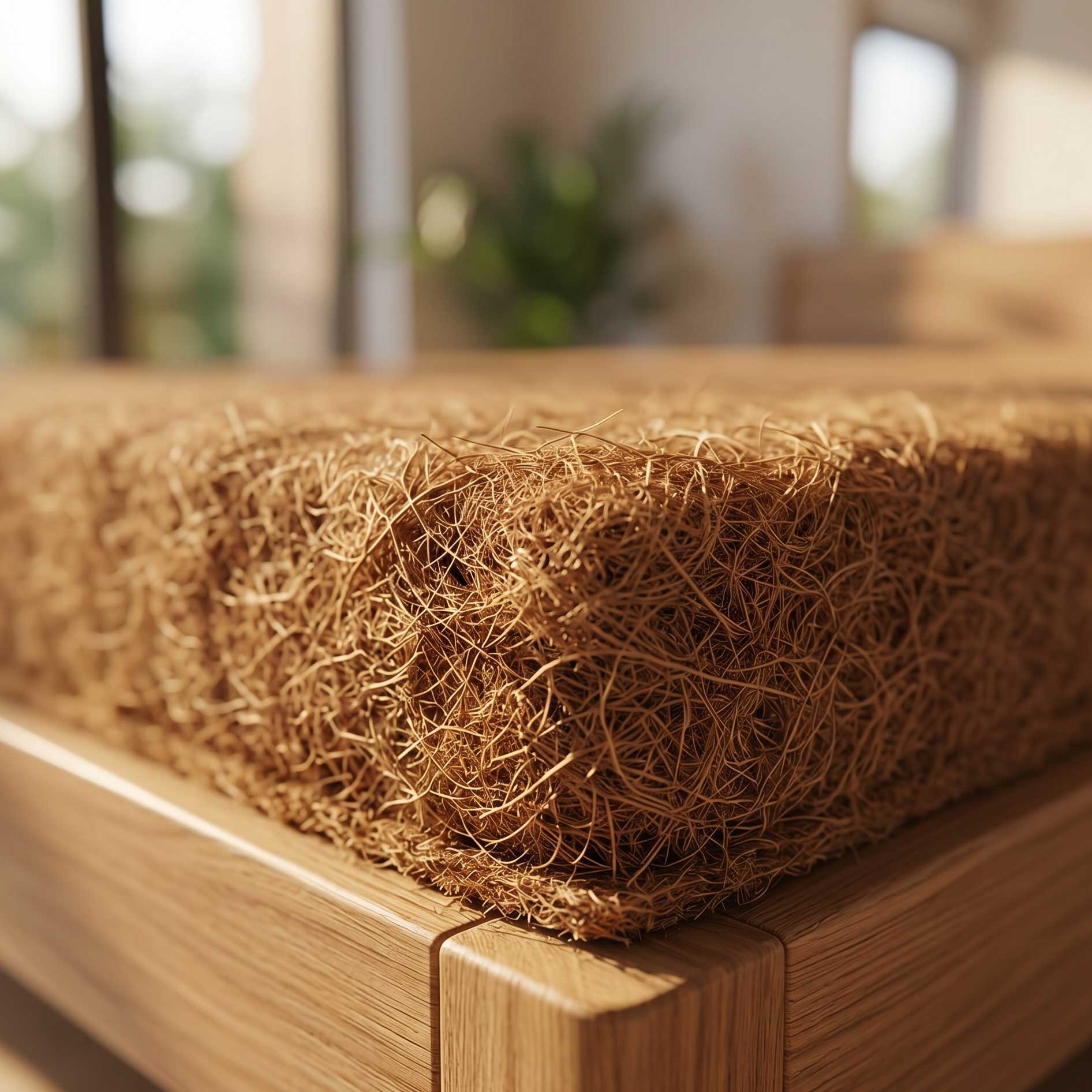
The foundation is the single most important factor outside the mattress itself. Latex requires a slatted base with slats no more than 3 inches apart. Wider gaps allow the latex to sink between slats under load, which causes stress points and accelerates wear unevenly. A solid platform without slats traps moisture underneath, which degrades latex over time. Frames that don't meet the slat spacing requirement can be brought to standard with a Coir Bunkie Board — it's a practical fix that protects a significant investment.
Rotation matters more than most people follow through on. Rotating a latex mattress head-to-foot every three to six months distributes wear evenly across the surface. On modular mattresses with a zippered cover, it's also worth flipping and rotating the individual top layers when you rotate the mattress. Uneven wear is one of the most common reasons a latex mattress underperforms its potential lifespan.
Moisture is the other major variable. Latex does not handle sustained dampness well. Spills that reach the latex, high-humidity environments without adequate airflow, or placing a latex mattress on a solid surface that prevents air circulation underneath can all lead to material degradation that shortens the mattress's life significantly. A slatted base helps. In humid climates, additional steps — a dehumidifier in the bedroom, more frequent rotation — are worth taking.
Does 100% Natural Latex Last Longer Than Blended?
Yes, with some nuance. A 100% natural latex mattress — where the latex content comes entirely from rubber tree sap rather than a blend of natural and synthetic rubber — is generally more durable over the long term. Synthetic latex (SBR, styrene-butadiene rubber) is less resistant to oxidation and degrades faster under heat and compression.
The practical difference shows up at the ten-year mark and beyond. A blended latex mattress may perform well for the first several years but soften more noticeably in the back half of its life. For people buying with a 15-to-20-year expectation, 100% natural or GOLS-certified organic latex is the more reliable choice.
Dunlop vs Talalay: Does Processing Method Affect Longevity?
Both Dunlop and Talalay processing produce durable latex, but they have different characteristics that affect how they wear. Dunlop is denser and more supportive — the heavier cell structure makes it particularly well-suited as a base or support layer, where it resists compression fatigue effectively. It is the more common choice for the foundational layers of a modular latex mattress.
Talalay is lighter and more open in its cell structure. It is softer and better suited as a comfort or transition layer. Because it is less dense, it can show wear slightly faster than Dunlop under heavy or sustained compression — but used correctly in a layered system, it performs well within a properly designed mattress.
The modular design of many natural latex mattresses is relevant here: if a single layer shows wear before the others, that layer can be exchanged without replacing the entire mattress. This is one practical reason the modular approach extends the useful life of a latex mattress beyond what a bonded, single-unit foam mattress can offer.
Lifespan is one of the more detailed topics worth walking through in a fitting, particularly for people comparing latex against other options. Sleep Majestic covers foundation compatibility, layer configuration, and care requirements during fittings — in person at the Annacis Island showroom or by phone. Book at sleepmajestic.com/pages/delta-latex-mattress-store or 604-731-8226.
Frequently Asked Questions
How do I know when a latex mattress actually needs replacing?
A latex mattress needs replacing when it develops a visible, permanent body impression of 1.5 inches or more that does not recover when unweighted, or when the support profile has changed enough to affect sleep quality — waking with back pain or pressure points that weren't present when the mattress was new. Minor softening over time is normal. Significant, uneven impression that persists is the signal to act.
Does sleeping on a latex mattress every night wear it out faster than rotating it between rooms?
Daily use does not shorten a latex mattress's lifespan beyond the normal wear range, provided the foundation is correct and the mattress is rotated regularly. The material is designed for continuous use. What accelerates wear is uneven use — sleeping in the same position in the same spot on the mattress without rotation. Head-to-foot rotation every three to six months distributes compression evenly and is more important than use frequency.
Does a latex mattress topper wear out at the same rate as a full latex mattress?
A latex topper carries more compression per surface area than a layer inside a full mattress stack, because it is not supported by other latex layers beneath it to the same degree. Toppers typically show wear faster than layers in a modular mattress and carry a shorter warranty as a result. A 2-inch topper used daily will generally last five to ten years depending on the user's weight, sleep position, and care routine.