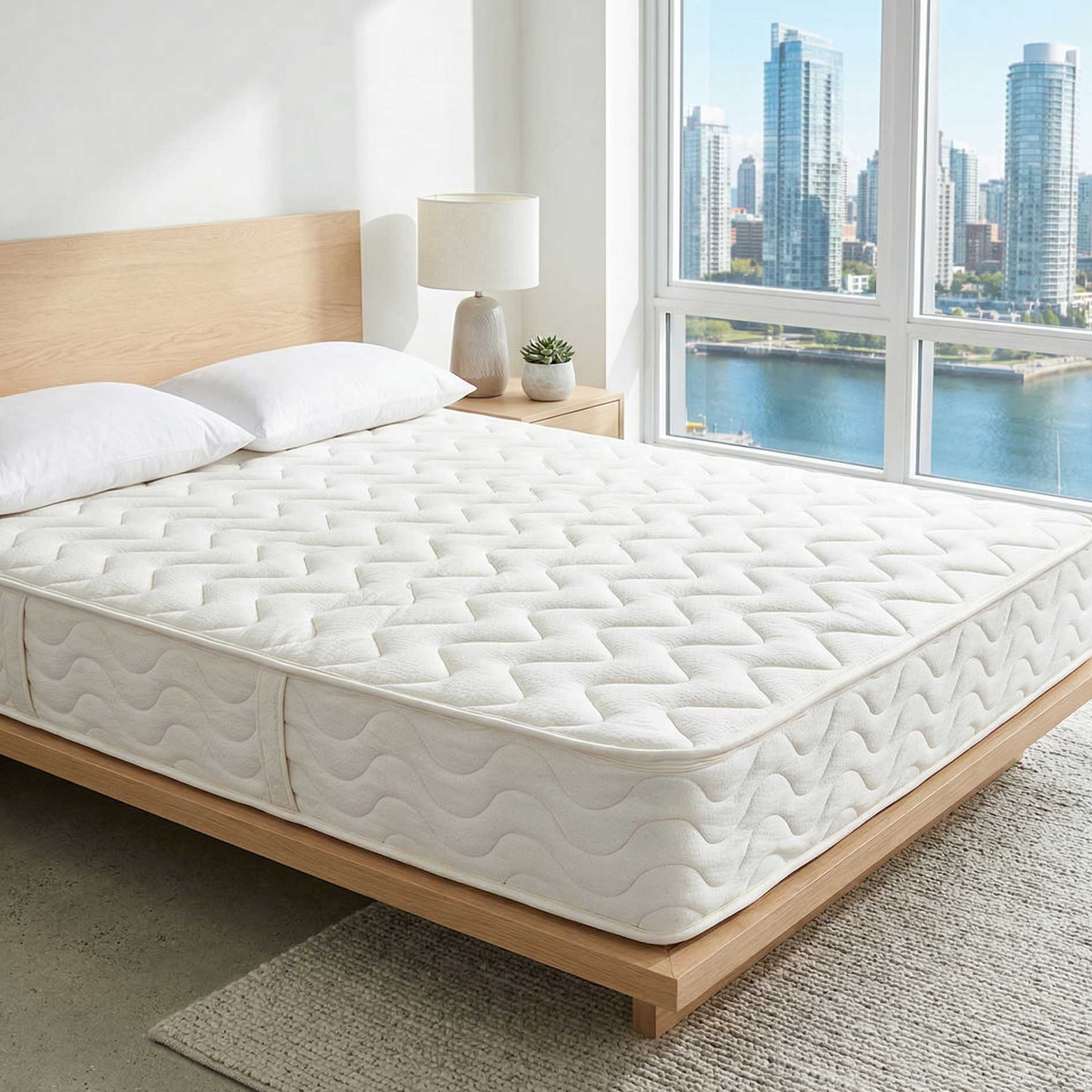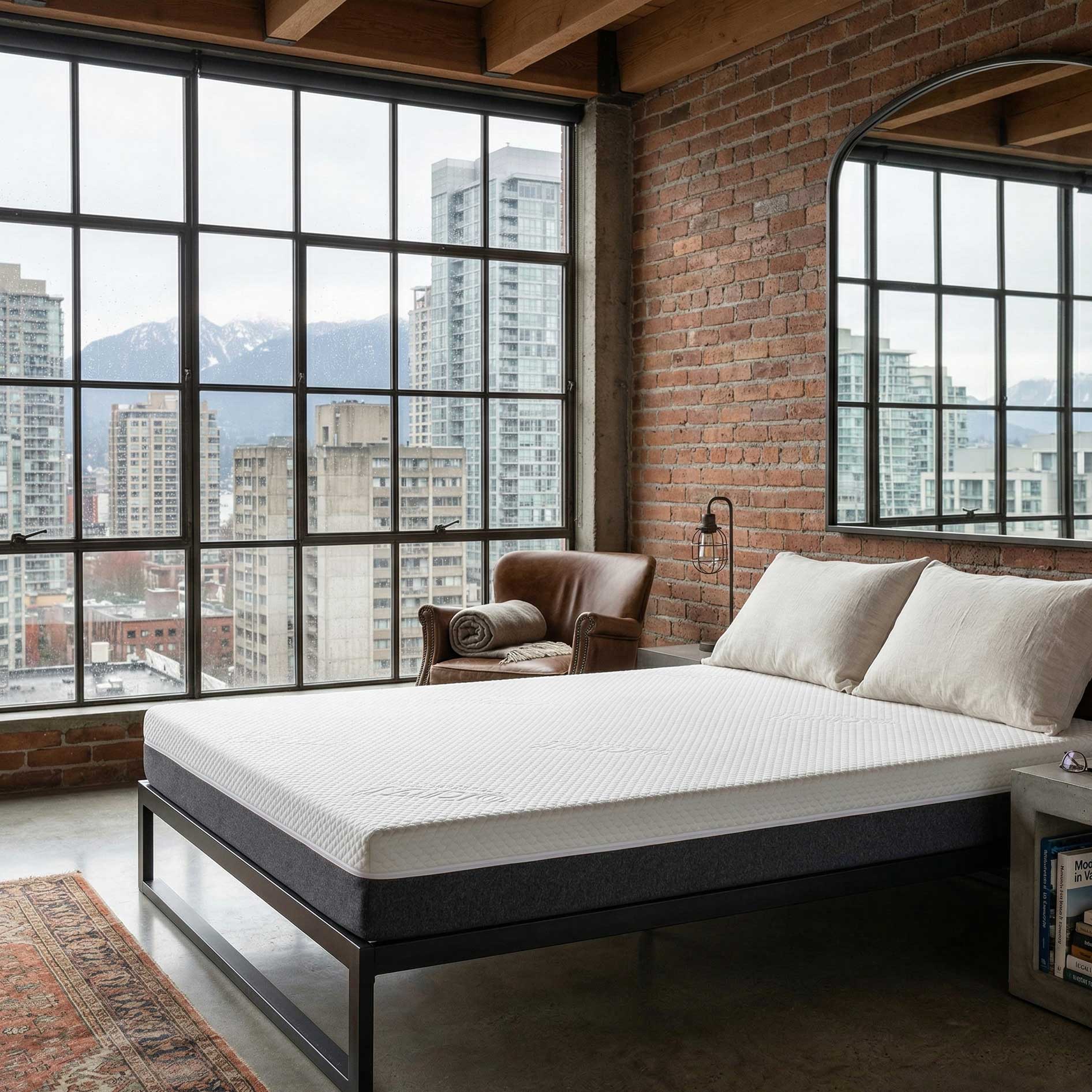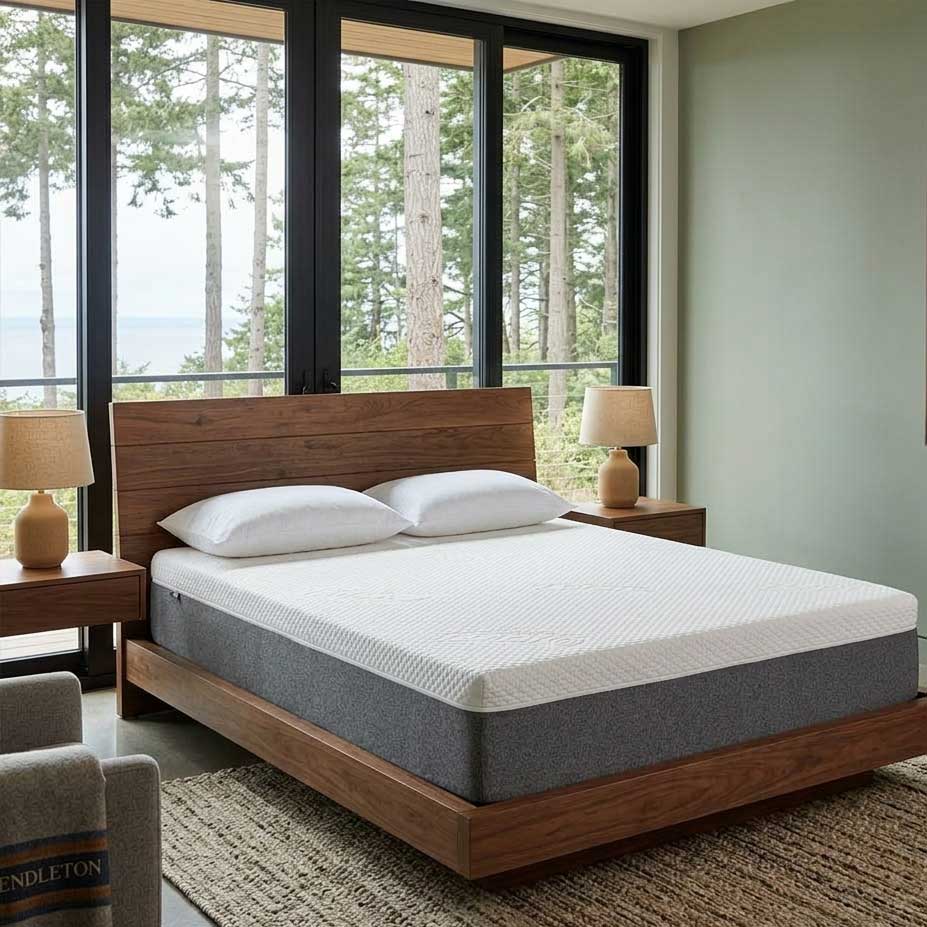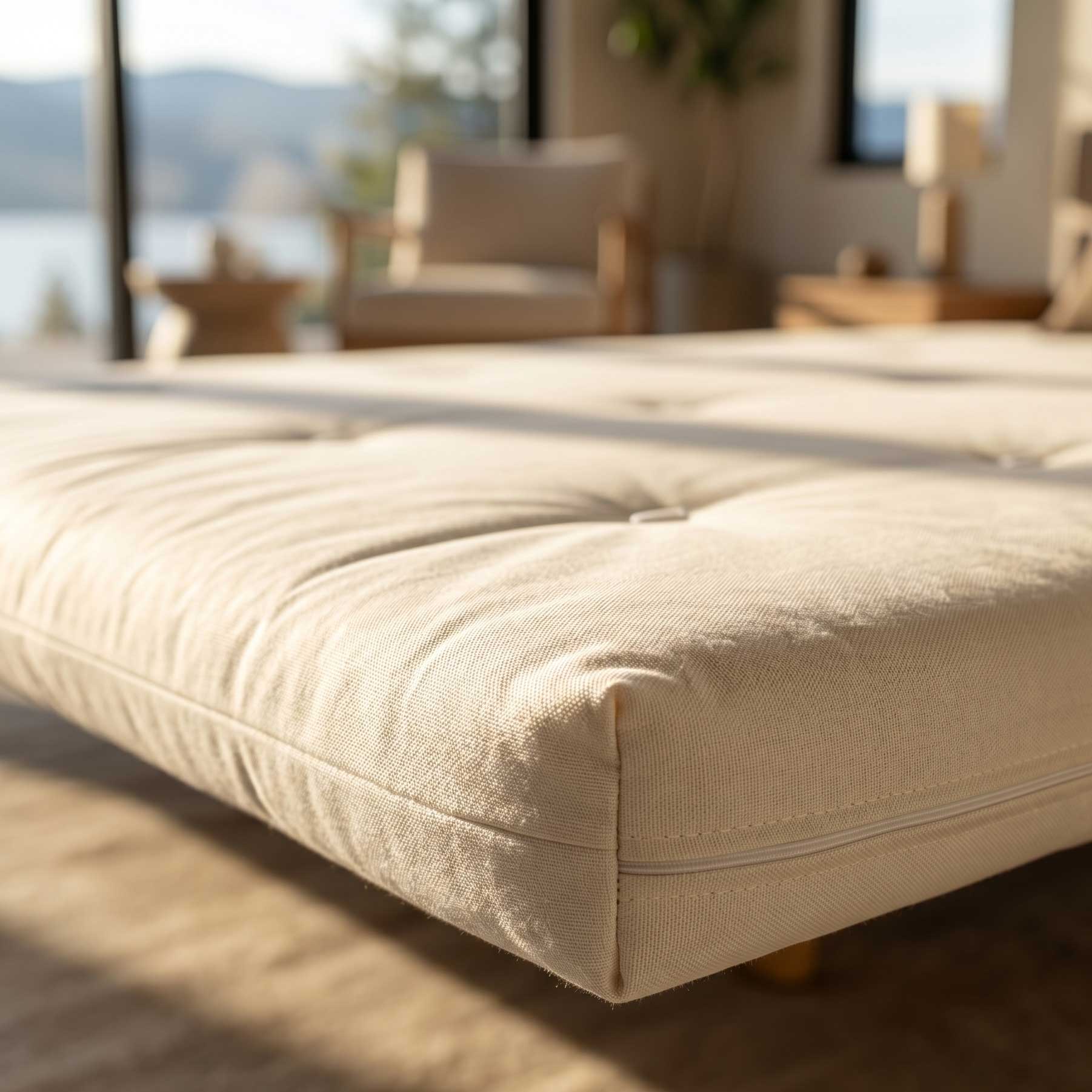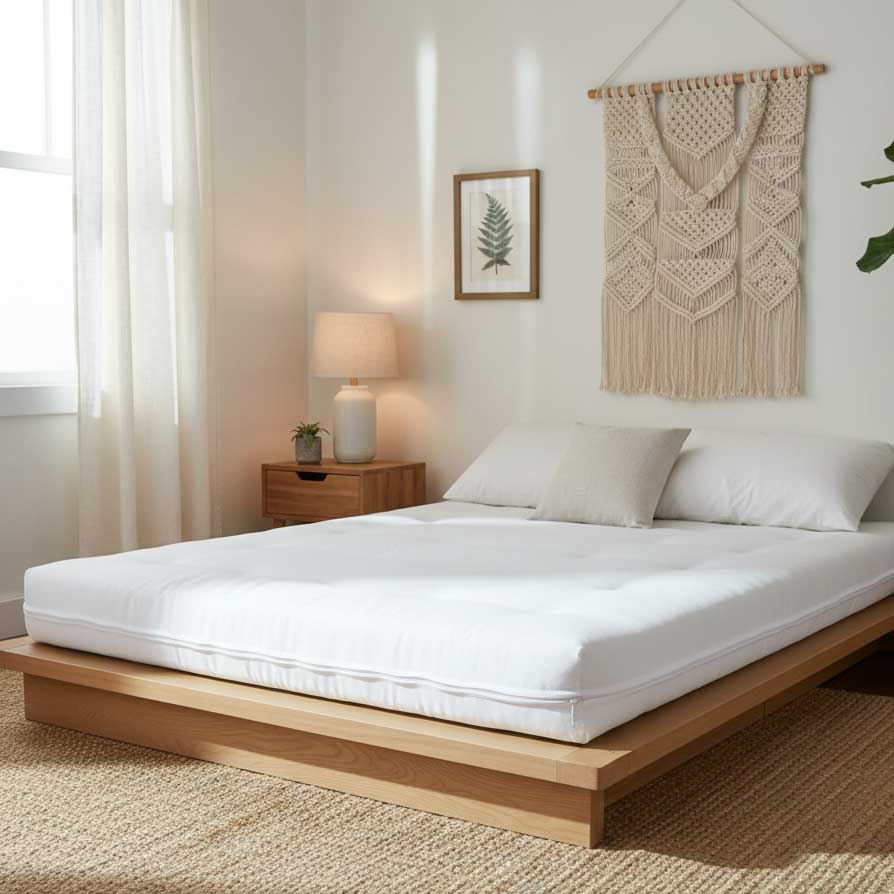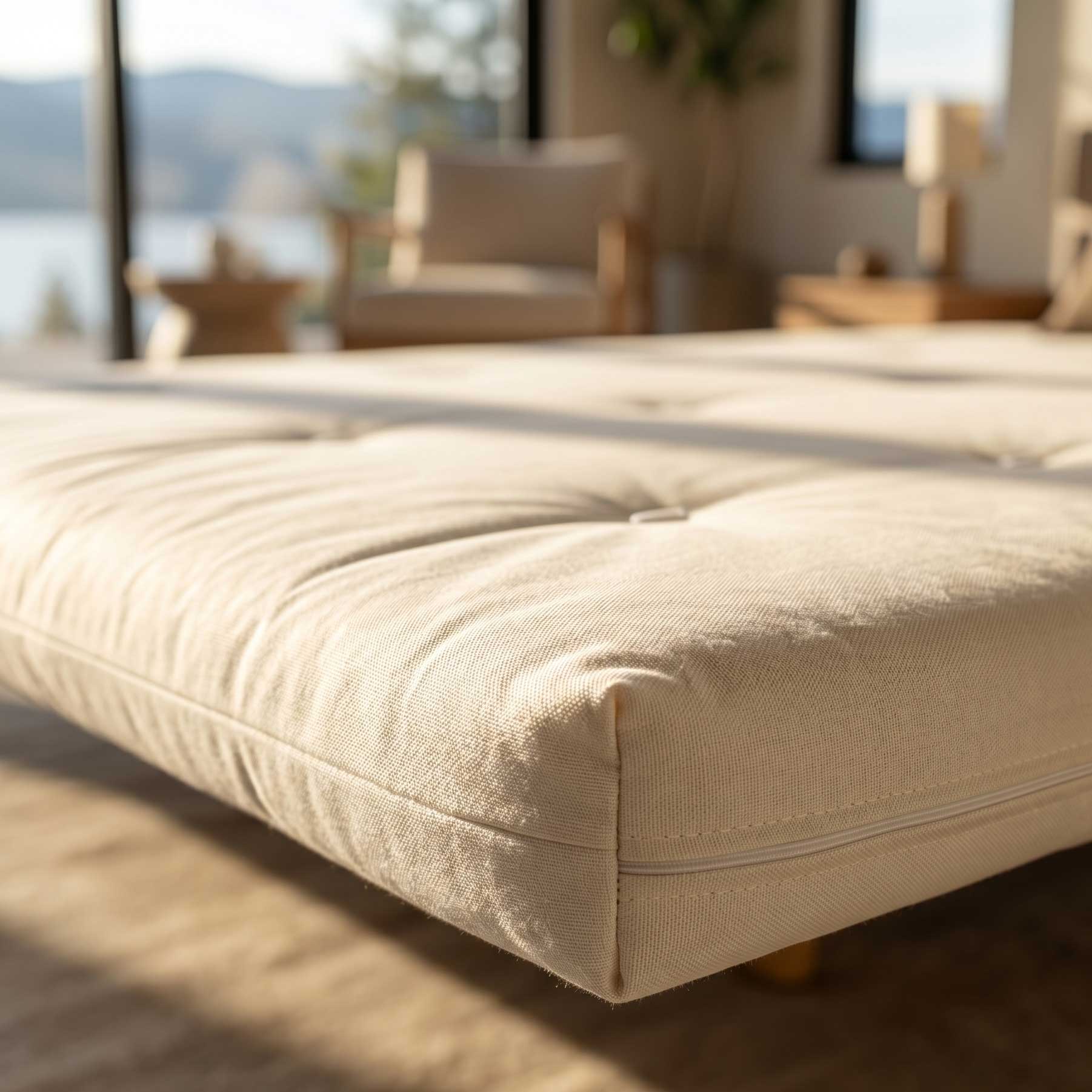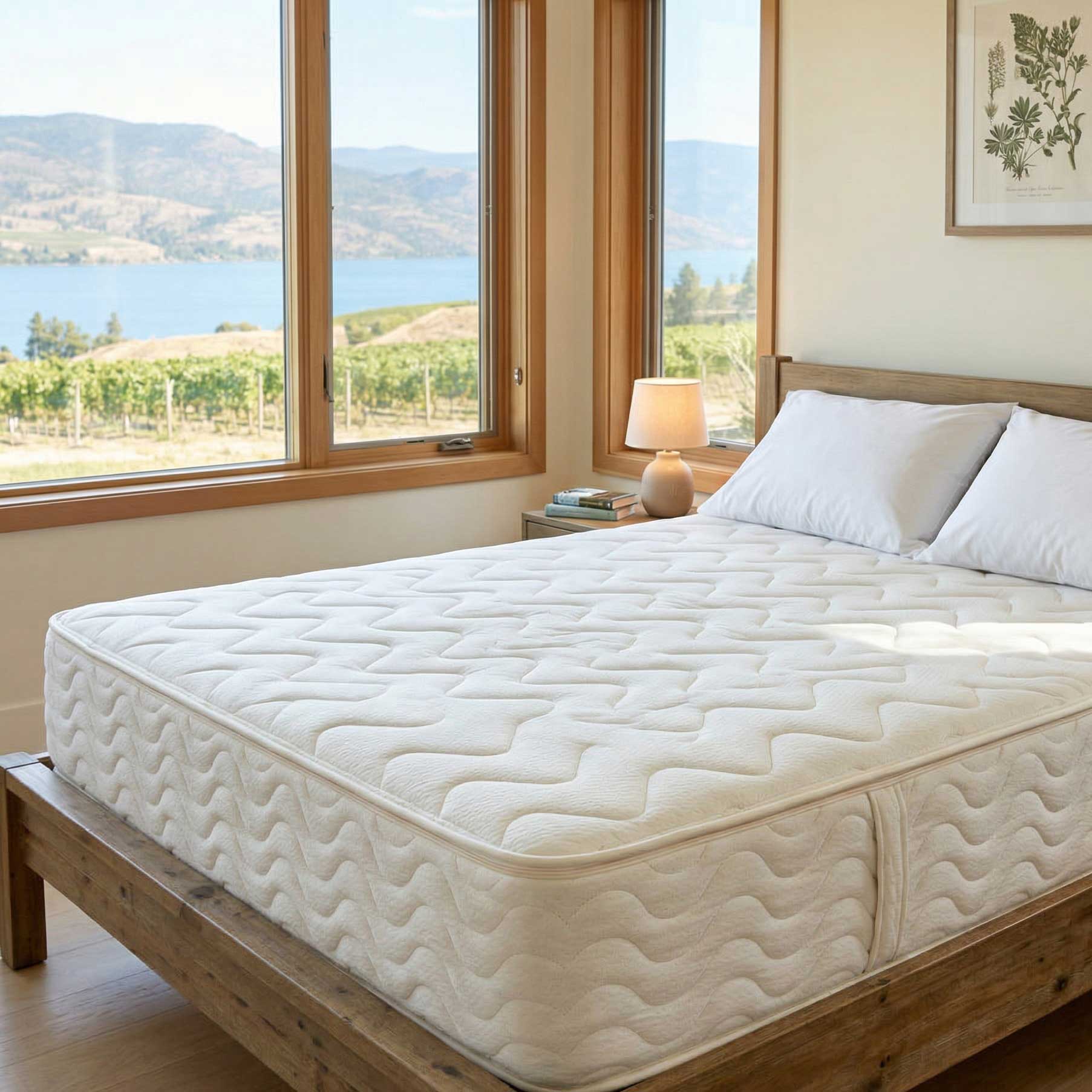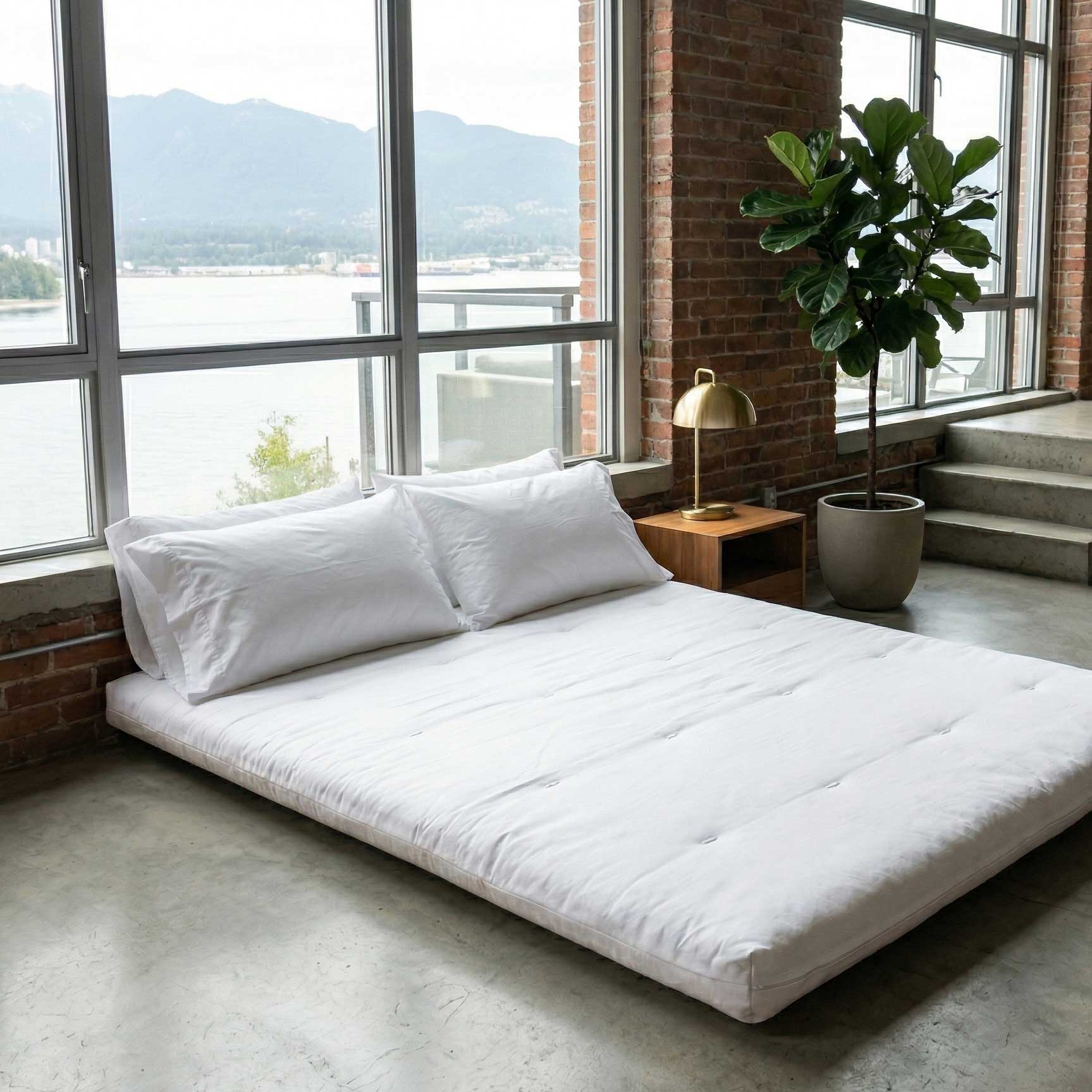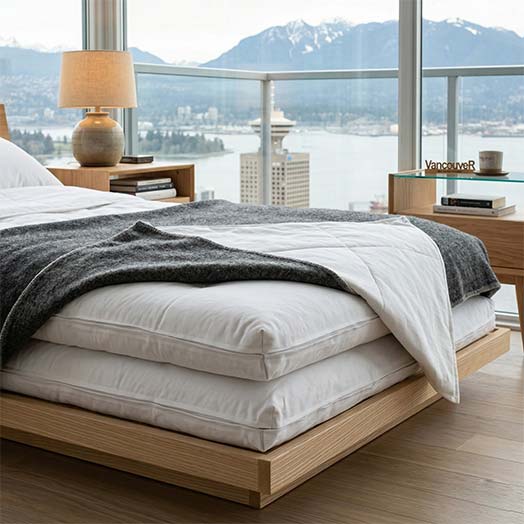

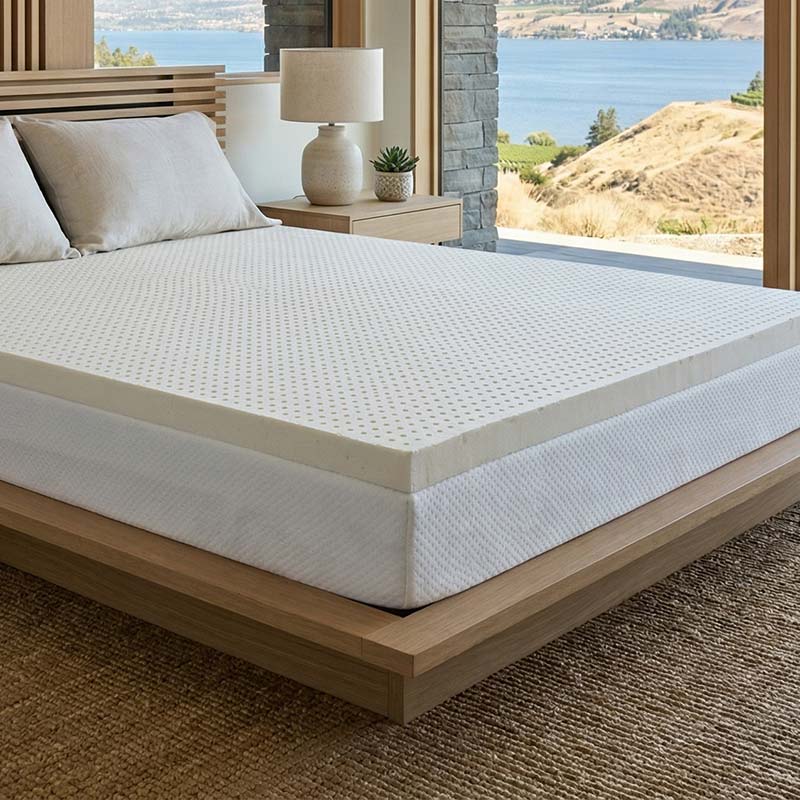
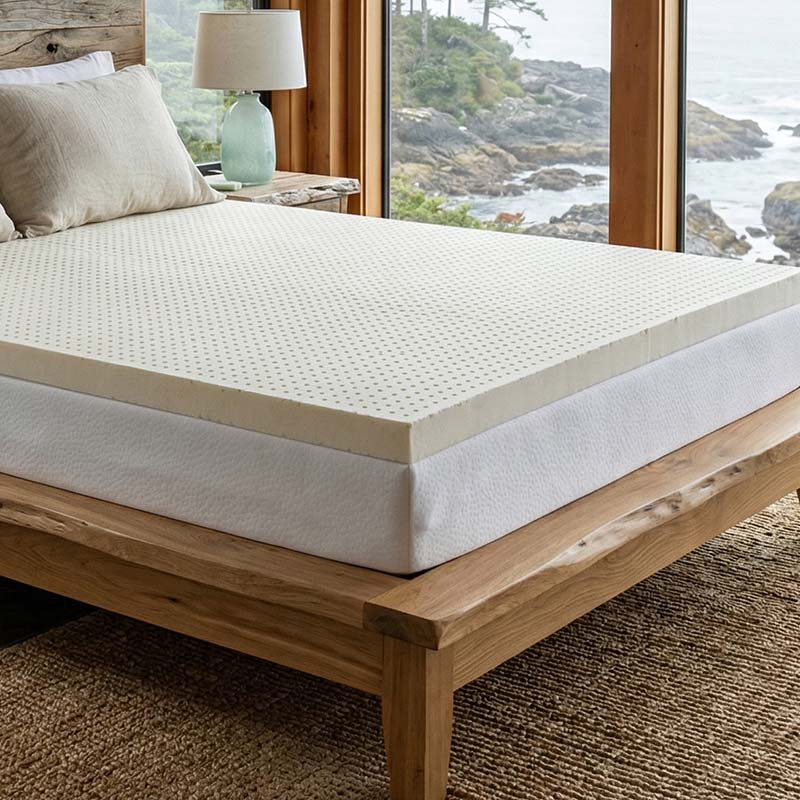
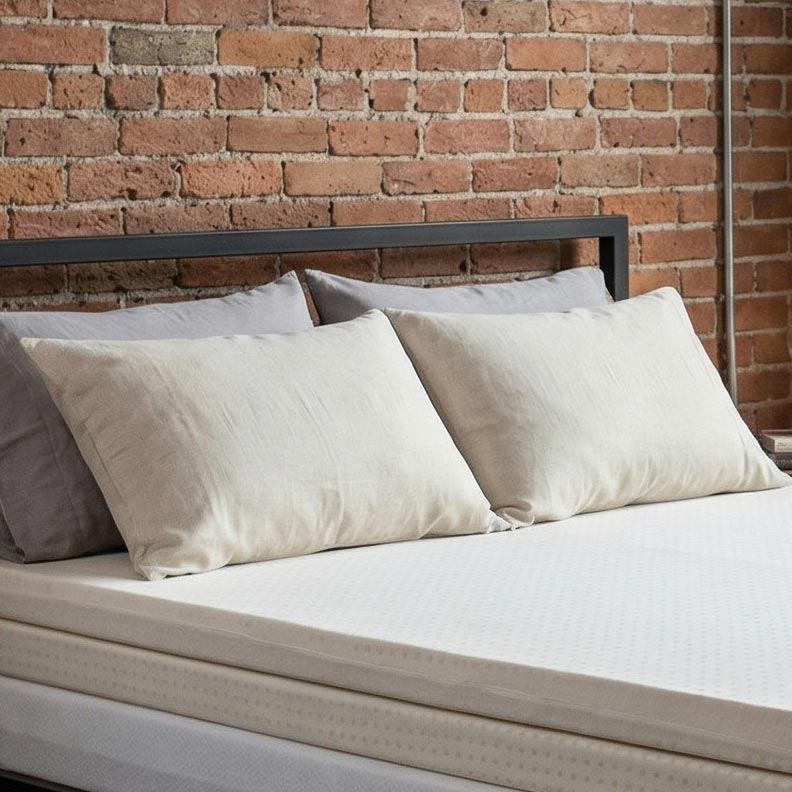
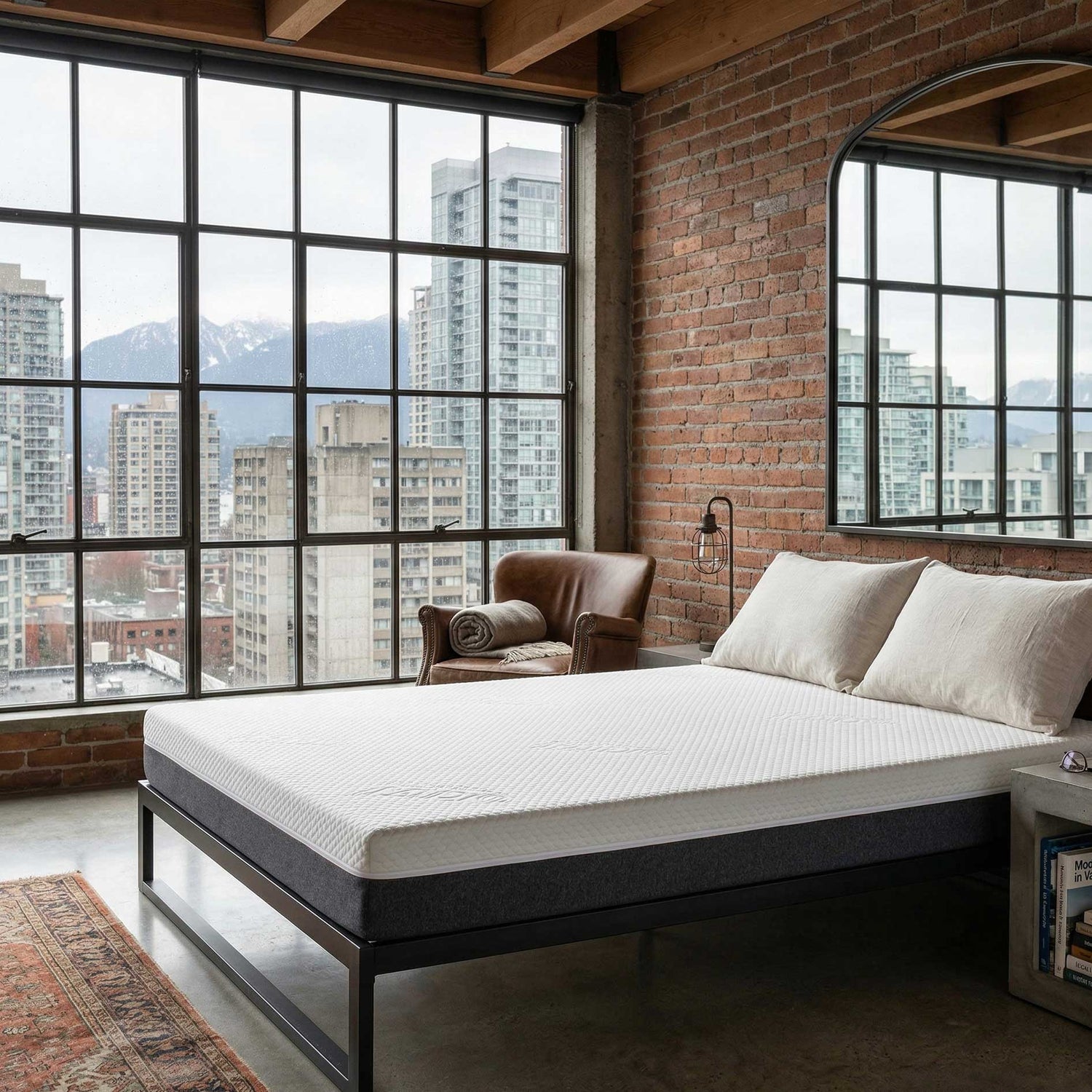
How long does a latex mattress last? Longer than most people expect, but not automatically. A well-maintained organic latex mattress can hold up for 15 to 25 years, compared with the 7 to 10 years often cited for conventional foam or spring mattresses. That gap isn't just marketing. Latex is a naturally elastic material that resists the permanent compression that breaks down other foams.
But that lifespan range assumes a few things go right along the way. The foundation underneath matters as much as the mattress itself. So does how often the mattress gets rotated, and in modular builds, whether the top layers get flipped along with it. Skip those basics and even the best latex mattress will show wear years ahead of schedule.
This breaks down what actually extends or shortens a latex mattress's working life, and what to watch for as the years go on.
Why Latex Outlasts Foam and Spring in the First Place
Polyurethane foam breaks down through cell collapse. Repeated compression eventually crushes the open structure that gives foam its cushioning, which is why a foam mattress typically softens and develops permanent body impressions well before the decade mark. Spring mattresses lose tension in a similar way, as coils gradually give up their resistance under years of repeated weight.
Natural latex behaves differently at a material level. It's an elastic structure that returns to its original shape after compression rather than collapsing under it, which is why a well-built latex mattress resists the kind of permanent softening that shortens the life of other constructions. Because GOLS-certified organic Dunlop latex is tested to some of the most rigorous independent standards available, the material going into the mattress starts from a more consistent baseline than many synthetic alternatives, which matters over a 15 to 20 year lifespan.
The Foundation Factor Most People Get Wrong
A latex mattress can only perform to its full lifespan if it's sitting on the right foundation. Latex needs support from slats spaced no more than about 2.5 to 3 inches apart. Wider gaps let the latex sink slightly into each opening over years of use, creating uneven wear that has nothing to do with the mattress's actual quality.
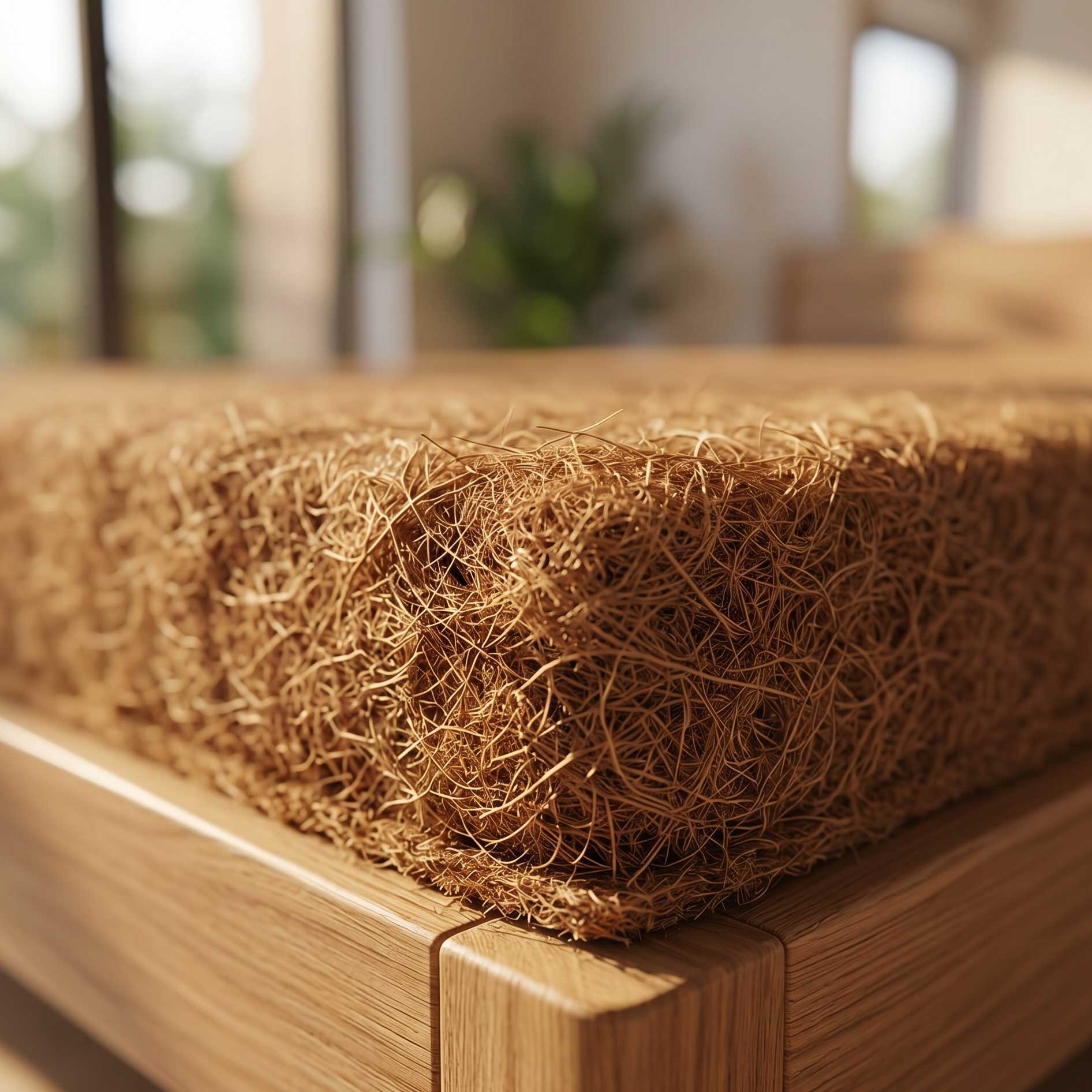
Box springs are never a compatible foundation for a 100% latex mattress, since they flex in ways latex isn't built to handle. This isn't a pass or fail situation for older or non-slatted frames, though. A Coir Bunkie Board sits on top of existing slats or a solid platform and closes any gaps, bringing most frames up to the standard a latex mattress needs without requiring a full frame replacement.
Rotation and Care Habits That Add Years
Rotating a latex mattress head to foot every 3 to 6 months distributes wear evenly across the surface rather than letting one section absorb the same pressure points night after night. On modular builds, flipping and rotating the top comfort and transition layers at the same time makes an even bigger difference, since those are the layers doing most of the work of contouring to the body.
Keeping the mattress dry and out of direct sunlight for extended periods matters too. UV exposure degrades latex over time, and moisture is one of the few things that can genuinely damage the material rather than just wear it down gradually.
What Actually Shortens a Latex Mattress's Life
Most of what cuts a latex mattress's lifespan short comes down to a handful of avoidable conditions rather than a flaw in the material itself: an improper foundation, prolonged sun exposure, moisture damage, or simply never rotating the mattress at all. None of these show up as a sudden failure. They show up as premature softening in one spot years before the rest of the mattress needs attention.
For anyone whose firmness needs change over that 15 to 20 year window, a layer exchange program on modular builds means an individual transition or comfort layer can be swapped out rather than replacing the entire mattress, which extends the useful life of the base layer considerably further.
Frequently Asked Questions
How long does an organic latex mattress last compared to memory foam?
An organic latex mattress typically lasts 15 to 25 years with proper care, compared with roughly 7 to 10 years for a conventional memory foam mattress. The difference comes down to how each material behaves under repeated compression. Latex is elastic and returns to shape, while memory foam gradually collapses at a cellular level, which is why foam mattresses tend to develop permanent body impressions much sooner.
Does the type of bed frame affect how long a latex mattress lasts?
Yes, significantly. Latex needs slats spaced no more than about 2.5 to 3 inches apart to support the material evenly, and box springs are never a compatible foundation for a 100% latex mattress. A frame that doesn't meet that standard can cause the latex to sink and wear unevenly over time. A Coir Bunkie Board closes that gap on most existing frames without needing a full replacement.
Can body impressions in a latex mattress be fixed without replacing it?
Often, yes, depending on the mattress. On modular latex builds, individual comfort or transition layers can be replaced through a layer exchange program rather than replacing the entire mattress, which addresses uneven wear directly where it's occurring. This is one reason modular construction tends to extend a latex mattress's practical lifespan well beyond a single-piece build.
ILD and material quality are a starting point. Sleep Majestic works through foundation, rotation, and layer configuration during a fitting, in person or by phone, at 604-731-8226.