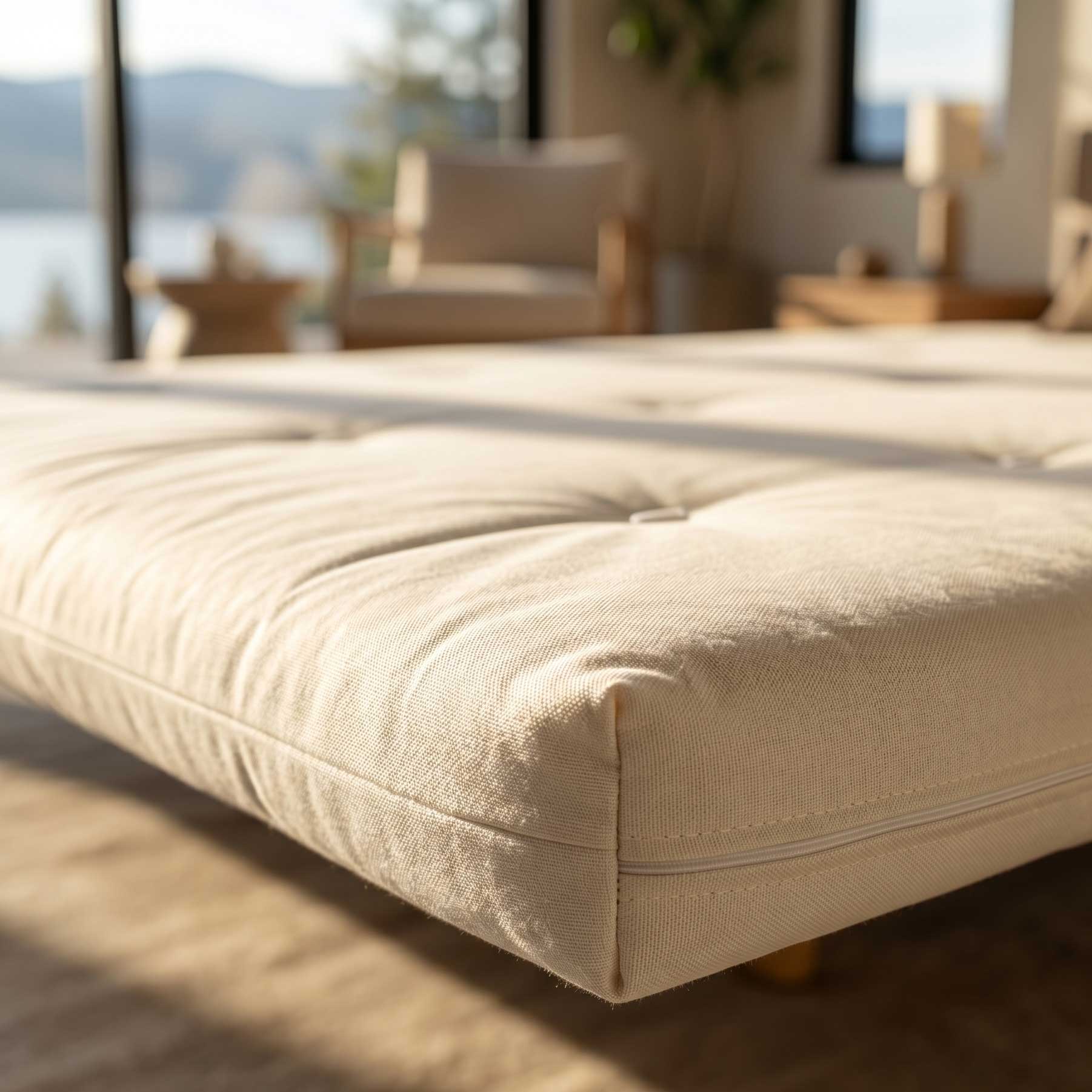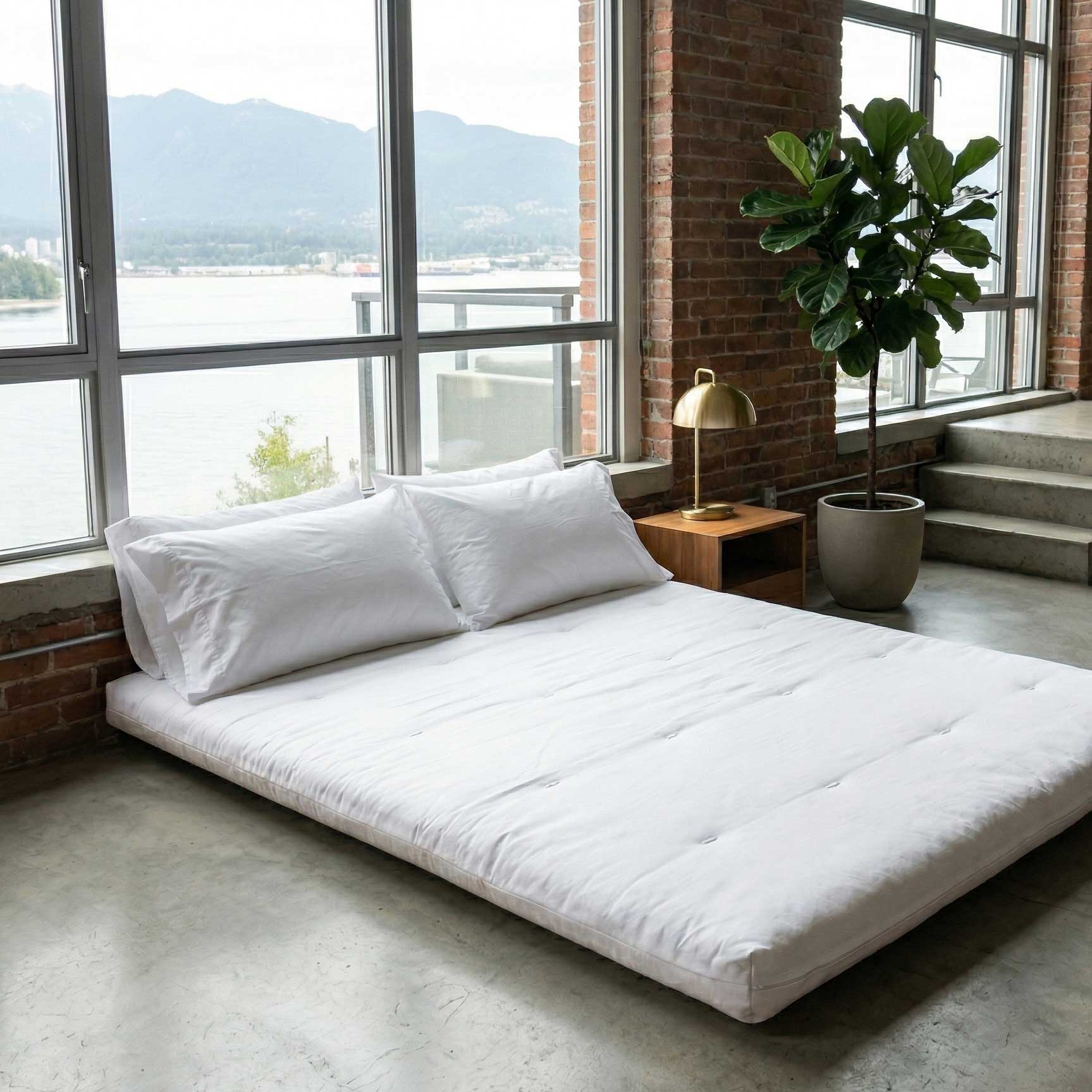

Cotton futon mattresses compress. That's not a defect — it's the nature of the material. Raw cotton batting under sustained weight will consolidate over time, and once it does, that change is mostly permanent. How quickly compression happens, how evenly it happens, and how much it affects the sleeping experience are all things that care habits can influence significantly.
Most of what makes a cotton futon mattress last well comes down to three things: rotation, foundation, and moisture. None of it is complicated, but getting all three right from the start makes a real difference to how the mattress performs years in.
Why Cotton Compresses and What That Means
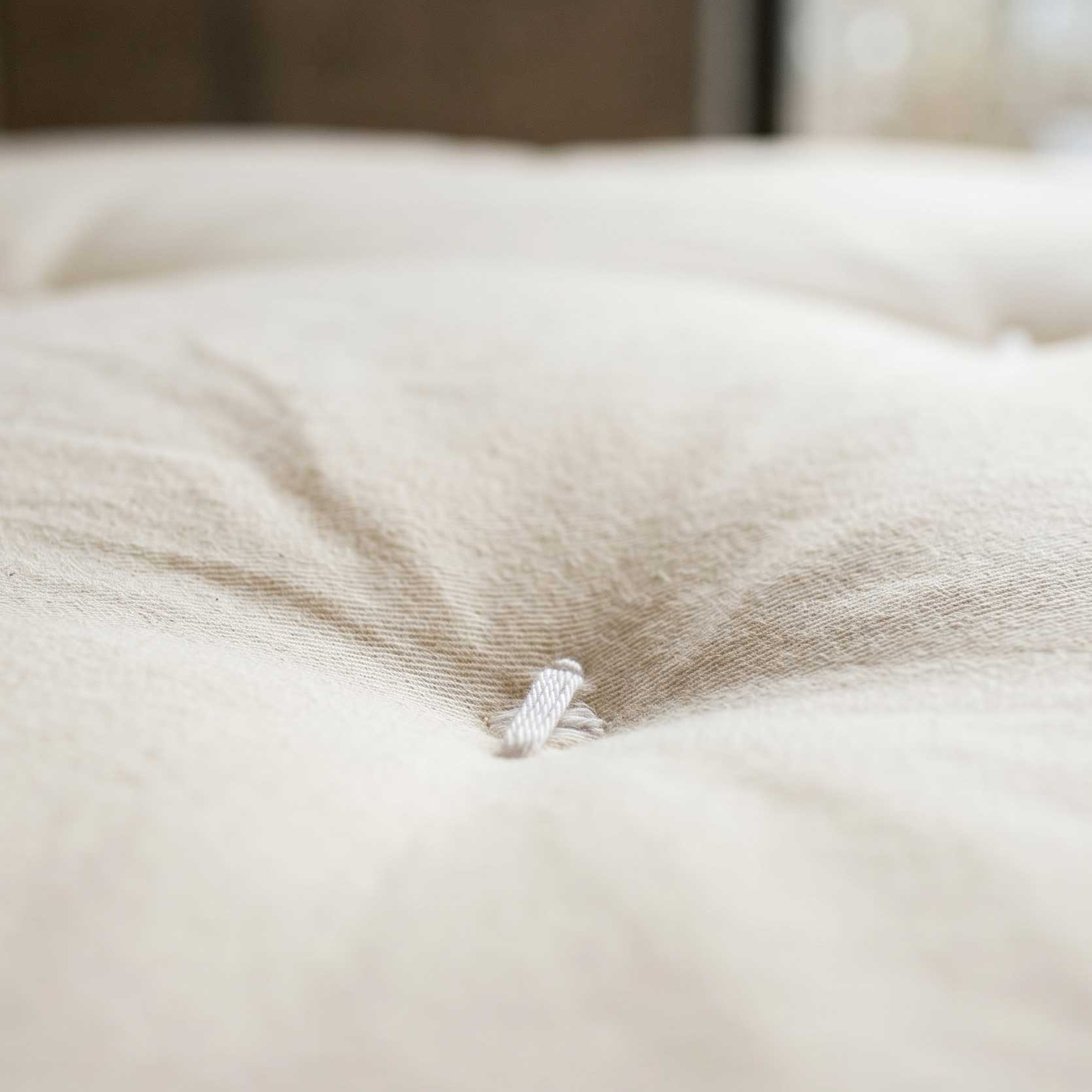
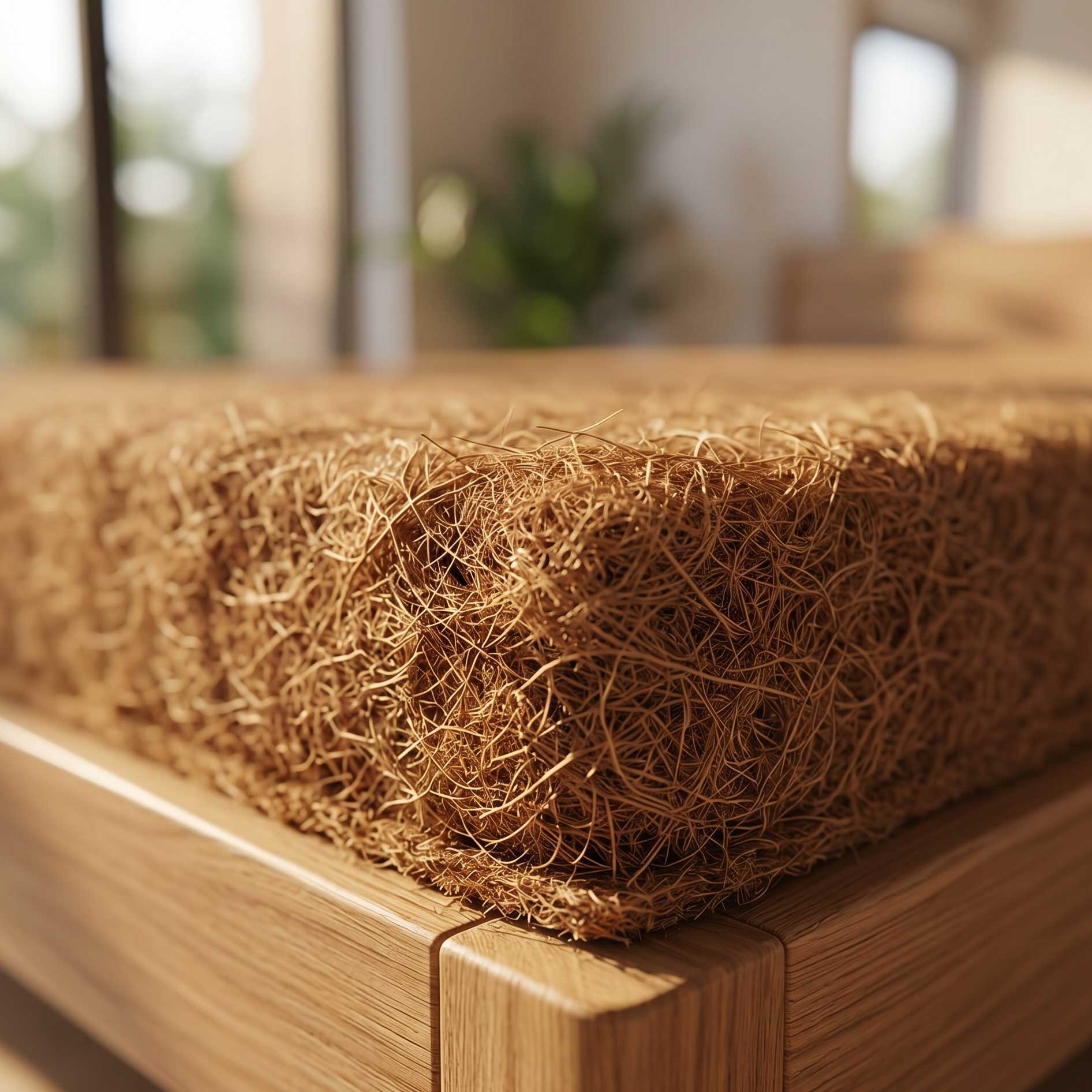
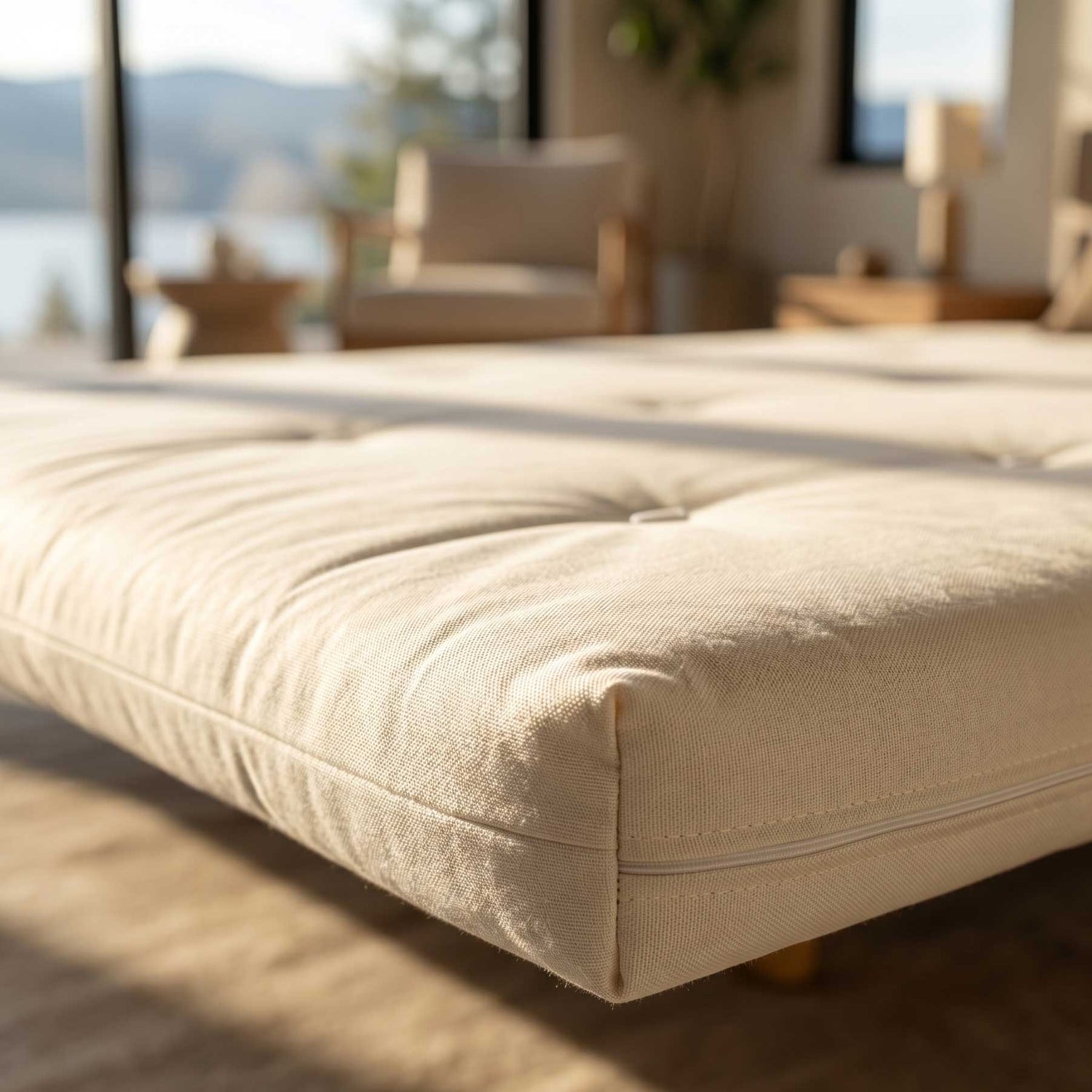
The filling in a cotton futon mattress is raw cotton batting — layers of carded cotton fibre that provide loft and cushion. Cotton batting compresses under weight because the fibres don't spring back the way latex does. Pressure applied repeatedly in the same area gradually consolidates the batting, reducing thickness and changing the feel in that zone.
This is normal and expected. It shows up as body impressions in the areas where you sleep most regularly. The goal of care is not to prevent compression entirely but to manage it so it happens evenly across the whole mattress rather than concentrating in one spot. Even compression means a flatter mattress over time; uneven compression means zones that feel noticeably different from each other.
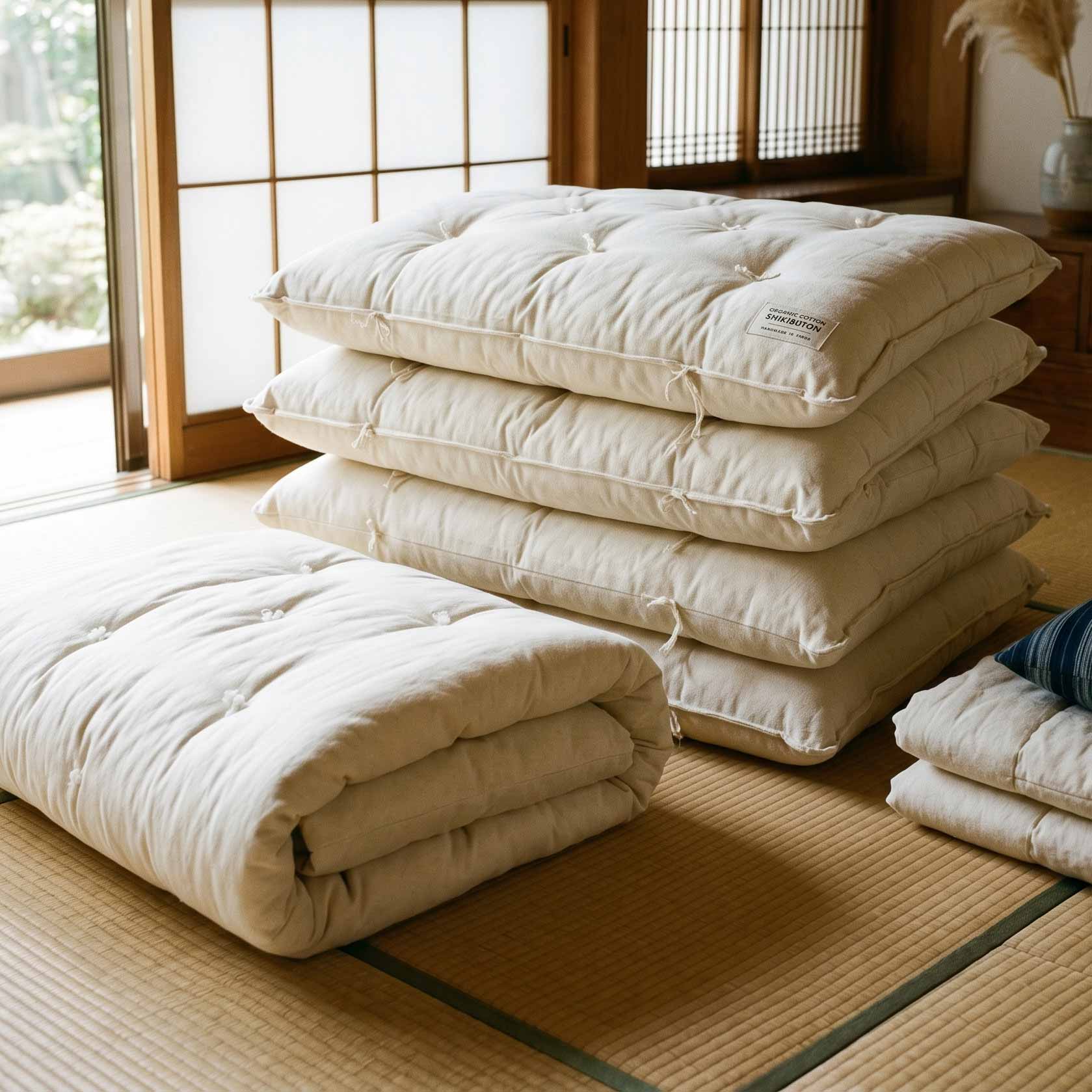
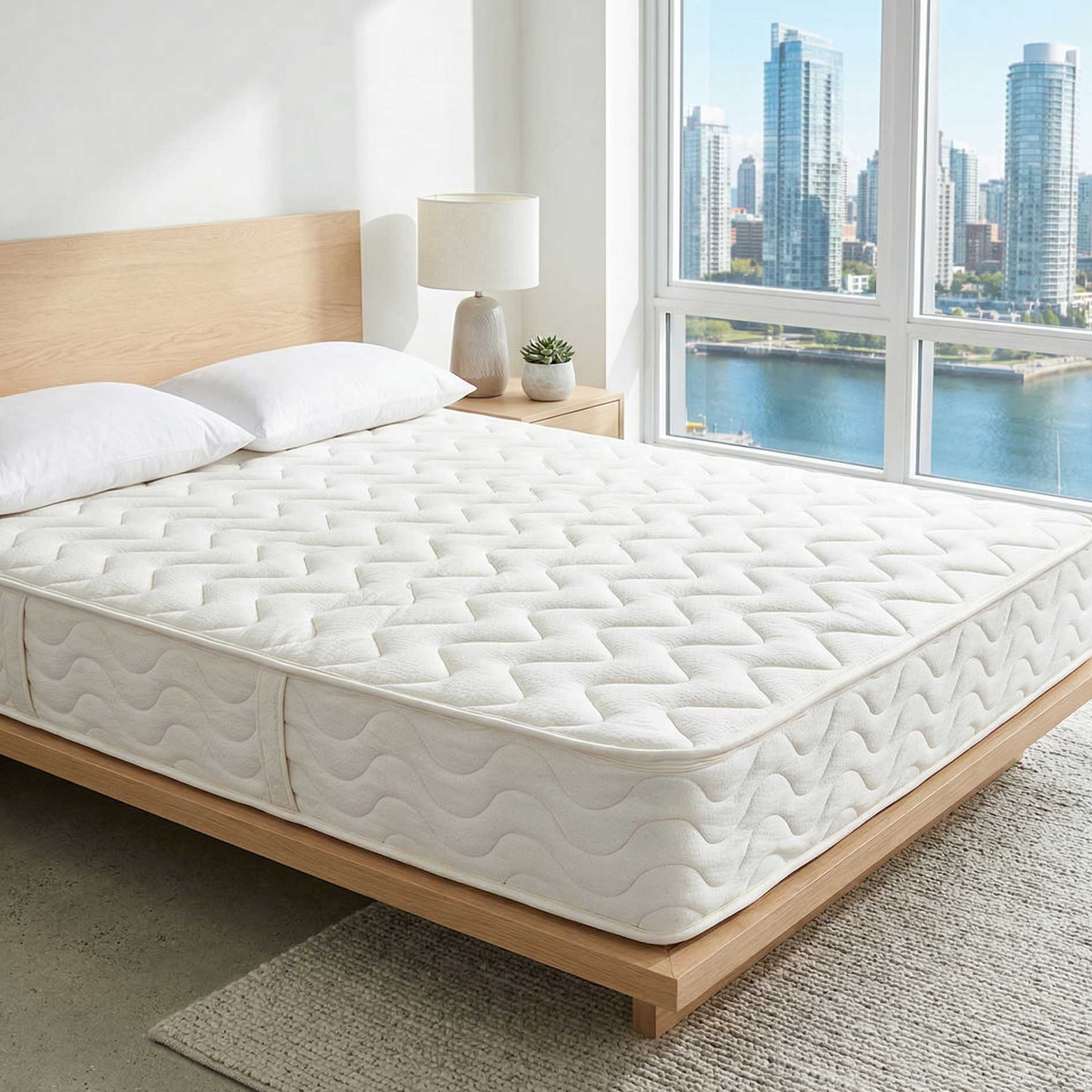
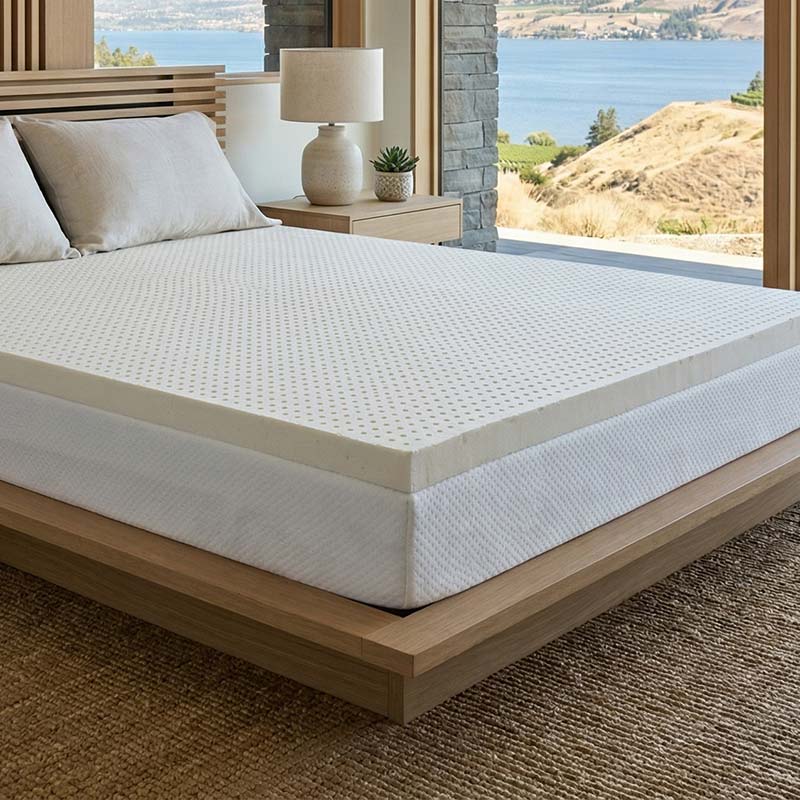
The Standard Futon and Essential Futon are cotton-and-foam constructions where this process applies most directly. The Eurotop Futon has a GOLS-certified Dunlop latex comfort layer on top of the cotton batting, which adds resilience to the sleep surface. Latex responds to pressure differently from cotton, maintaining its surface feel longer and recovering more fully between uses. The batting underneath still compresses over time, but the latex layer moderates how quickly that change becomes noticeable at the surface.
Flip and Rotate: How Often and What It Means
The standard recommendation for cotton futon mattresses is to flip and rotate monthly, at minimum. For a new mattress in its first few months of regular use, doing this more frequently — every two to three weeks — helps establish even compression patterns before the batting has a chance to set in any one configuration.
"Flip and rotate" means two things: flipping the mattress over so the side that was facing up is now facing down, and rotating it end-to-end so the area that was under your head is now under your feet. Doing both distributes wear in two axes rather than one. A mattress that's only rotated but never flipped will still develop uneven compression on the consistently upper side.
After the first year, monthly rotation and flipping is sufficient for most use patterns. If the futon is used daily as a primary sleeping surface, staying closer to the more frequent schedule keeps the batting more consistent. If it's used occasionally as a guest mattress, the schedule can be less strict.
Foundation Requirements and Why They Matter
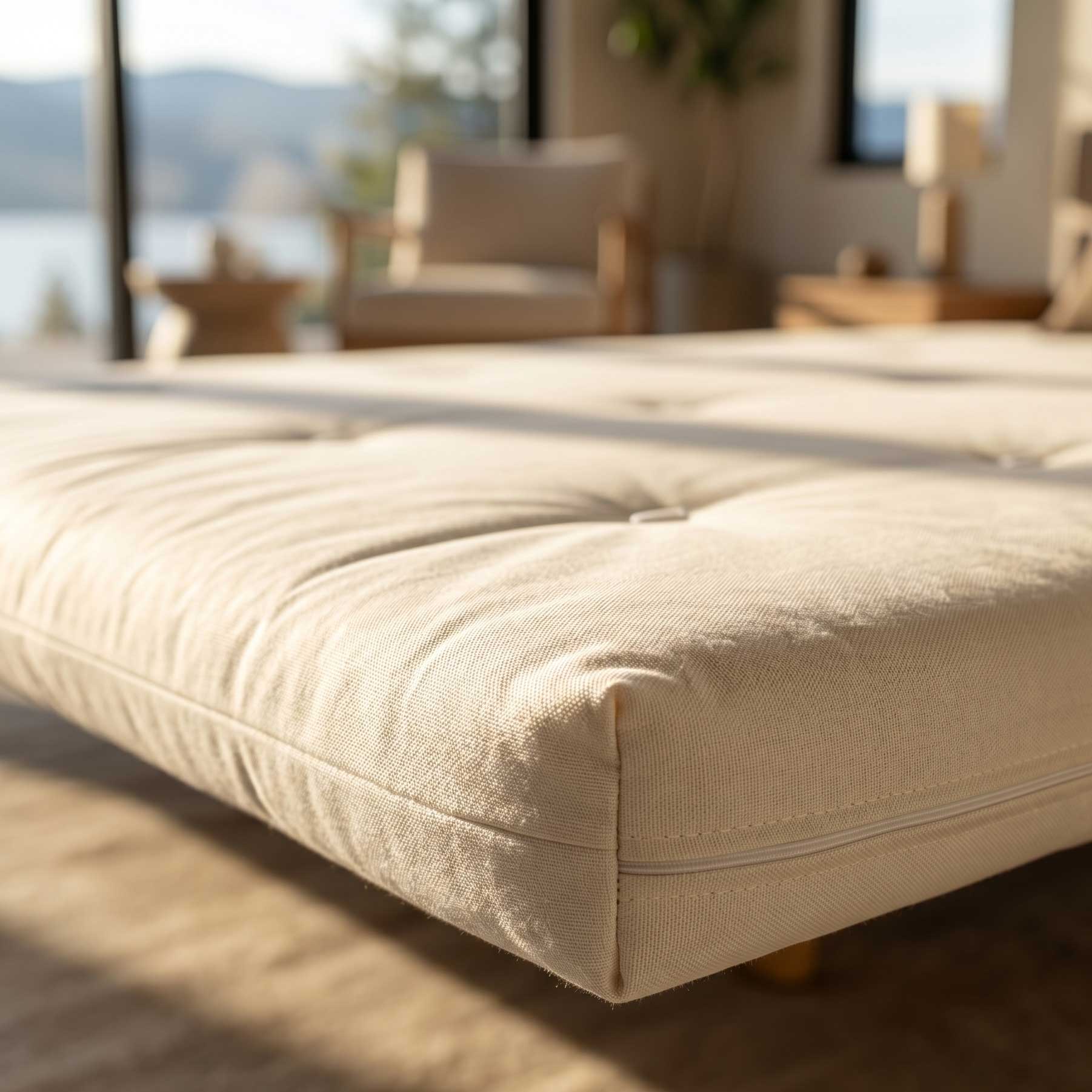
A cotton futon mattress must be used on a slatted surface. This is a care requirement, not a preference. Solid platforms and floors restrict airflow underneath the mattress, which allows moisture to accumulate in the batting. Cotton absorbs moisture readily and releases it slowly. A damp batting environment is where mould and mildew develop, and once that happens the mattress is compromised in a way that rotation cannot fix.
The slats need to be close enough together to provide consistent support. Wide gaps allow the batting to sag between slats under weight, which creates uneven compression patterns regardless of how diligently you rotate. A futon frame with slats at roughly 3-4 inch spacing, or a slatted bed frame, provides the right combination of support and airflow.
If the futon is used on the floor for any period, taking it off the floor each night and standing it upright or leaning it against a wall allows the moisture that accumulated during the night to dissipate. Floor use without that nightly airing is not sustainable for a cotton futon mattress.
Moisture: The Biggest Risk to Longevity
Moisture is the primary threat to cotton futon mattress longevity. Cotton batting is a natural moisture absorber. It picks up humidity from the air, from the body overnight, and from the surface it's resting on. In a well-ventilated setup with a slatted foundation, that moisture moves through and out of the batting. In a poorly ventilated setup, it accumulates.
A breathable mattress protector adds a useful barrier against spills and perspiration, particularly for mattresses used daily. The protector should be breathable rather than plastic-backed, which would trap moisture rather than allowing it to dissipate.
Airing the mattress in dry conditions periodically — standing it upright near an open window, or outside on a dry day — is a simple preventive measure, particularly after any sustained period of high use.
What Normal Compression Looks Like
After regular use over a few years, a well-cared-for cotton futon mattress will be noticeably flatter than it was new. The loft that comes from fresh batting consolidates as the fibres bed in. This is expected and is not a sign of a failing mattress. What matters is whether the compression is even across the surface and whether the mattress still provides the support needed.
Uneven compression, with pronounced dips in specific zones, is the sign that rotation has not been consistent enough. It can sometimes be partially addressed by resuming a more aggressive rotation schedule, which redistributes some of the batting over time, though well-set body impressions don't fully recover.
The 2-year warranty on futon mattresses covers defects in materials and workmanship, including zippers, seams, and tufts. Body impressions of any size are considered normal wear and are not covered. A futon mattress that compresses normally is not a product that has failed — it's a cotton product doing what cotton does under sustained use.
FAQs
How often should I flip and rotate a cotton futon mattress to prevent uneven compression?
Cotton futon mattresses should be flipped and rotated at least once a month, with more frequent rotation every two to three weeks recommended during the first few months of use. Flipping means turning the mattress over so the top surface becomes the bottom; rotating means turning it end-to-end. Doing both distributes compression in two directions. For daily-use futon mattresses, monthly rotation is the minimum to maintain even wear. For occasional-use guest mattresses, the schedule can be less strict without significant impact.
Can a cotton futon mattress be used directly on the floor, or does it need a slatted foundation?
A cotton futon mattress needs a slatted foundation for everyday use. Using it directly on the floor restricts airflow underneath, which allows moisture from the batting to accumulate rather than dissipate. Cotton absorbs moisture readily, and a consistently damp batting environment is where mould and mildew develop. If floor use is occasional or temporary, taking the mattress off the floor each night and standing it upright to air out reduces the moisture risk. Ongoing floor use without nightly airing is not suitable for a cotton futon mattress.
Does the Eurotop Futon need the same care routine as a standard cotton futon mattress?
The Eurotop Futon requires the same fundamental care: regular flipping and rotation, a slatted foundation, and keeping the mattress dry. The key difference is that its GOLS-certified Dunlop latex comfort layer adds resilience to the sleep surface. Latex recovers more fully between uses than cotton batting and maintains its surface feel longer. The cotton batting underneath still benefits from regular rotation, but the latex layer moderates how quickly compression at the surface becomes noticeable. Foundation and moisture requirements are identical to a standard cotton futon mattress.
Sleep Majestic carries the full futon mattress range in Delta, BC, including full-size models to try in the showroom. Book a fitting to see the options in person - Book a Mattress Fitting - or call 604-731-8226.