

If you've spent any time researching latex mattresses, you've probably come across ILD. It appears in product specs, comparison guides, and manufacturer literature, often without much explanation. Numbers like 19, 24, 32, and 44 are listed next to terms like Soft, Medium, Firm, and Extra-Firm, and the assumption seems to be that the relationship is obvious.
It isn't quite. ILD measures something specific, and understanding what it measures — and what it doesn't — changes how you use the number to make a decision.
This post explains what ILD is, how it applies differently to Dunlop and Talalay latex, and how to use sleep position alongside ILD to choose the right configuration.
What ILD Actually Measures
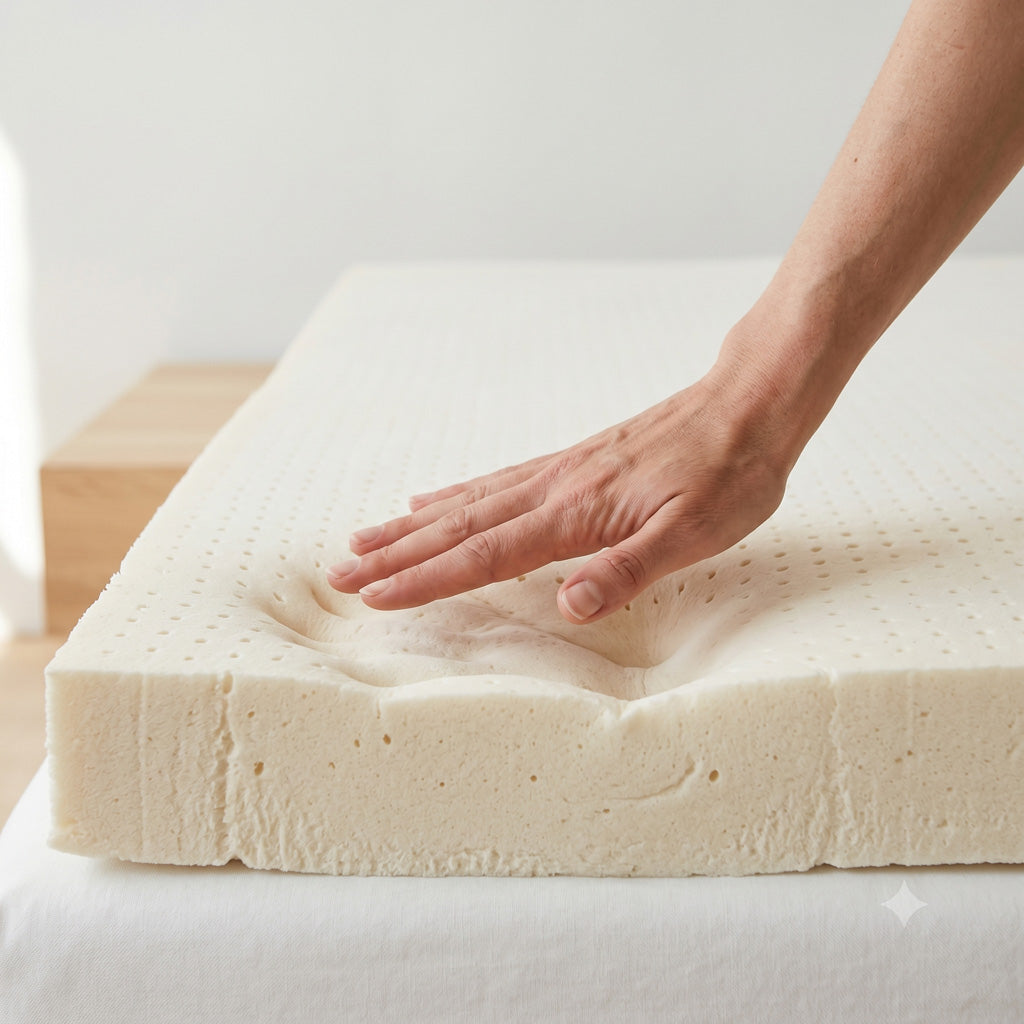
ILD stands for Indentation Load Deflection. It's a standardised measurement of how much force — in pounds — is required to compress a fifty-square-inch circular disc into a four-inch-thick foam sample by exactly twenty-five percent.
So a 19 ILD layer requires nineteen pounds of force to compress it one inch. A 44 ILD layer requires forty-four pounds. Higher number means more resistance — which is what most people mean when they say firmer.
The test was developed for polyurethane foam and has been applied to latex as a common reference point. It's useful, but it's not the whole story, because two materials can have the same ILD number and still feel meaningfully different under a sleeping body.
Why Dunlop and Talalay Feel Different at the Same ILD
Dunlop and Talalay are both made from natural rubber sap, but the manufacturing process produces different cell structures. Dunlop is processed in a single pour and settles during curing, which creates a denser material with a more supportive feel throughout. Talalay goes through a vacuum-expansion and flash-freeze step that creates a more open, airy cell structure.
The practical result is that Dunlop tends to feel more supportive at the same ILD. Talalay at the same number tends to feel softer and more conforming, with a lighter quality under the body.
This is why Sleep Majestic describes Dunlop as having a more supportive feel and Talalay as having a lighter feel — not because one is better, but because they do different things. A 19 ILD Talalay comfort layer and a 19 ILD Dunlop comfort layer are not interchangeable recommendations, even though the number is the same.
The Firmness Options Sleep Majestic Uses
Sleep Majestic uses named firmness levels that correspond to ILD ranges. Here's how the Dunlop options map out, from softest to firmest.
Soft Dunlop is the most conforming option in the Dunlop range. It's designed as a comfort layer for side sleepers who need pressure relief at the shoulder and hip. It's not suitable as a base layer — at soft densities, Dunlop needs a firmer layer beneath it for adequate overall support.
Medium Dunlop sits in the centre of the range and works well both as a comfort layer for back sleepers and as a transition layer in multi-layer builds. It's the most versatile option and the most common starting point for customers who are unsure where to begin.
Firm Dunlop is a common base layer choice and works as a comfort layer for back sleepers who prefer a firmer feel. It has enough density to carry structural load across the full mattress width.
Extra-Firm Dunlop is specifically recommended for stomach sleepers. Stomach sleeping requires a surface firm enough to prevent the pelvis from sinking into the mattress, which would force the lumbar spine into an arched position. Extra-Firm Dunlop is the configuration Sleep Majestic specifically recommends for this position.
For Talalay, Sleep Majestic carries Soft options — Original Talalay and Natural Talalay — as comfort layers. Natural Talalay uses fully natural latex and is slightly firmer than Original Talalay, which uses a natural and synthetic blend. The blend in Original Talalay creates a slightly softer, more consistent feel. Both are softer than Soft Dunlop at the same nominal ILD, because of the cell structure difference described above.
How Sleep Position Changes the Calculation
ILD is only useful in context. The right firmness depends on where the body puts pressure and what the mattress needs to do at those points.
Side sleepers put significant pressure through the shoulder and hip. Those contact points need enough surface softness to allow some compression — enough for the shoulder to drop in slightly rather than being held at the surface. Without that, the shoulder is pushed inward and the spine curves laterally. For side sleepers, Sleep Majestic typically recommends a Soft Talalay layer or a multi-layer Dunlop system with a Soft Dunlop comfort layer.
Back sleepers distribute weight more evenly along the full length of the spine. The lumbar region needs support — not so soft that it sinks, not so firm that the natural curve of the lower back is unsupported. A 100% organic Dunlop mattress in Medium or Firm is the most common recommendation for back sleepers.
Stomach sleepers are the most constrained by mattress choice. In stomach position, a surface that allows the hips and pelvis to sink puts the lumbar spine into hyperextension. The only configuration Sleep Majestic specifically recommends for consistent stomach sleeping is an Extra-Firm Dunlop core.
Combination sleepers — people who move between back and side during the night — need a surface that handles both positions reasonably well. A multi-layer Dunlop build with a Medium comfort layer tends to work across positions without being optimised for either.
Why the Total Build Matters More Than One Layer's ILD
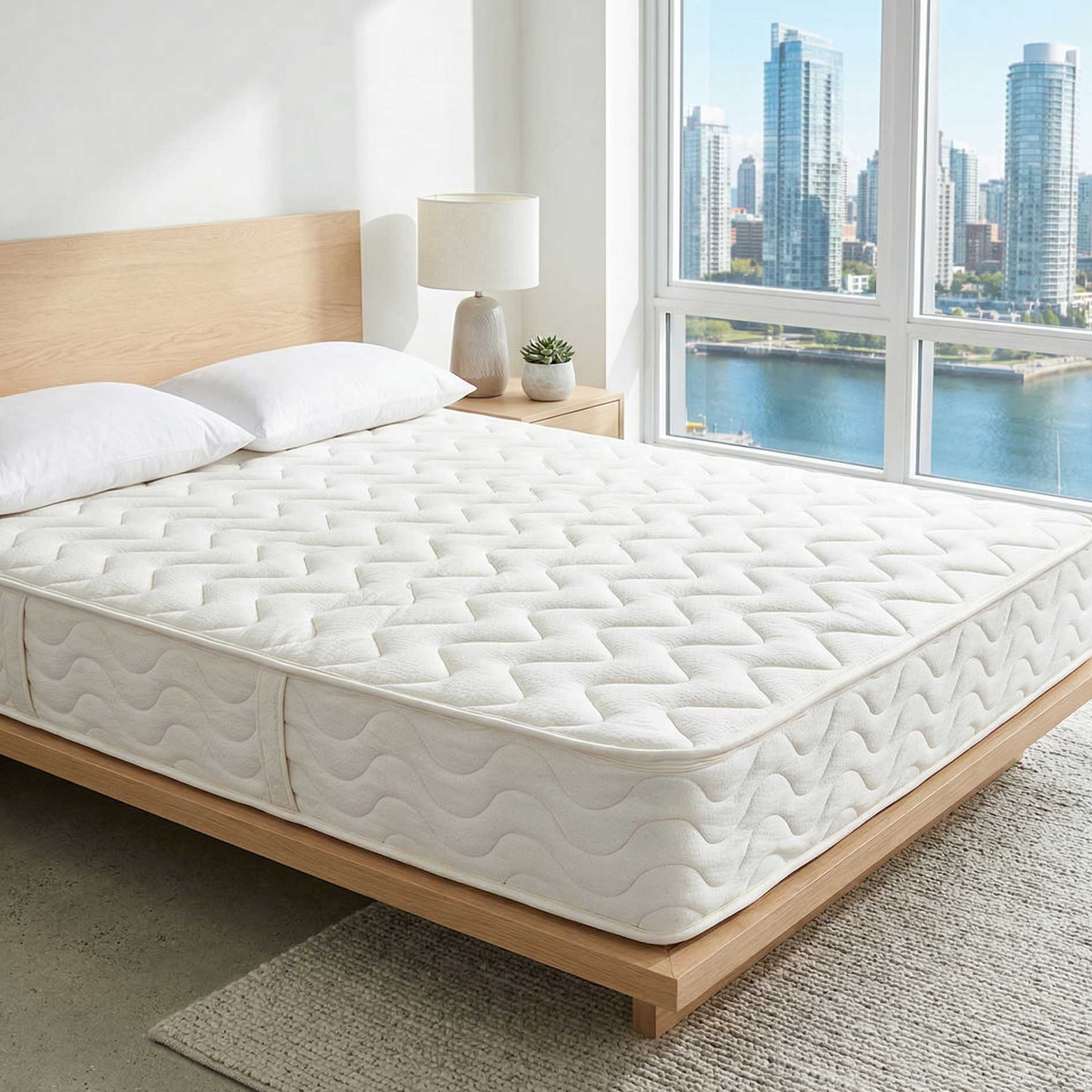
A mattress is not a single layer. The 10" Organic Dunlop Latex Mattress from Sleep Majestic is built from five layers, each with its own ILD. The comfort layer is what the body contacts first and where firmness is most directly felt. But the transition and base layers shape how the comfort layer behaves.
A Soft comfort layer on a very firm base gives a different result than the same Soft layer on a Medium base. The base layers provide the structural resistance that prevents the whole mattress from feeling like it bottoms out. This is why Sleep Majestic works through the whole configuration during a fitting, rather than just recommending a single firmness number.
The layer exchange program exists specifically for situations where the initial choice, made before sleeping on the mattress at home, turns out to be slightly off. Only the comfort or transition layer gets exchanged — not the whole mattress. The customer returns the original layer and Sleep Majestic produces and ships the replacement.
Frequently Asked Questions
Is a higher ILD number always firmer?
Yes, within the same material. ILD measures resistance to compression, so a higher number means more force is required to compress the layer by the same amount. The caveat is that this comparison only holds within the same material type. A 28 ILD Talalay layer will feel softer than a 28 ILD Dunlop layer because the cell structures are different, even though the number is the same. Always compare ILD within the same latex type.
How does the ILD of a latex topper compare to a full mattress layer?
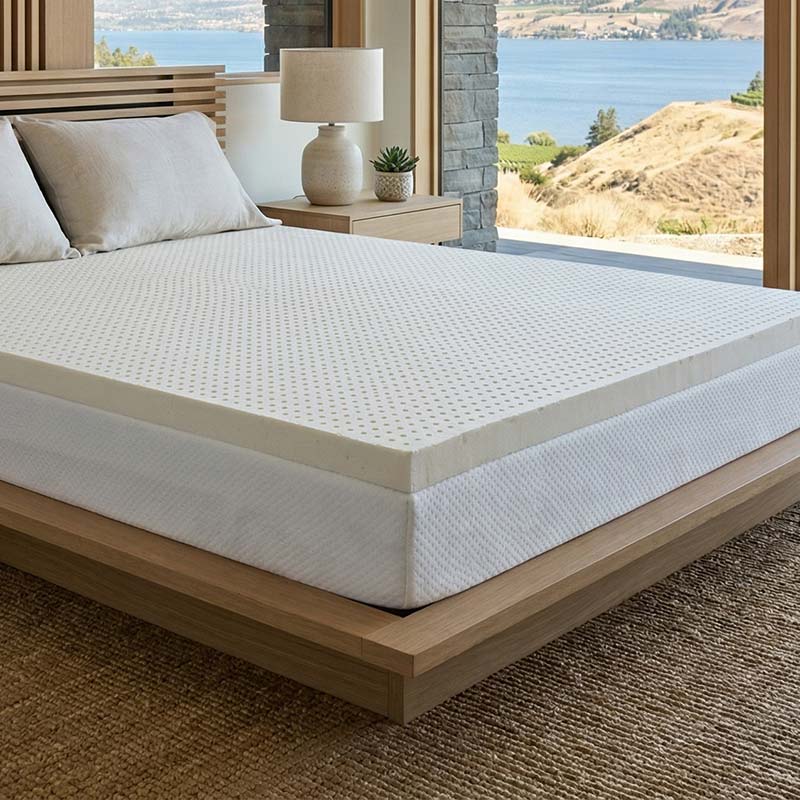
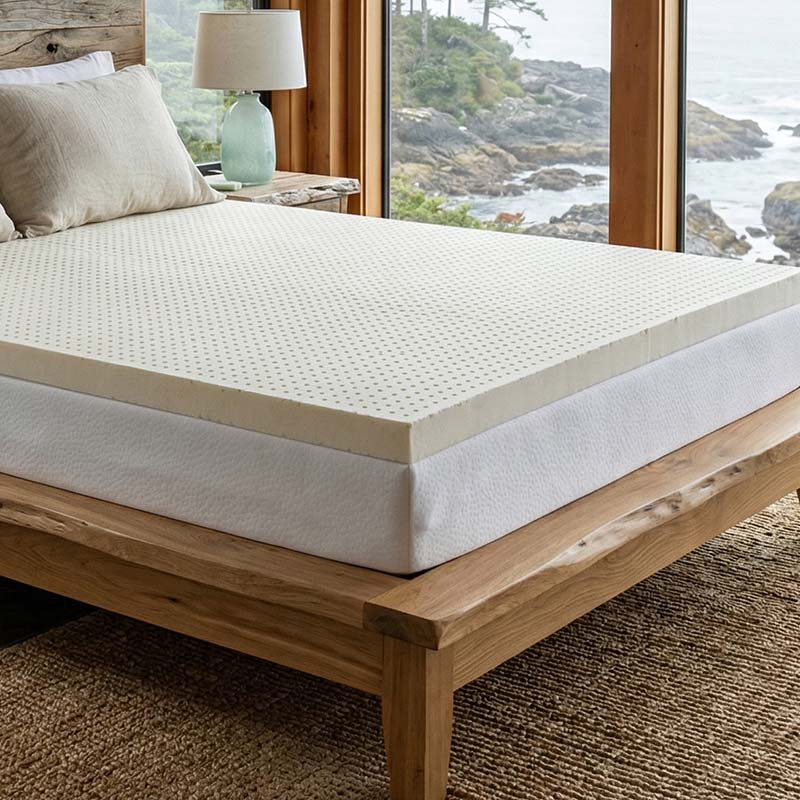
The ILD of a topper is measured the same way as a mattress layer, but the feel differs because a topper sits on top of an existing mattress. The existing mattress provides the base resistance, so a Soft Dunlop topper on a firm mattress will feel firmer than the same topper on a medium mattress. Sleep Majestic's general guidance is that the firmer the existing mattress, the firmer the topper that works well on it. The Organic Dunlop Latex Topper is available in Soft, Medium, and Firm in both 2" and 3" thickness.
What ILD should a first-time latex mattress buyer start with?
The starting point depends on sleep position. Side sleepers typically start with a Soft Talalay or Soft Dunlop comfort layer. Back sleepers do well on a Medium or Firm Dunlop. Stomach sleepers need Extra-Firm Dunlop. For anyone who is genuinely unsure, a fitting session — in person at the Delta showroom or by phone — is the most reliable way to work through the options before ordering. The layer exchange program is also there if the initial choice needs adjustment after sleeping on the mattress at home.
ILD is a starting point. Sleep Majestic works through the full configuration — layer by layer, by sleep position — during a fitting. Book in person or by phone here: Majestic Mattress Bookings