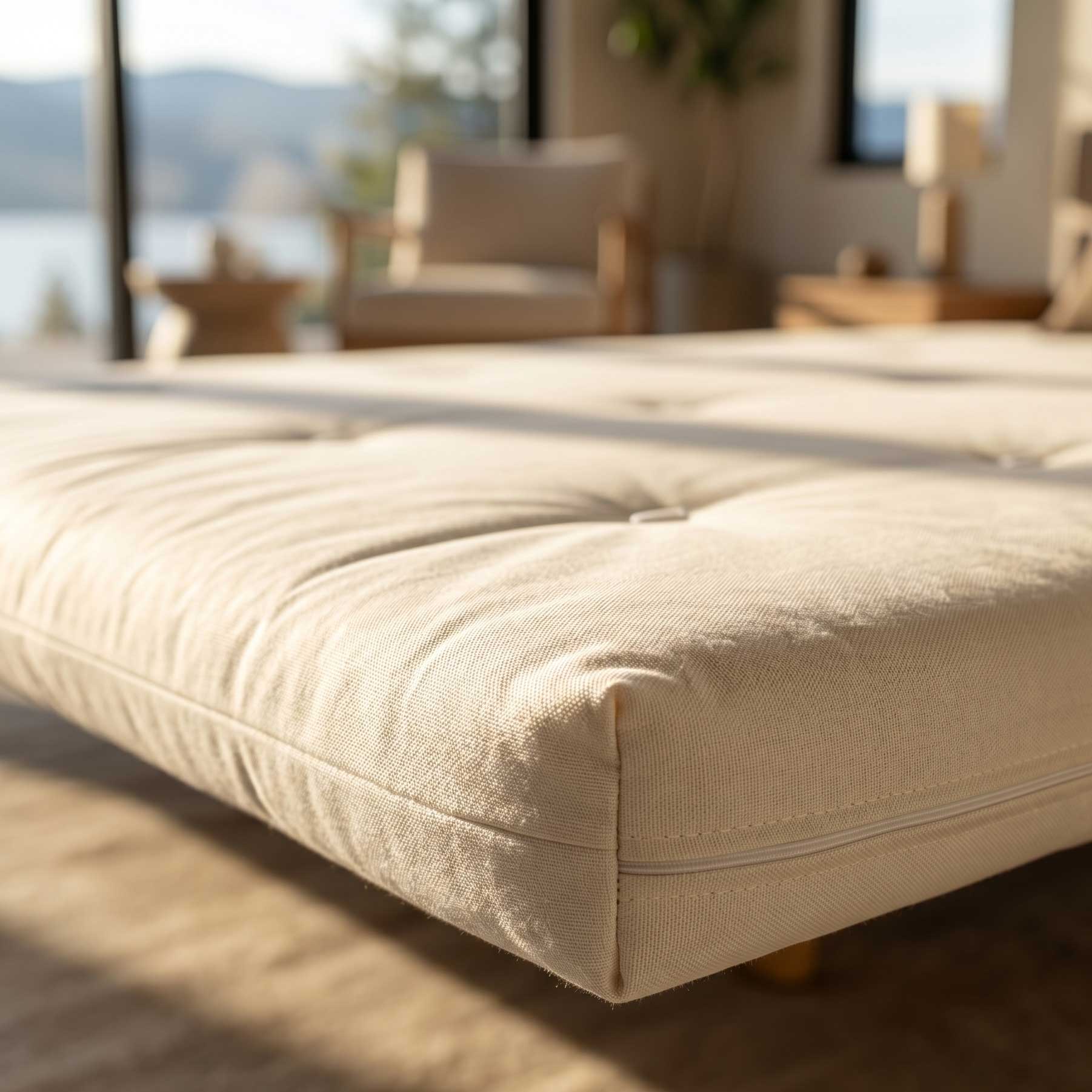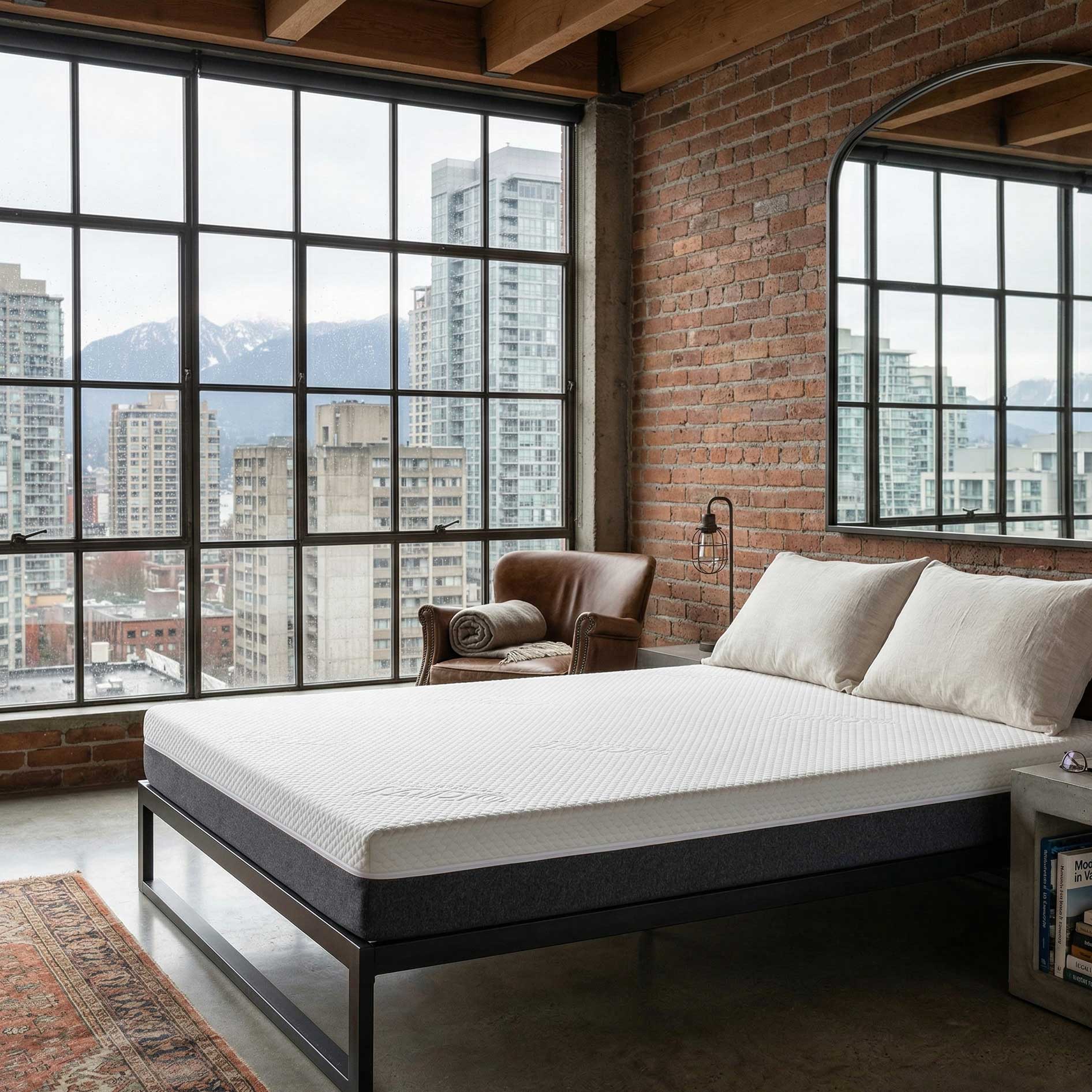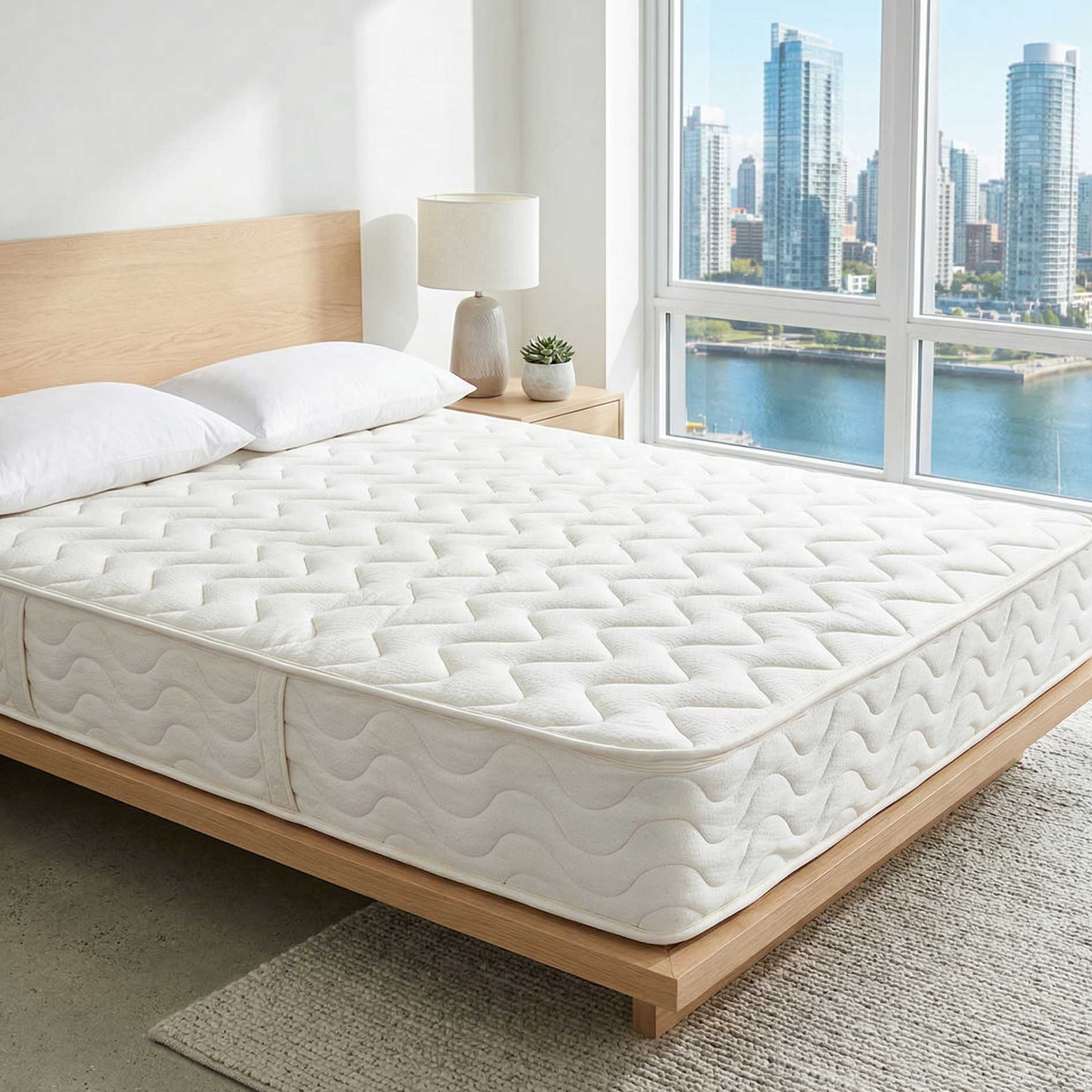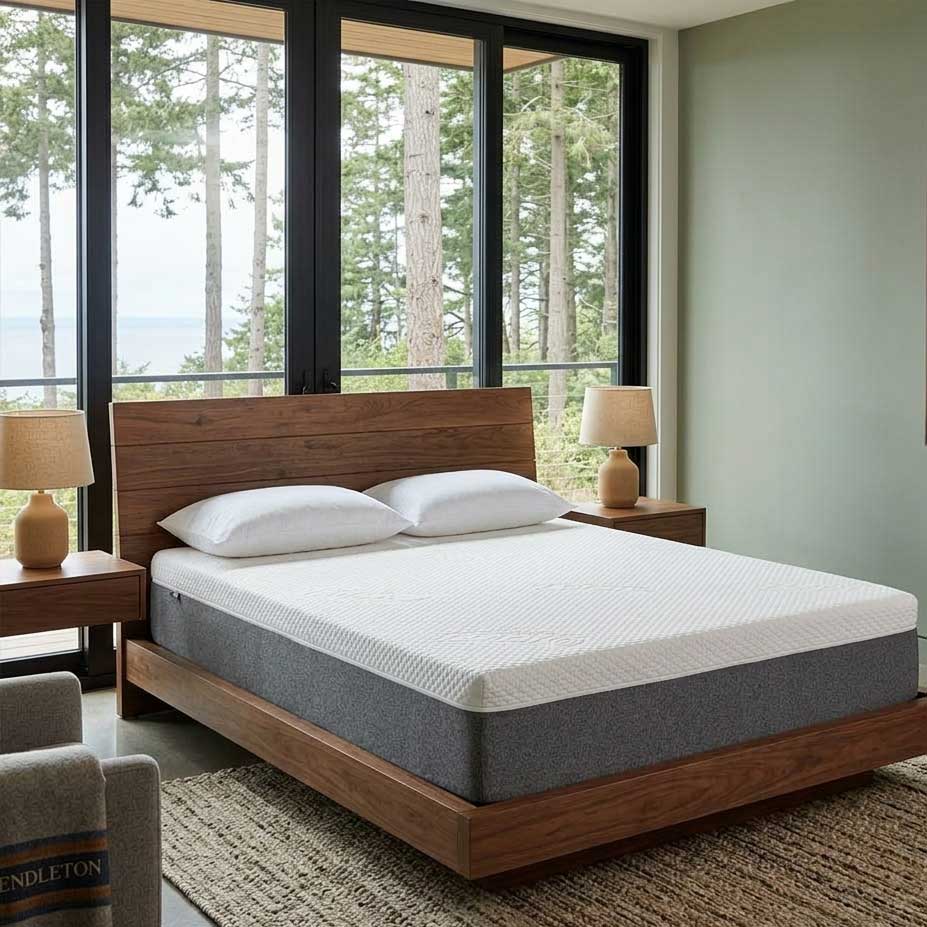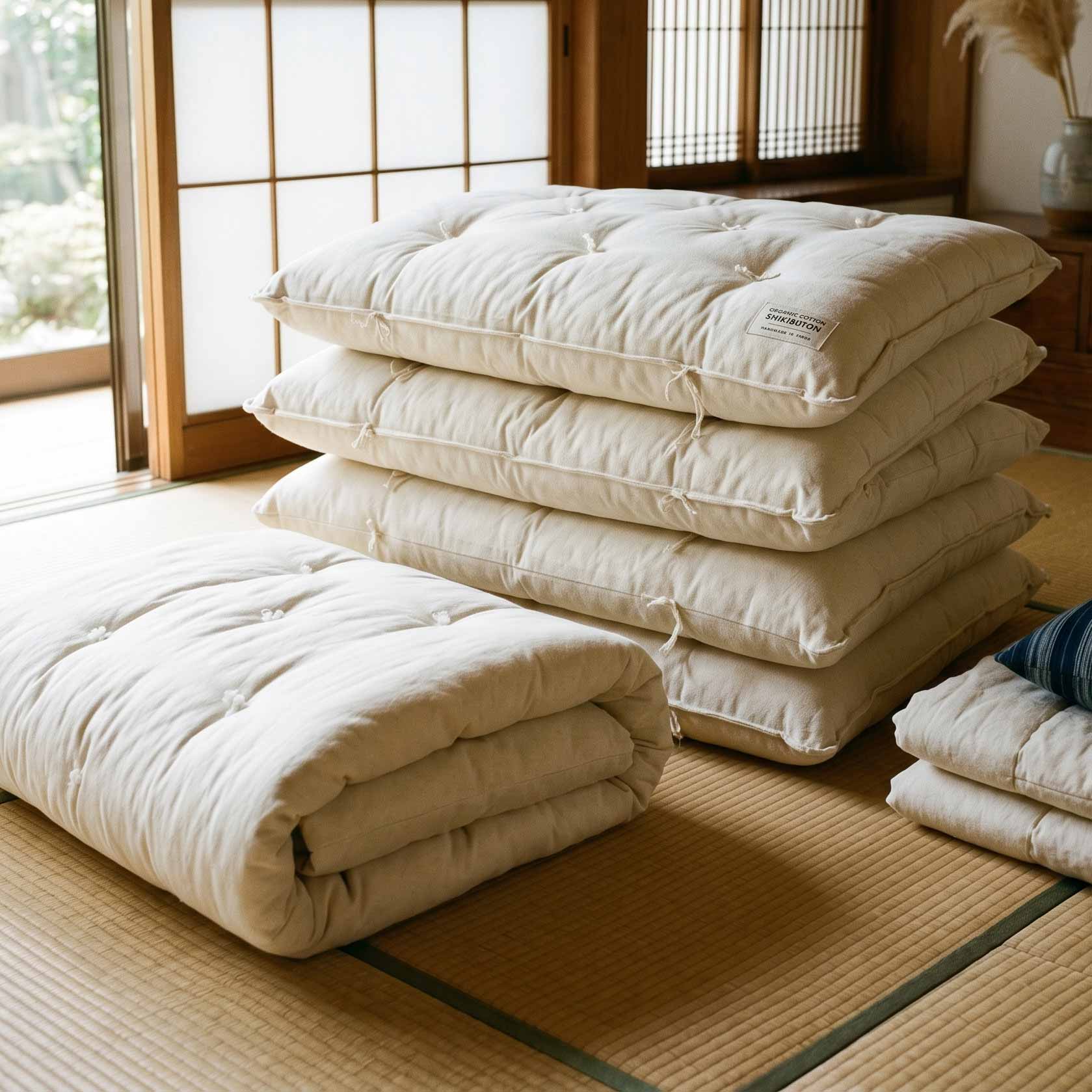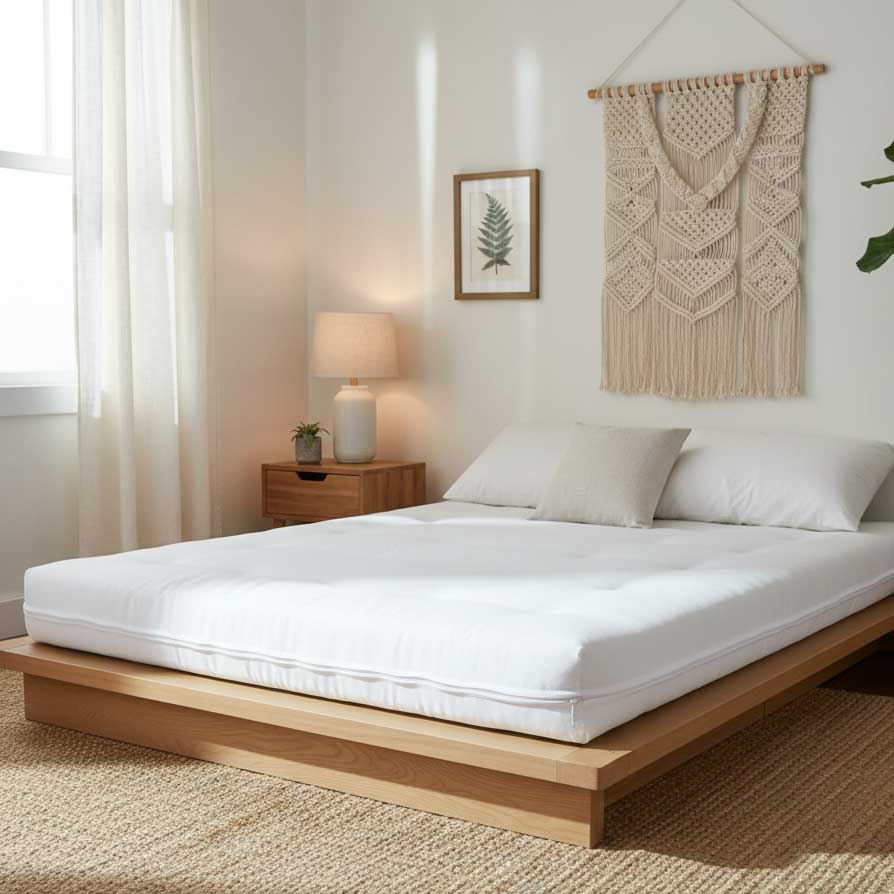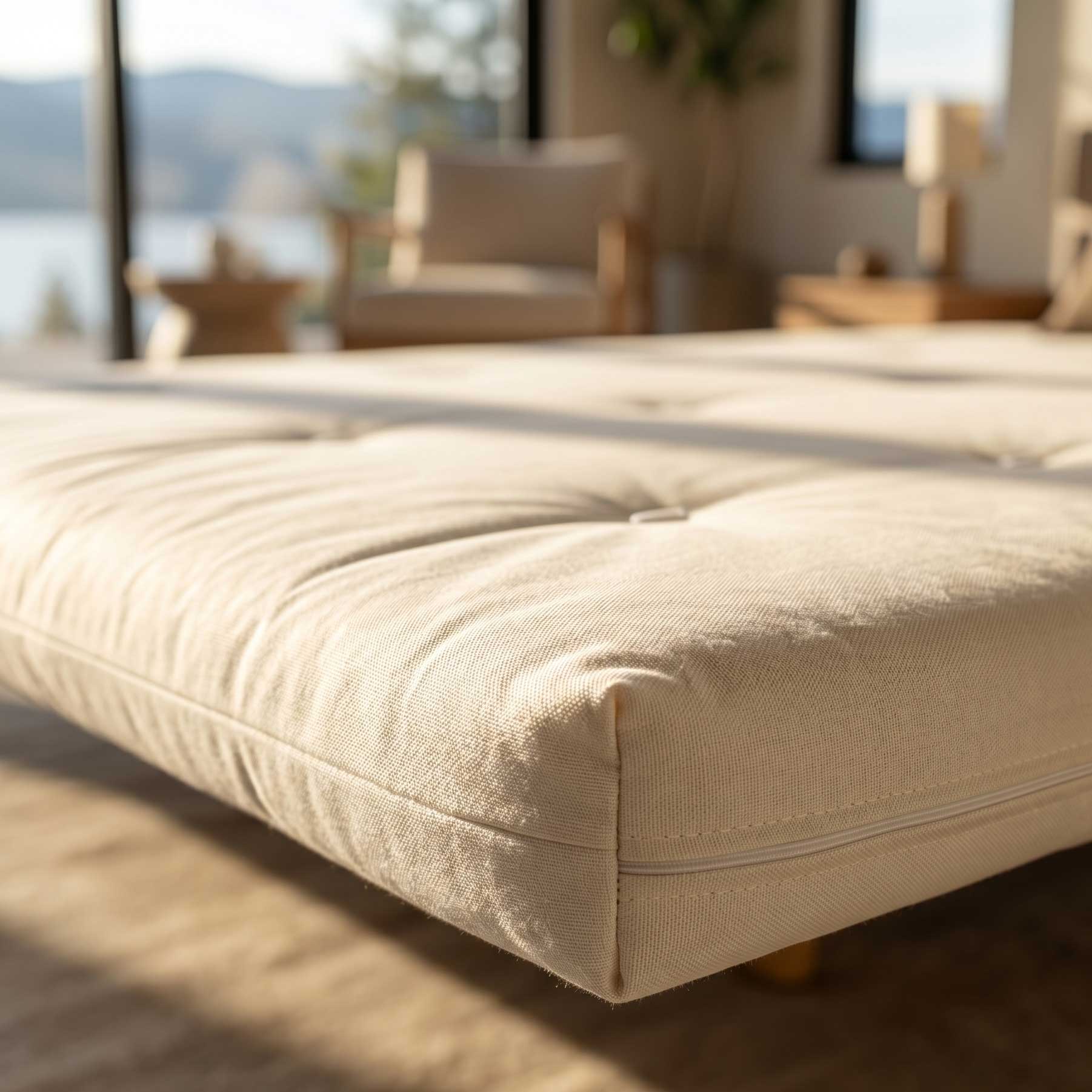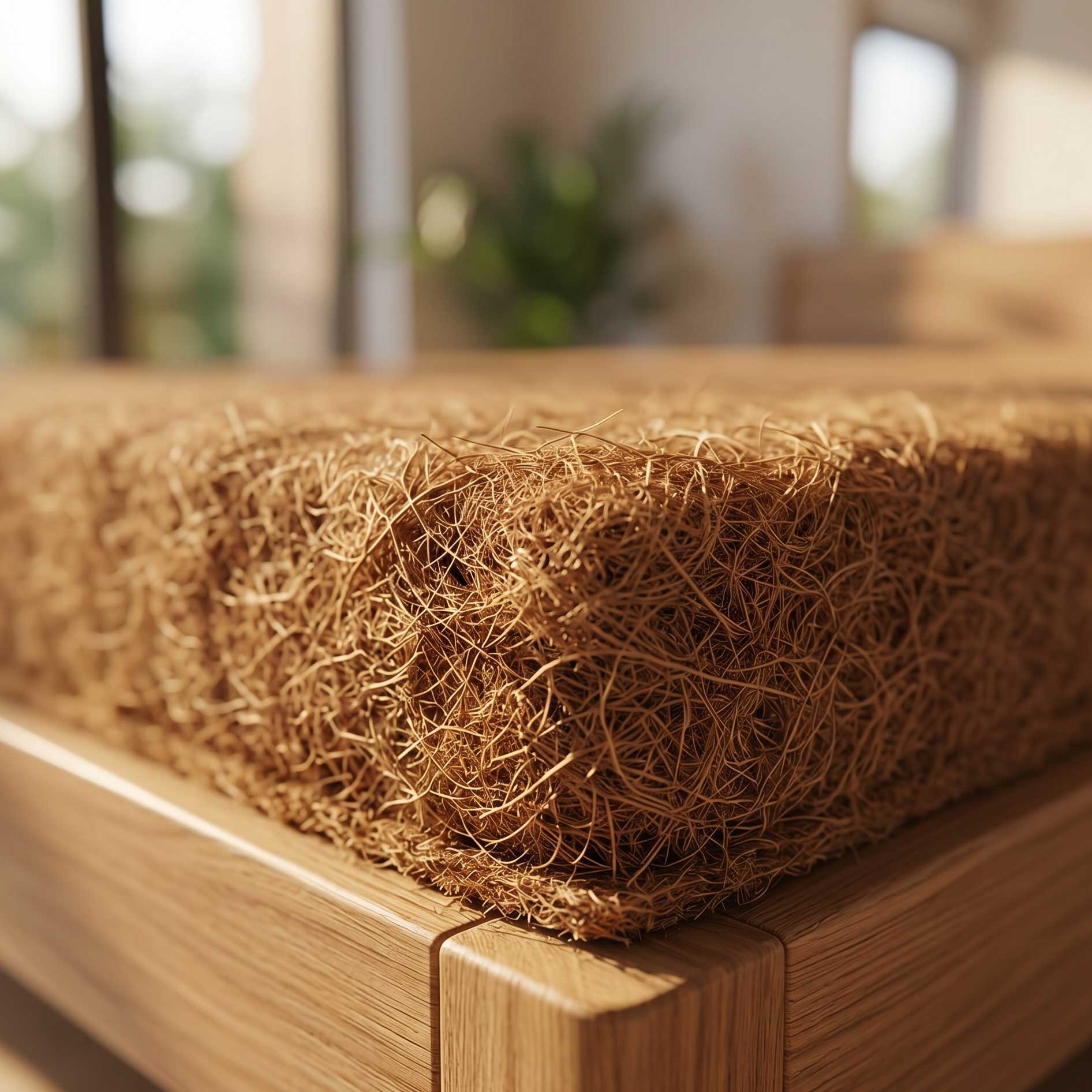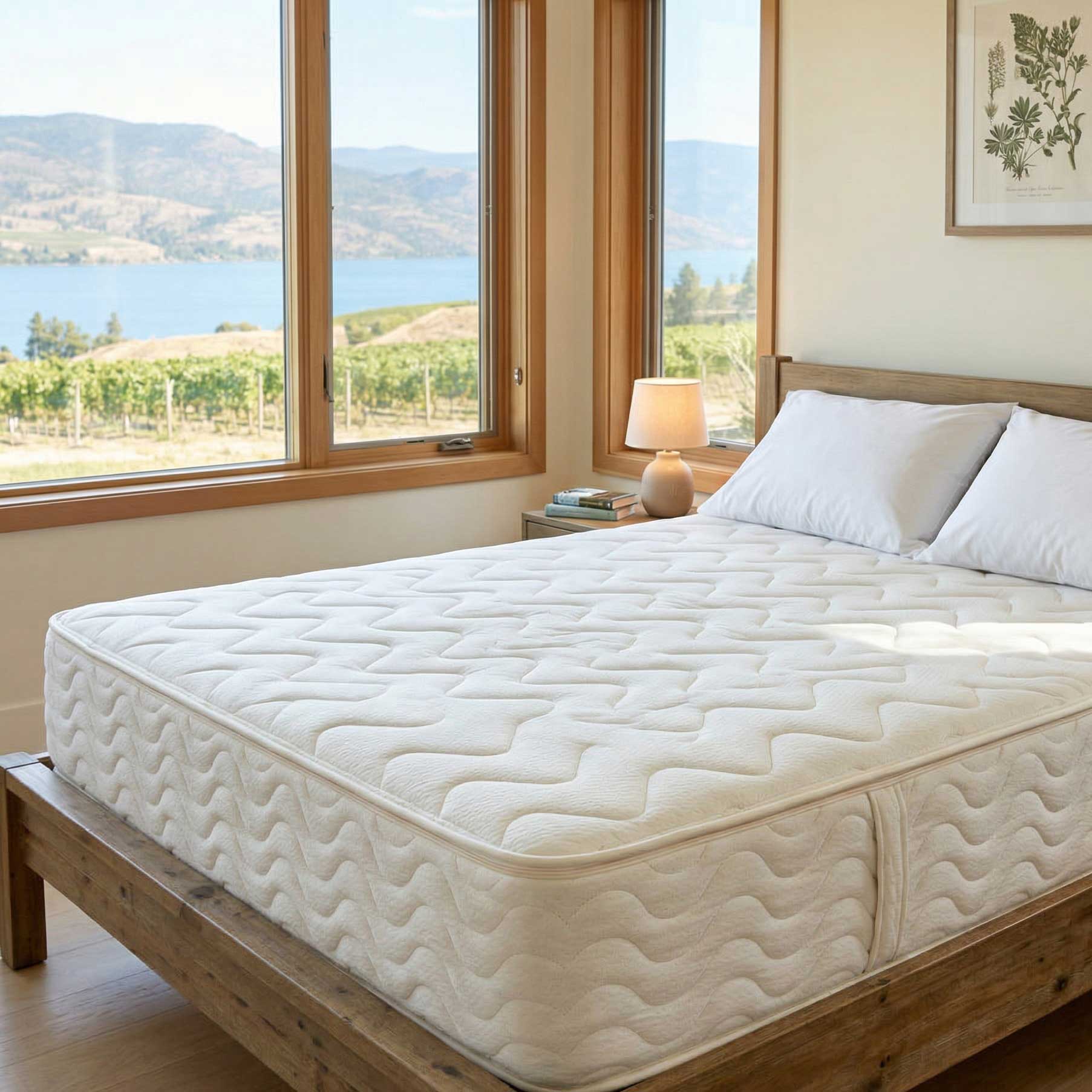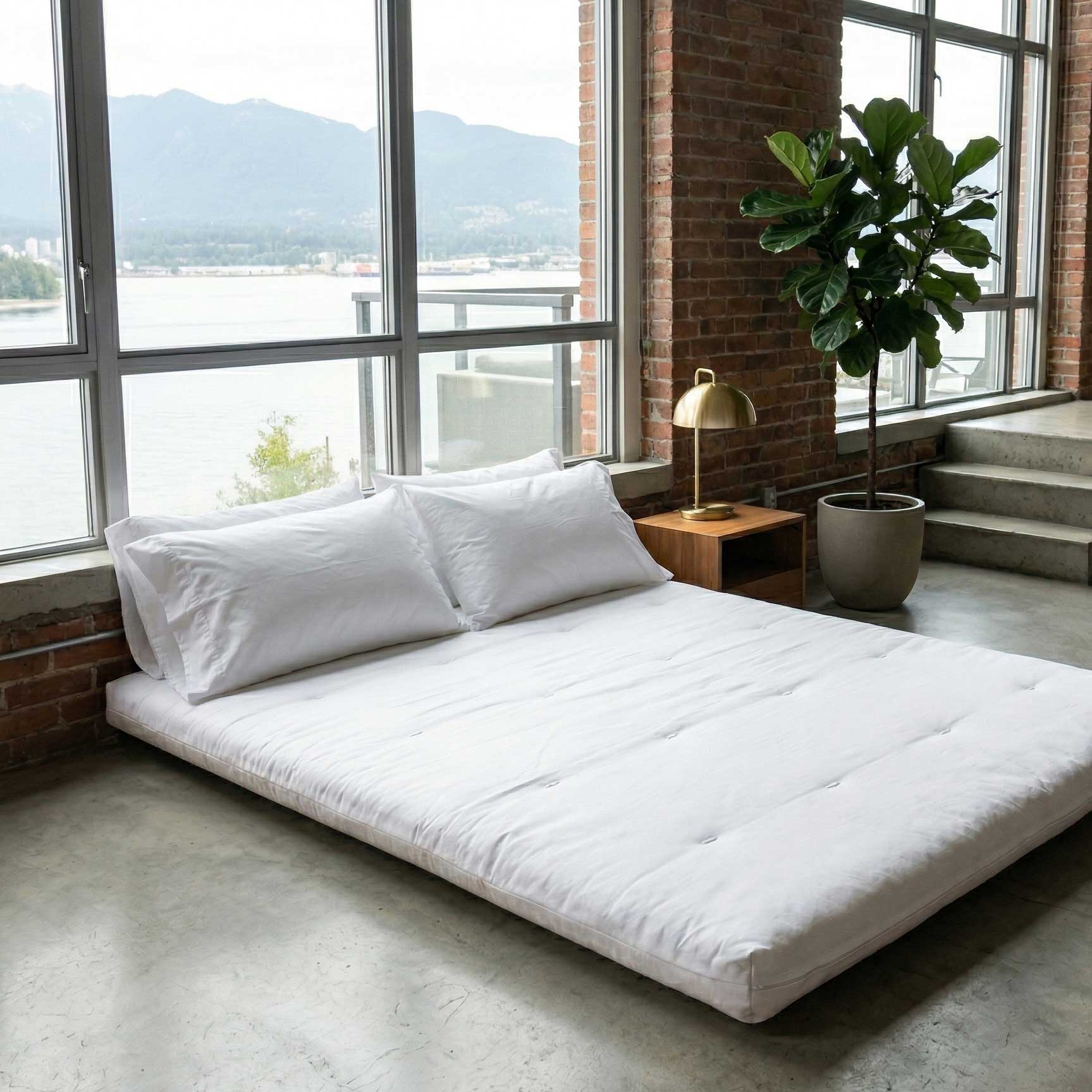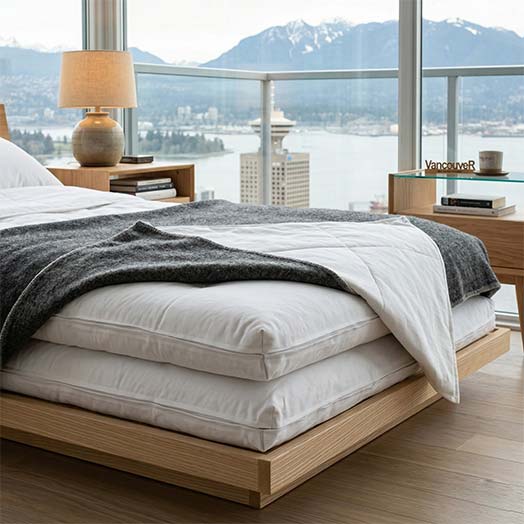
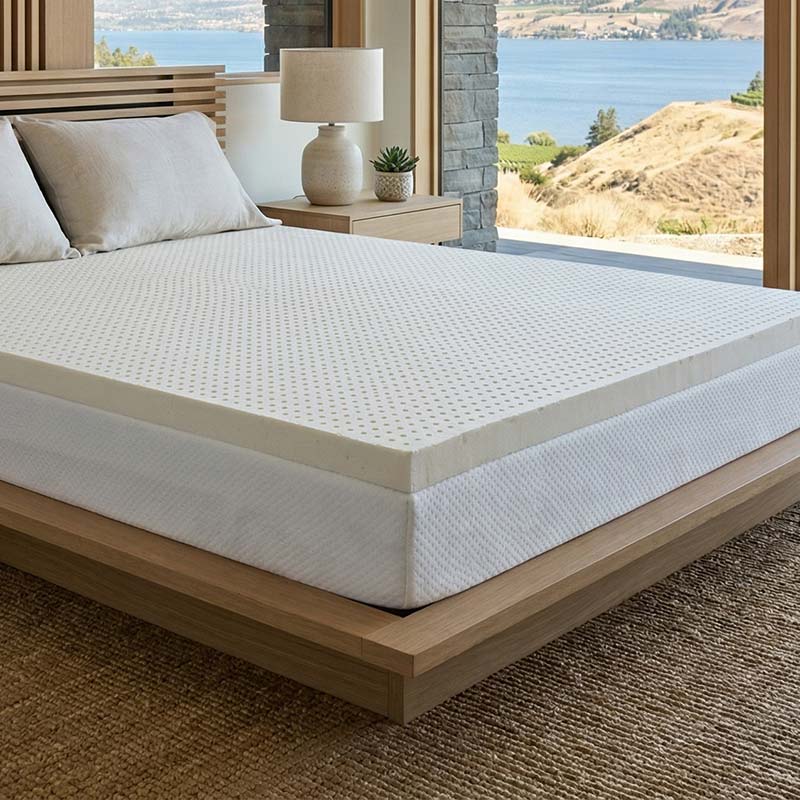
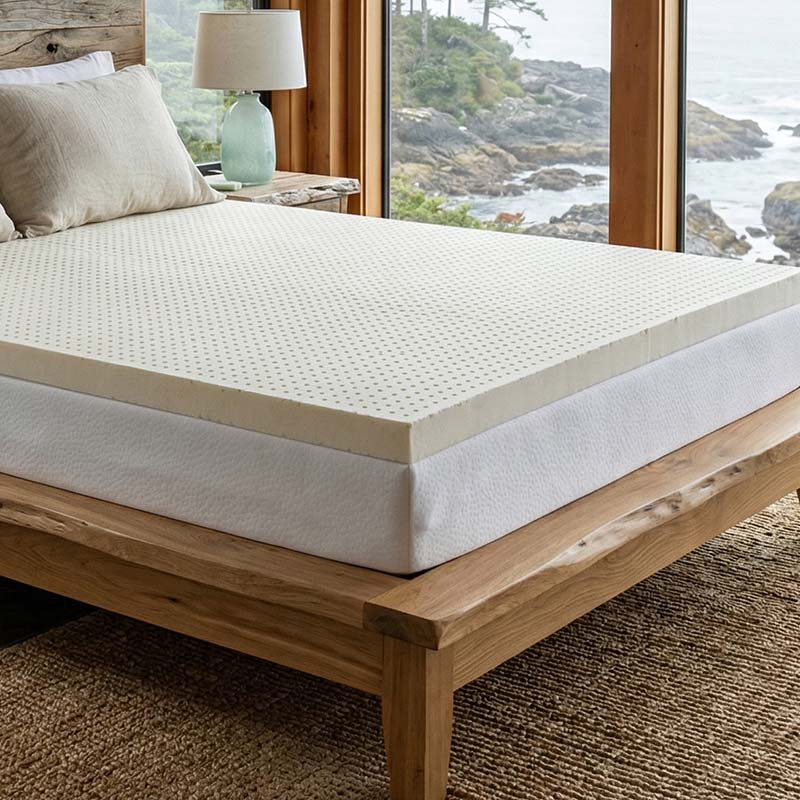
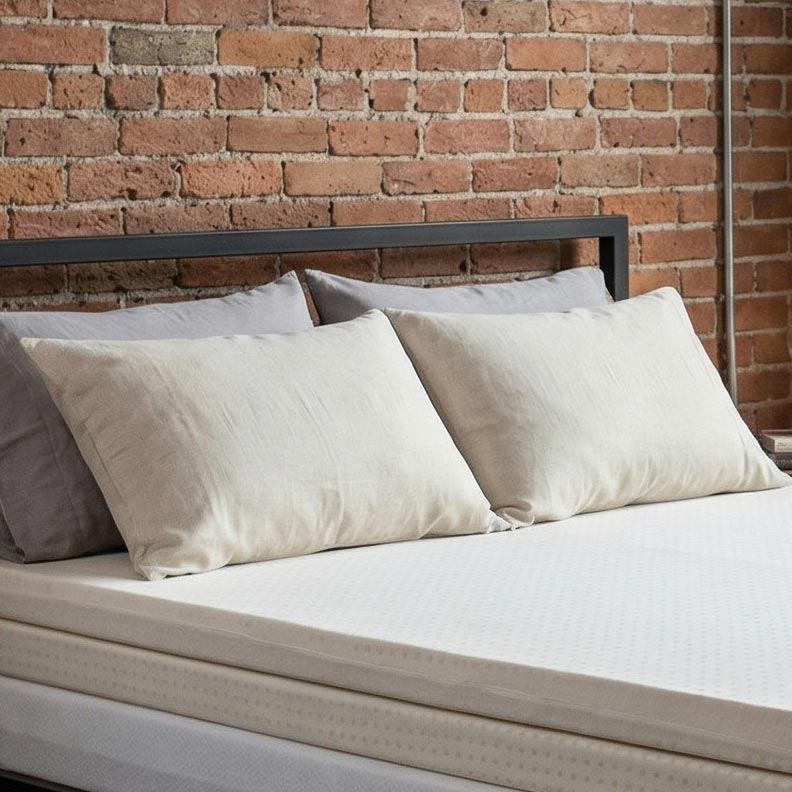
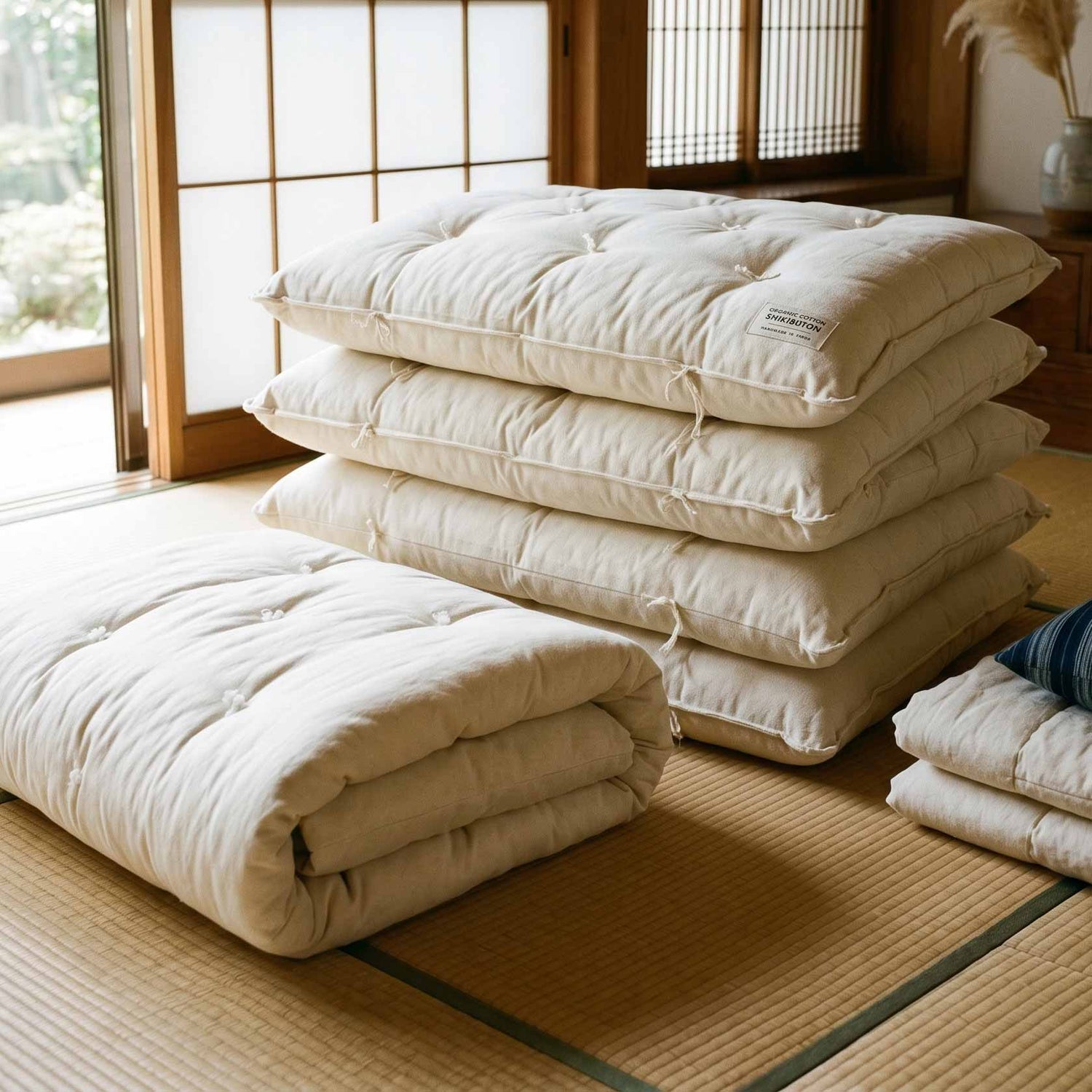
Both shikibutons start from the same place: raw cotton batting wrapped in a cotton canvas cover, with a wool wrap for natural fire protection. The Cotton Shikibuton stays there. The Latex Shikibuton adds a 2-inch layer of GOLS-certified Dunlop latex between the cotton and the cover. That one addition changes how the mattress feels, who it suits, and how it behaves over time. Here's what the difference actually means in practice.
What a Shikibuton Is — and What It Isn't
A shikibuton is an Asian style floor mattress designed for sleeping close to the ground. It's a distinct product from a futon mattress — it doesn't fold, it isn't designed for a futon frame, and it doesn't serve a sofa-bed function. Its purpose is floor sleeping: a minimalist, portable sleep surface that can be rolled and stored during the day.
Both the Cotton and Latex Shikibuton are available in a range of sizes from Twin through King. The Delta showroom carries full-size versions of both to try in person, which matters because the feel difference between them is real and worth experiencing before deciding.
Neither is a compromise product. They're designed for different sleepers with different priorities, and understanding which one you are is the whole decision.
The Cotton Shikibuton: What It Is and Who It Suits
The Cotton Shikibuton is built entirely from raw cotton batting in alternating layers, wrapped in a cotton canvas cover with a wool wrap for natural fire protection. It has no latex, no foam, and no synthetic fill. The result is a firm, relatively thin sleep surface — typically in the 3 to 5 inch range — that compresses with use in the way cotton naturally does.
The firmness is the defining characteristic. This is not a cushioned sleep surface. It's a supportive one. People who sleep well on it tend to be back sleepers or lighter adults who genuinely prefer a firm surface and find conventional mattresses too soft. It also suits sleepers who prioritise minimalism and portability over cushioning — the Cotton Shikibuton is the lighter, more packable option of the two.
Cotton compression over time is normal and expected. The mattress will soften slightly with regular use, which is why rolling and flipping it periodically helps maintain even wear and loft. It doesn't degrade — it settles. For some sleepers, a lightly broken-in Cotton Shikibuton is exactly right.
The Latex Shikibuton: What the Latex Layer Actually Adds
The Latex Shikibuton starts with the same cotton batting base, but adds a 2-inch layer of GOLS-certified Dunlop latex before the cotton canvas cover goes on. That latex layer is the entire difference between the two products — and it's a meaningful one.
Dunlop latex has a more supportive feel than Talalay. In a shikibuton context, that means the latex layer adds resilience and responsiveness to the cotton base without making the overall product dramatically softer. It doesn't turn the Latex Shikibuton into a plush mattress — it turns it into a floor mattress that pushes back slightly when you press into it, rather than compressing without resistance.
The practical effect is that the Latex Shikibuton suits a broader range of sleep positions and body types than the Cotton Shikibuton. Side sleepers in particular benefit from the latex layer, which provides enough give at the shoulder and hip to reduce pressure without the firmness of all-cotton construction. Back sleepers also do well on it. The latex layer maintains its responsiveness over time in a way that cotton alone does not.
The Wool Wrap: Same on Both
Both shikibutons use a wool wrap for natural fire protection. Sleep Majestic doesn't use boric acid treatments, polyester fibre wraps, or chemical fire retardants in any futon or shikibuton product. The wool wrap is the fire protection method on both versions, which is worth knowing for anyone who has looked at conventional futon mattresses and been concerned about what's in them.
This is a specific, statable fact about the construction. It applies equally to the Cotton Shikibuton and the Latex Shikibuton.
How to Choose Between Them
The deciding factors are sleep position, body type, and what kind of feel you're after on a floor surface.
The Cotton Shikibuton suits back sleepers and lighter adults who want a genuinely firm floor mattress, prioritise the lightest and most portable option, and don't need pressure relief at the shoulder or hip. It's also the right choice for anyone who wants a fully cotton product with no latex content.
The Latex Shikibuton suits side sleepers, combination sleepers, and anyone who wants a floor mattress with some responsiveness. It's the better everyday sleeping option of the two — the latex layer makes the difference over a full night in a way that matters more the longer you sleep on it.
If you're in Metro Vancouver, both versions are available to try full-size at the Delta showroom before you decide. The feel difference is noticeable in person and worth an hour of your time before committing to either.
Frequently Asked Questions
Do both shikibutons work for everyday sleeping or just occasional use?
The Latex Shikibuton is well suited to everyday sleeping. The 2-inch GOLS-certified Dunlop latex layer adds enough resilience and pressure relief to make it a practical daily sleep surface for back and side sleepers. The Cotton Shikibuton is more appropriate for occasional use or for sleepers who genuinely prefer a very firm surface — the all-cotton construction provides less pressure relief and will compress more noticeably with nightly use than the latex version.
Can a shikibuton be used on a bed frame or futon frame?
Shikibutons are designed for floor use. They are not compatible with futon frames and should not be used on a standard bed frame as a mattress substitute. On the floor, both versions work best on a clean, firm surface that allows some airflow — placing a shikibuton on thick carpet for extended periods can restrict ventilation. Rolling and storing it during the day is the traditional approach and helps maintain loft on the cotton layers over time.
Does the latex layer in the Latex Shikibuton change how it needs to be cared for?
The basic care routine is the same for both shikibutons: roll and store during the day when possible, flip and rotate periodically to distribute wear, and keep the mattress dry. The latex layer in the Latex Shikibuton should not be exposed to direct sunlight for extended periods, as UV exposure degrades natural latex over time. The cotton canvas cover on both versions should be spot cleaned only — not machine washed.
Sleep Majestic carries both the Cotton Shikibuton and Latex Shikibuton in Delta, BC, with full-size models available to try in person.