Federal regulations in Canada require every mattress, including futon mattresses and floor mattresses, to meet minimum fire resistance standards before it can be legally sold. The regulation doesn't specify how a manufacturer meets it. That's left to the manufacturer, and the approach varies considerably.
In the conventional futon mattress market, two solutions dominate. Boric acid is a mineral powder applied to the cotton batting inside the mattress. It's effective and inexpensive, but it introduces a boron-based compound into the core of a product that people sleep directly on. Polyester fibre wraps are a separate layer of synthetic material positioned around the cotton core to slow ignition. Again effective, but they add synthetic content to a product often sold as a natural alternative to foam mattresses.
Sleep Majestic uses neither. Every futon mattress and shikibuton in the range uses wool batting for natural fire protection, sewn into the cover as a wool wrap around the cotton core.
What the Wool Wrap Actually Does
Wool is naturally flame-resistant through the structure of the fibre itself. Wool has a high moisture content relative to synthetic fibres, which raises its ignition threshold significantly. When exposed to a flame source, wool chars and self-extinguishes rather than melting, dripping, or spreading flame the way polyester does. The char forms a crust that limits how far a flame can travel into the material beneath it.
Wool also has a high nitrogen and sulphur content, which creates a natural environment that doesn't sustain combustion well. It requires a higher temperature to ignite than most synthetic alternatives, and when it does char, it doesn't release the same combustion by-products that burning synthetic materials produce.
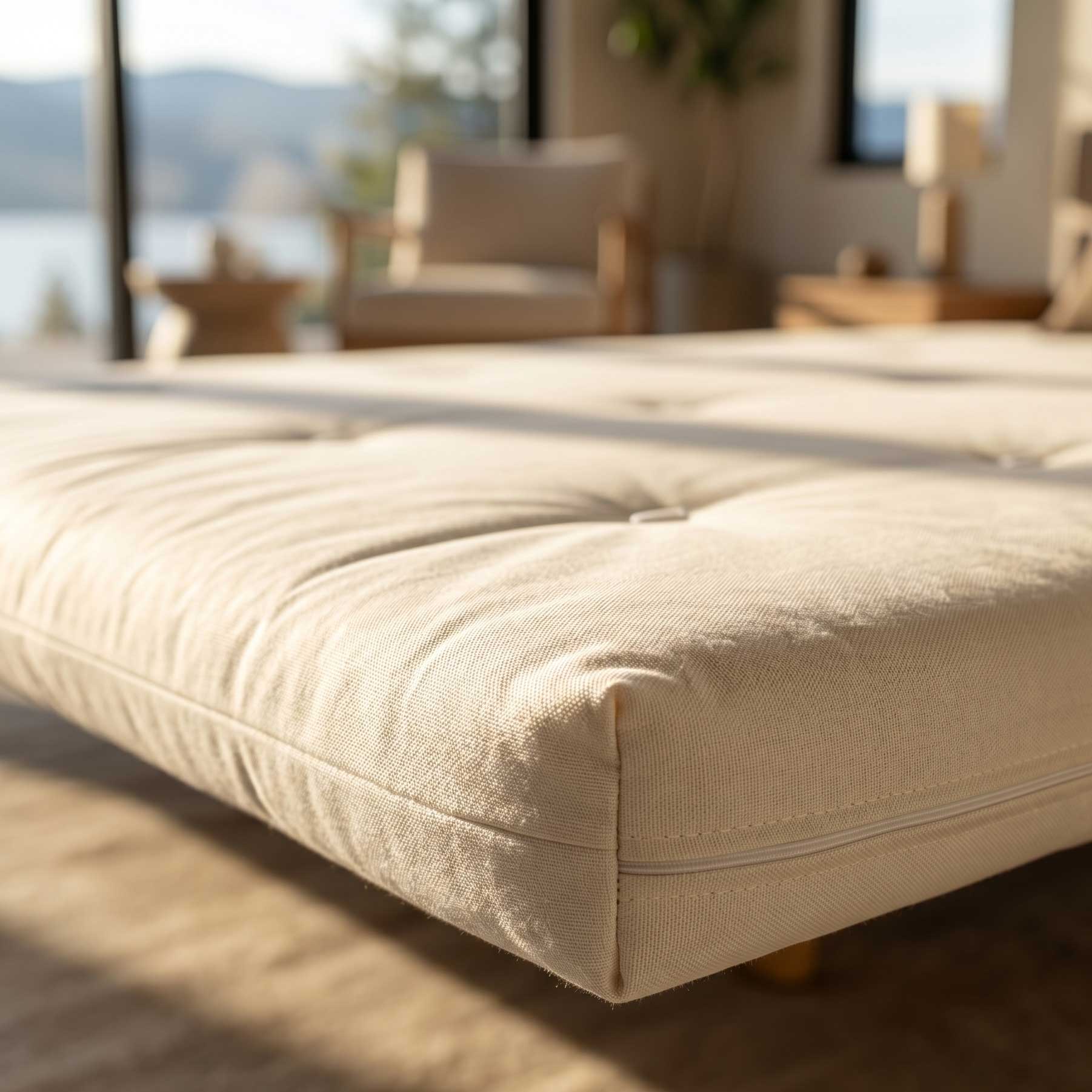
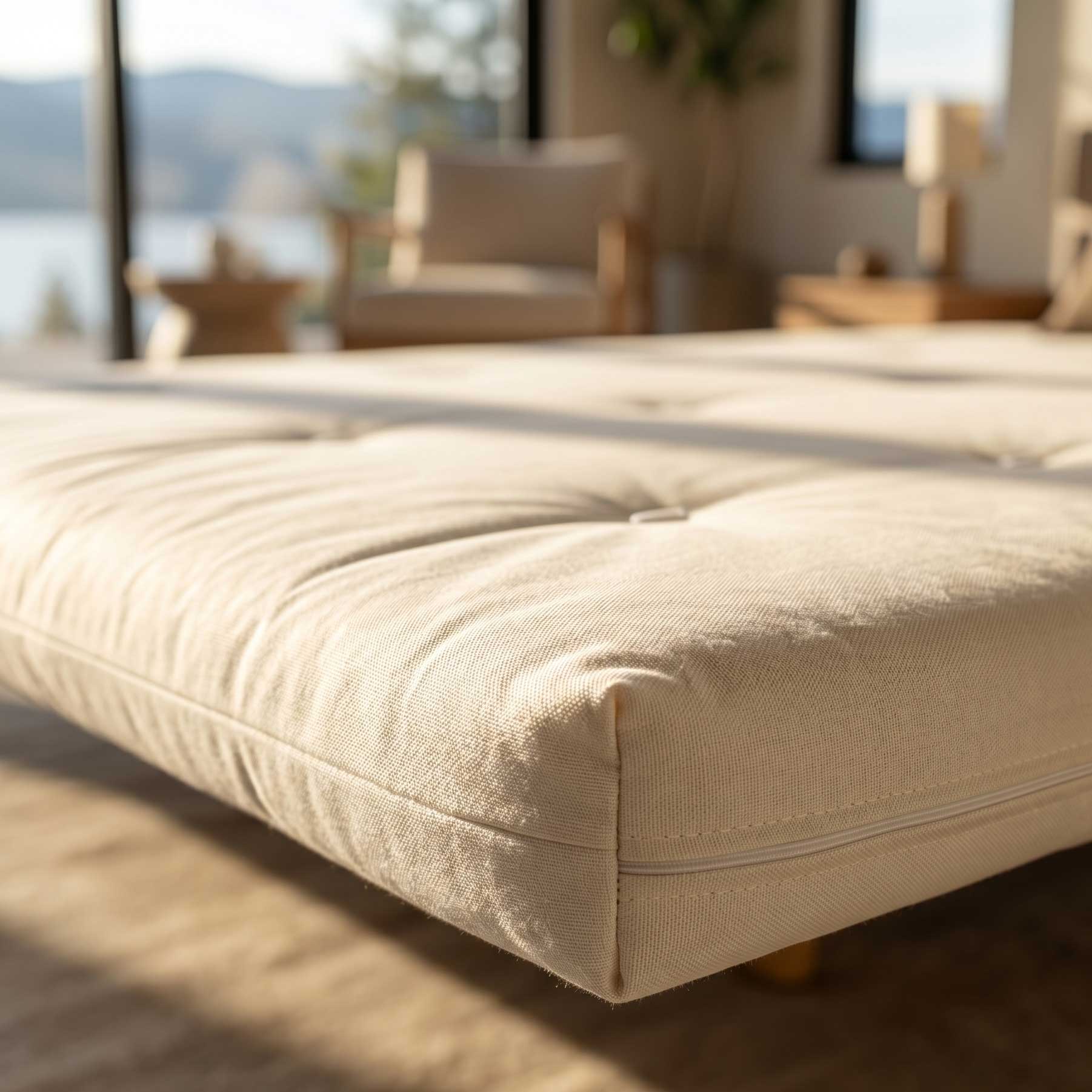
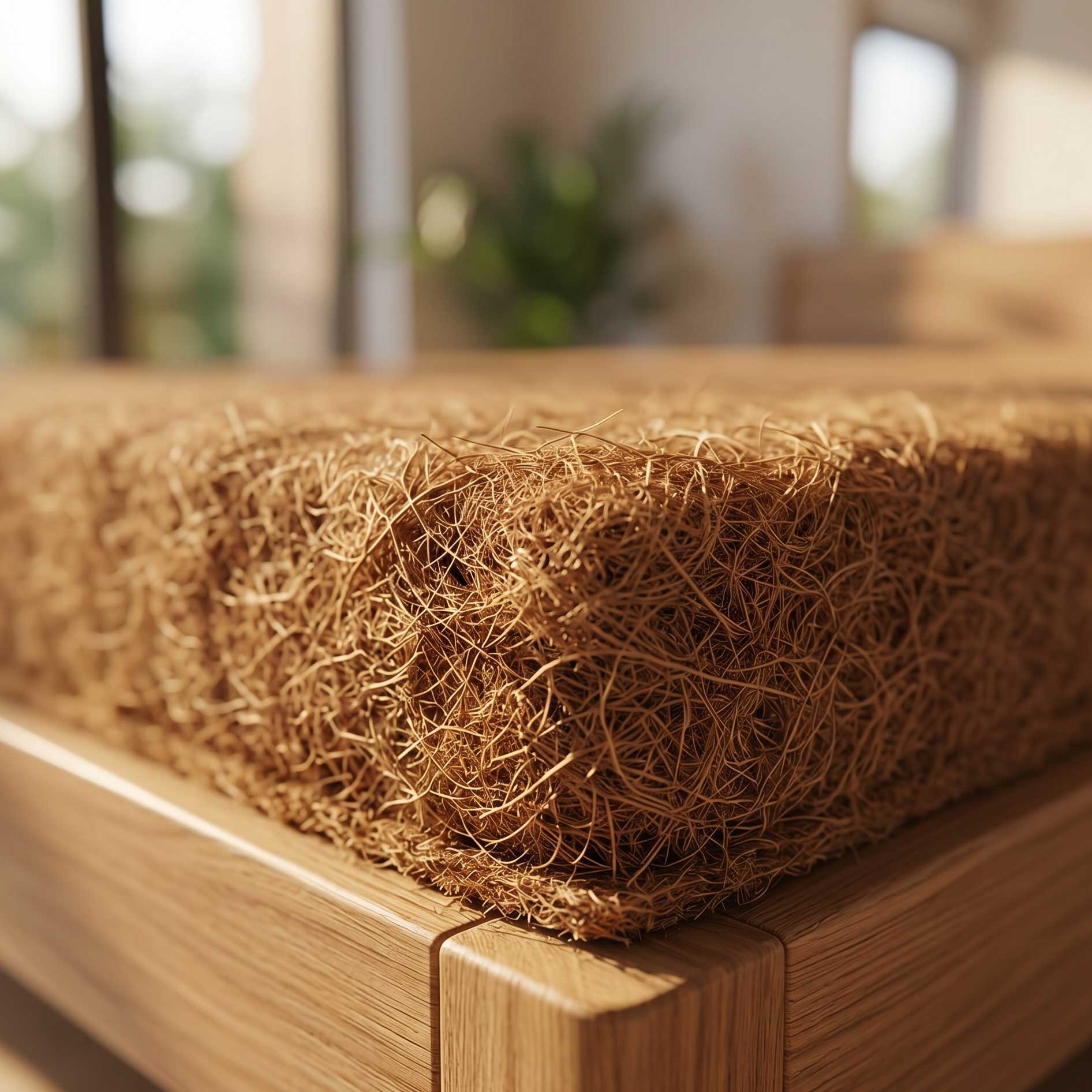
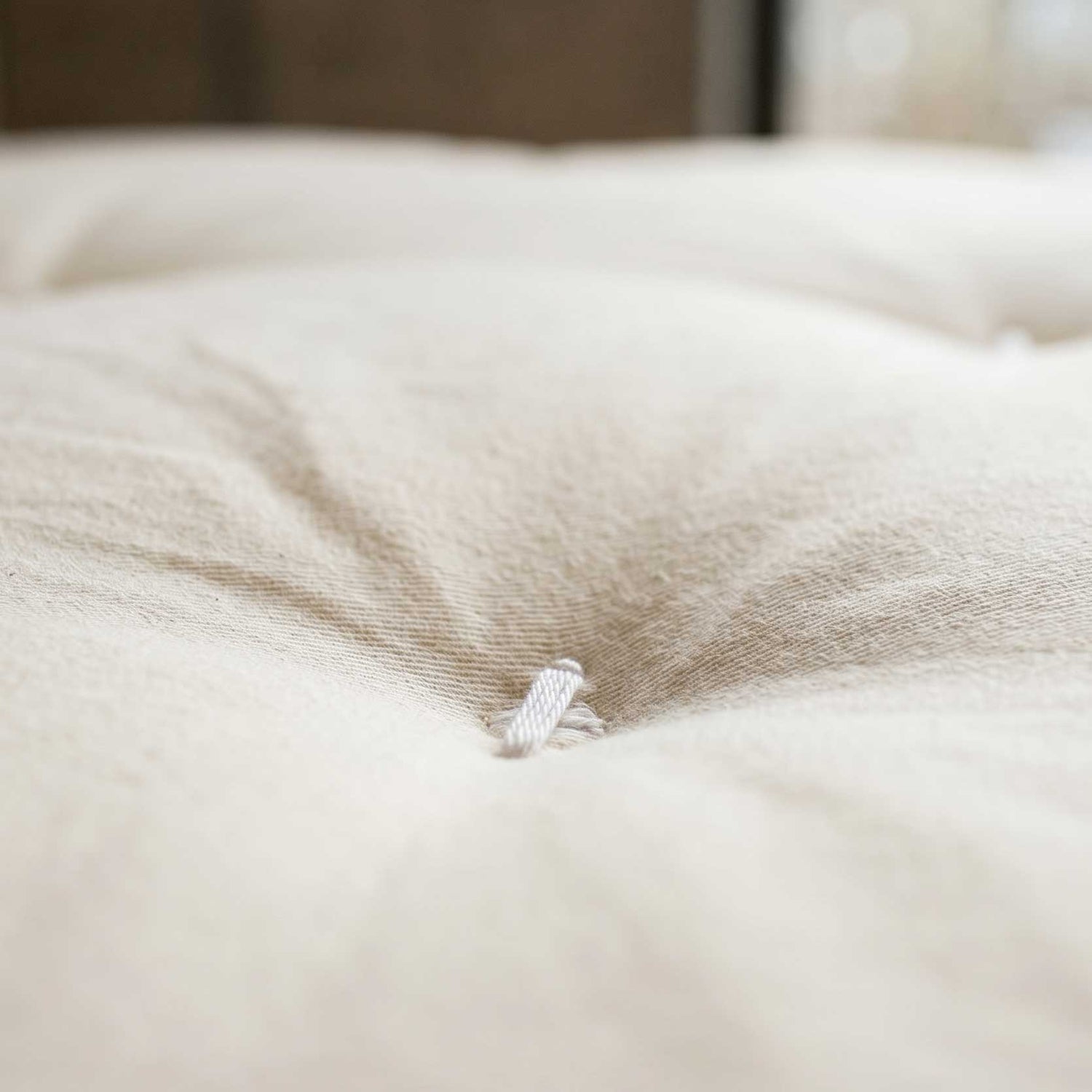
In Sleep Majestic's futon and shikibuton construction, the wool batting is sewn into the cover as a wool wrap between the outer cotton canvas and the cotton batting core. This is the layer that meets the fire resistance requirement. No additional chemical treatment is applied to the cotton batting, and no separate synthetic fire barrier layer is added.
Which Products Use the Wool Wrap
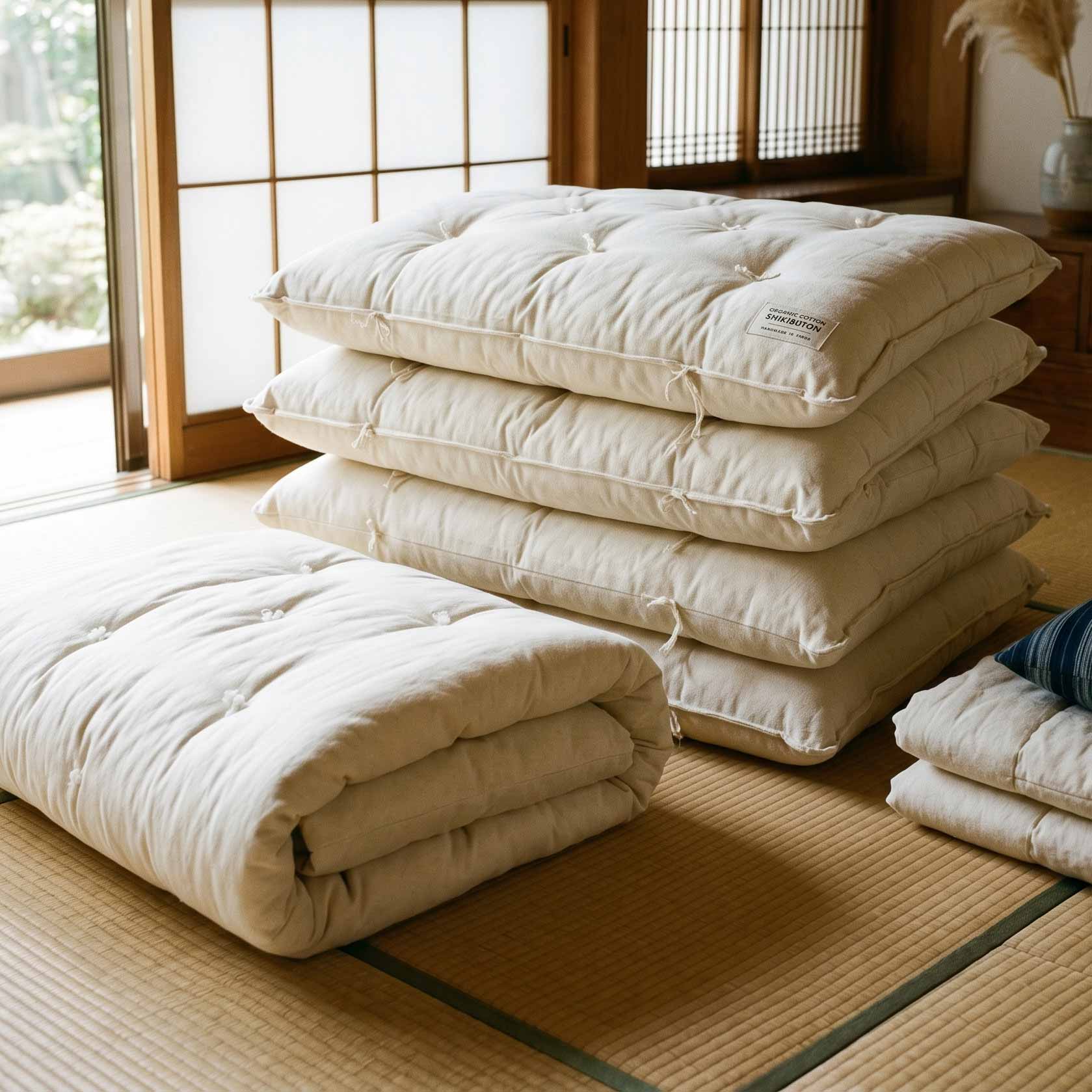
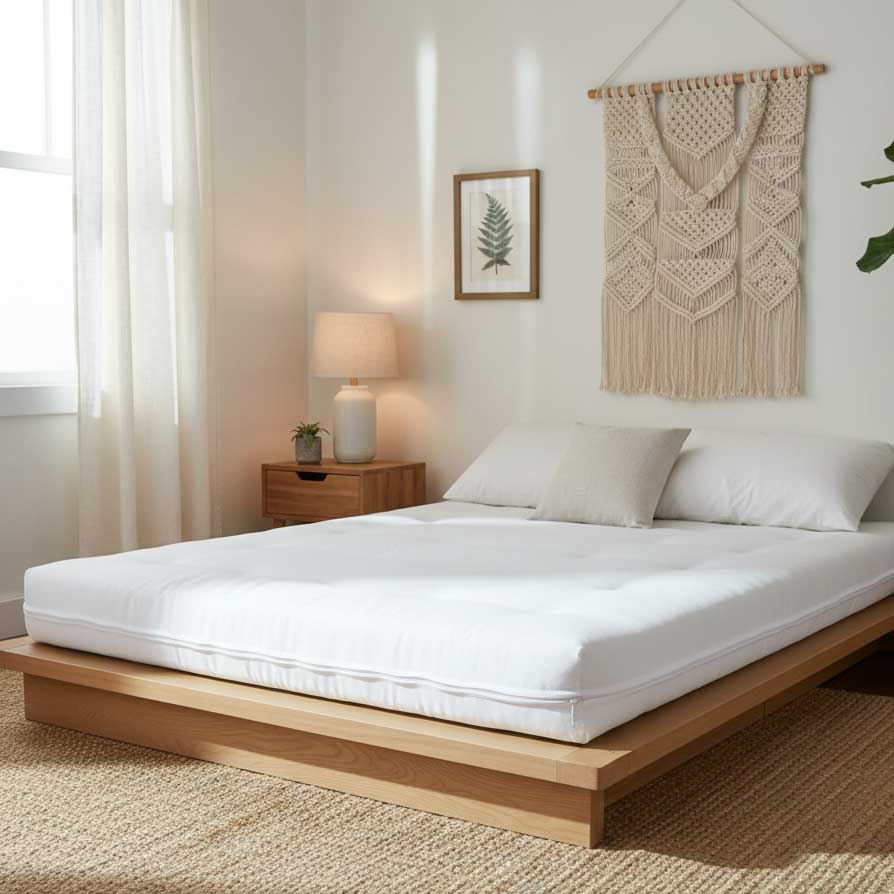
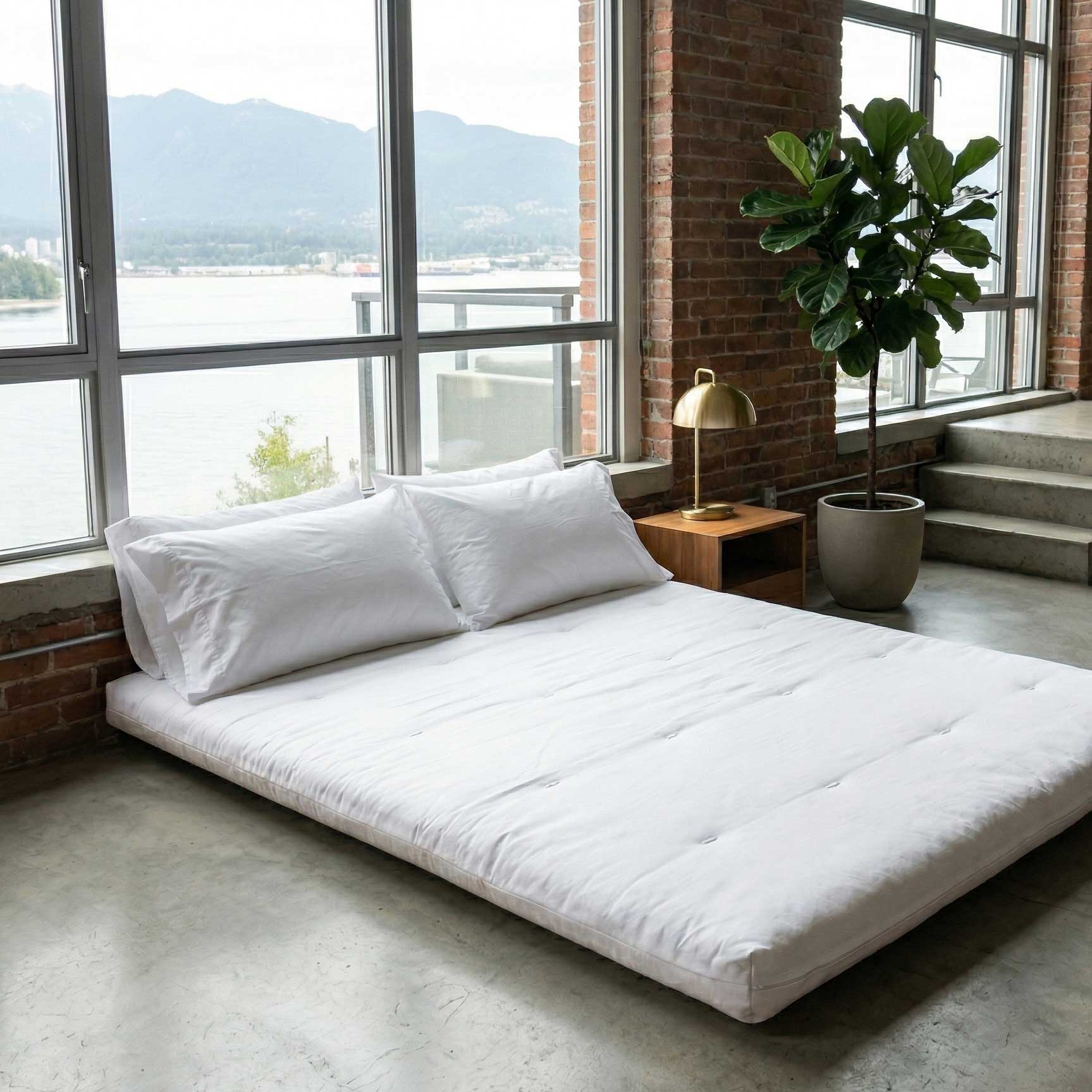
The wool wrap for natural fire protection is used across all five futon and floor mattress products Sleep Majestic makes. This includes the Essential Futon, Standard Futon, and Eurotop Futon mattresses, as well as the Cotton Shikibuton and Latex Shikibuton. The construction is consistent across the range: cotton canvas cover, wool wrap inside the cover, cotton batting core.
Where products differ is in what's inside the cotton batting core. The Essential and Standard Futon mattresses use alternating cotton batting and high-density foam. The Eurotop Futon adds a GOLS-certified Dunlop latex comfort layer. The Cotton Shikibuton is all-cotton batting. The Latex Shikibuton adds a 2" GOLS-certified Dunlop latex layer. The wool wrap is the same in all of them.
None of these products use boric acid treatments, polyester fibre wraps, fibreglass, or chemical fire retardants of any kind. The fire protection is provided by the wool batting sewn into every cover.
Why This Matters for Futon Buyers
Futon mattresses are often chosen because they're perceived as a more natural alternative to foam mattresses. That perception is reasonable. Cotton batting and canvas construction is genuinely different from a polyurethane foam core. But the fire protection solution can quietly contradict that story if a manufacturer is using boric acid or synthetic wraps to meet the standard.
For buyers who are choosing a futon mattress specifically because they want to reduce chemical concerns in their sleeping environment, it's worth asking what's providing the fire protection. With Sleep Majestic, the answer is wool batting, the same material used in traditionally constructed futon mattresses and one that has been meeting fire resistance requirements in natural mattress manufacturing for decades.
Frequently Asked Questions
Does wool batting actually meet the Canadian fire resistance standard for futon mattresses?
Yes. Wool meets the federal fire resistance standard through its inherent fibre properties: a high ignition threshold, self-extinguishing behaviour when exposed to flame, and a charring response that limits flame travel. It has been used as the fire protection solution in naturally constructed futon mattresses for decades. Sleep Majestic has used wool batting in its futon mattress and shikibuton construction since 1985. No additional chemical treatment or synthetic barrier layer is required.
What is boric acid and why do some futon mattresses use it?
Boric acid is a boron-based compound used as a flame retardant treatment in textiles, including the cotton batting inside many futon mattresses. It's inexpensive and effective at meeting fire resistance standards, which is why it's widely used in conventional futon manufacturing. The concern for buyers choosing natural products is that it introduces a treatment into the core of the mattress. Sleep Majestic does not use boric acid in any futon mattress or shikibuton. The fire protection in every Sleep Majestic futon and floor mattress is provided by wool batting between the cover and cotton batting.
Is the fire protection the same in the shikibutons as in the futon mattresses?
Yes. The same wool wrap construction is used across all Sleep Majestic futon mattresses and shikibutons: Essential Futon, Standard Futon, Eurotop Futon, Cotton Shikibuton, and Latex Shikibuton. In every case, the wool batting is sewn into the cover between the outer cotton canvas and the cotton batting core. The wool is the fire protection layer in all five products. No boric acid, no polyester fibre wrap, and no other chemical treatment is used in any of them.
Every Mattress Needs Fire Protection
If you're shopping for a futon mattress or shikibuton and the fire protection approach matters to you, Sleep Majestic's range is built with wool batting and nothing else. No boric acid. No polyester wraps. No chemical treatments. The full range is at sleepmajestic.com. If you have questions about construction or want to see the products before ordering, book a fitting or call 604-731-8226.