



The Festival International de Jazz de Montréal returns for its 46th edition from June 25 to July 4, and this year's programme has a thread running through it that makes the whole thing feel more coherent than usual. Miles Davis, John Coltrane, and Tony Bennett were all born in 1926. The festival has built a substantial portion of its programming around that coincidence, which gives the 2026 edition a specific focus that extends well beyond tribute-band territory.
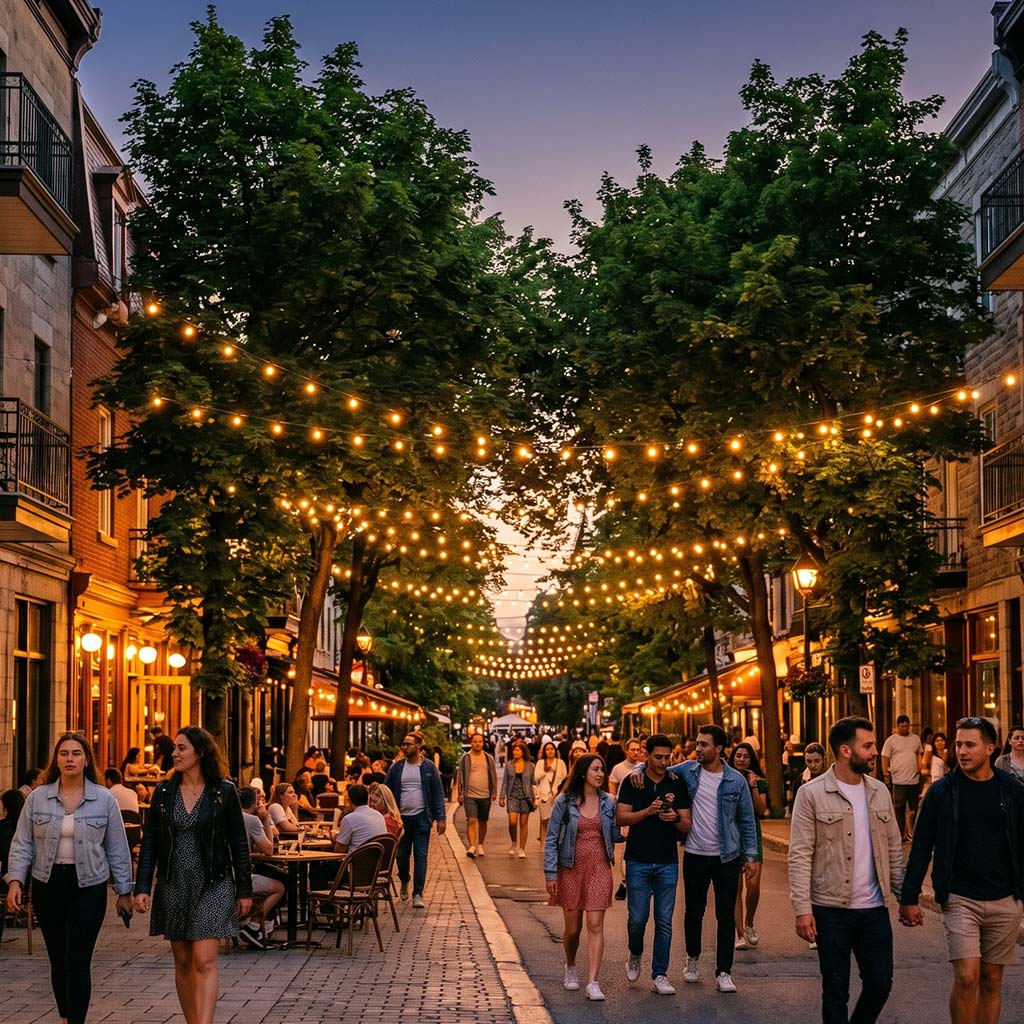
Over 350 concerts across ten days. Two-thirds of them free. More than two million people will pass through the Quartier des Spectacles over the course of it. If you've been to Montreal in late June, you already know what the city feels like when Jazz Fest is running. If you haven't, this is as good a year as any to find out.
The Free Stage Is the Heart of It
The TD Stage at Place des Festivals is where the festival concentrates its energy. Outdoor, free, and capable of holding tens of thousands of people, it's the place where Jazz Fest becomes something more than a ticketed concert series and turns into a genuine public event.
This year's TD Stage programming is strong by any measure. Patrick Watson, one of the most distinctive live performers in Canadian music, brings his Uh Oh tour to the main stage. His shows are built on loop pedals, orchestral swells, and a voice that does things most singers don't attempt. Willow and Angine de Poitrine — the anonymous Québécois mathematical rock duo whose Trans Musicales set spread well beyond francophone audiences — round out the outdoor headliners. All free. All worth planning around.
The Centennial Programming
The tributes to Davis, Coltrane, and Bennett are where the 2026 edition earns its ambitions. Marcus Miller — Davis's final musical director and one of the most authoritative bassists alive — leads the We Want Miles centennial concert at the Maison Symphonique. This is not a note-for-note recreation. Miller was in the room for Davis's final years, and that proximity gives the evening a dimension that a generic tribute cannot replicate.
At Le Gesù, trumpeter Ron Di Lauro performs Kind of Blue in its entirety, paired with a ciné-concert staging of Davis's 1958 soundtrack for Ascenseur pour l'échafaud. The Coltrane centenary gets two dedicated evenings: Isaiah Collier performs A Love Supreme front to back at the Théâtre Jean-Duceppe, and the Christine Jensen Sextet presents Modes of Coltrane at Club Montréal. John Pizzarelli takes on Bennett at Théâtre Maisonneuve.
These are the shows to book first. They will sell out.
Worth Your Time Beyond the Headliners
The 2026 programme has several performances that are easier to get tickets for and worth just as much attention. DOMi & JD BECK return to MTELUS — the keyboard and drum duo play with a technical telepathy that is genuinely difficult to process in real time. They opened for Herbie Hancock for a reason. KOKOROKO, the London Afrobeat-jazz ensemble, brings a warmth to the indoor stages that translates differently in a seated venue than it does at a festival. Melody Gardot, who has made several of the better jazz vocal albums of the past fifteen years, performs at a venue still to be confirmed at time of writing.
DJ Jazzy Jeff hosts the Donuts 20th Anniversary Celebration Party at Club Soda with the Montréal Loves Dilla collective. J Dilla's Donuts is twenty years old this year, and its influence on how producers think about rhythm and texture has only grown. If you know the record, this is the show.
How to Navigate Ten Days of 350 Concerts
The simplest approach is to decide early what you're willing to pay for and what you want to catch for free, then build around those anchor points. The TD Stage programming fills the plaza quickly for the bigger names — arriving an hour before sets from Watson or similar draws is not excessive. For the free stage in general, earlier is better, and the side streets adjacent to Place des Festivals offer sightlines that the centre of the plaza doesn't.
For indoor shows, the Maison Symphonique and Théâtre Maisonneuve are the largest seated venues and the most formally programmed. Club Soda, Le Gesù, and Pub Molson give you a more intimate room. The festival's own app and the montrealjazzfest.com site are the most reliable sources for day-of scheduling; the outdoor programme in particular can shift with weather.
Montreal in late June is warm and often humid. Hotel room availability near the Quartier des Spectacles drops quickly as the festival approaches, and the nights that end at 1am feeling energised are the ones that catch up with you by day four. Worth planning a morning off somewhere in the middle of the ten days.
Frequently Asked Questions
How much does it cost to attend the Montreal Jazz Festival?
Roughly two-thirds of the 350 concerts are free. The TD Stage outdoor programming at Place des Festivals costs nothing. Indoor ticketed shows at venues like the Maison Symphonique, Théâtre Maisonneuve, and MTELUS range in price depending on the artist and venue. The Lionel Richie and Earth, Wind & Fire co-headline at the Bell Centre on July 5 is a separate ticketed event at stadium pricing. Check montrealjazzfest.com for current pricing on individual events.
Is the Montreal Jazz Festival only jazz?
In name, yes. In practice, the FIJM has always stretched its genre boundaries considerably. The 2026 lineup includes hip-hop (DJ Jazzy Jeff), neo-classical (Max Richter), roots rock (Larkin Poe), pop (Willow), Afrobeat (KOKOROKO), and Argentine trap (Catriel & Paco Amoroso) alongside the core jazz programming. The festival defines jazz broadly, which is part of what has made it the largest event of its kind in the world for decades.
What's the best area to stay for Jazz Fest?
The Quartier des Spectacles and Plateau-Mont-Royal are the most practical bases. The Plateau is a 20 to 30-minute walk from Place des Festivals, which is useful for nights when you want to decompress before sleeping. Mile-End is slightly further but gives you access to some of the better late-night food options. Staying further out — Old Montreal, NDG — works fine with the Metro but adds logistics on the nights the festival runs late and the trains are full.
Sleep Majestic makes handmade organic latex mattresses right here in Canada. If you're thinking about upgrading your sleep before Jazz Fest season, phone fittings are available here: Sleep Majestic Mattress Fittings