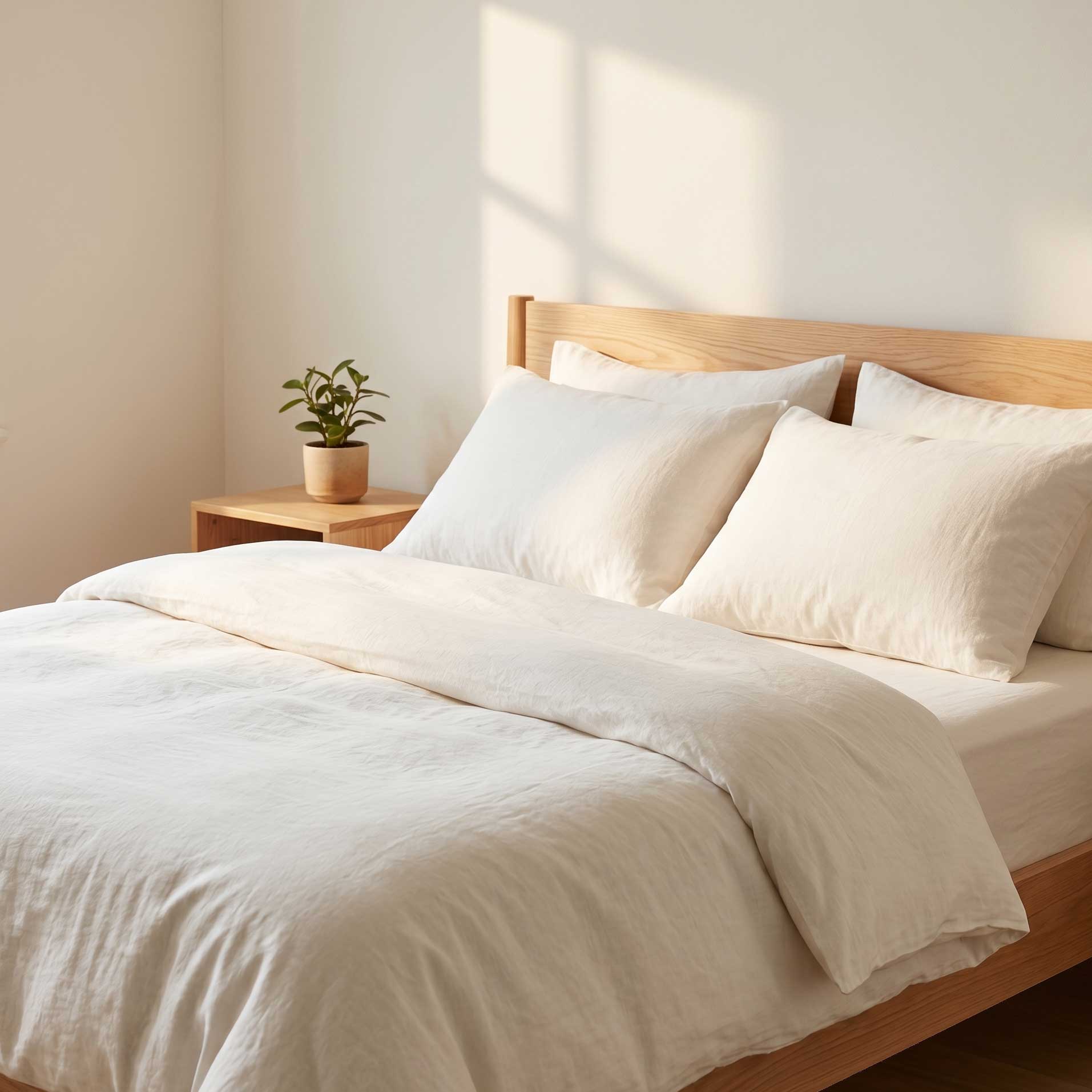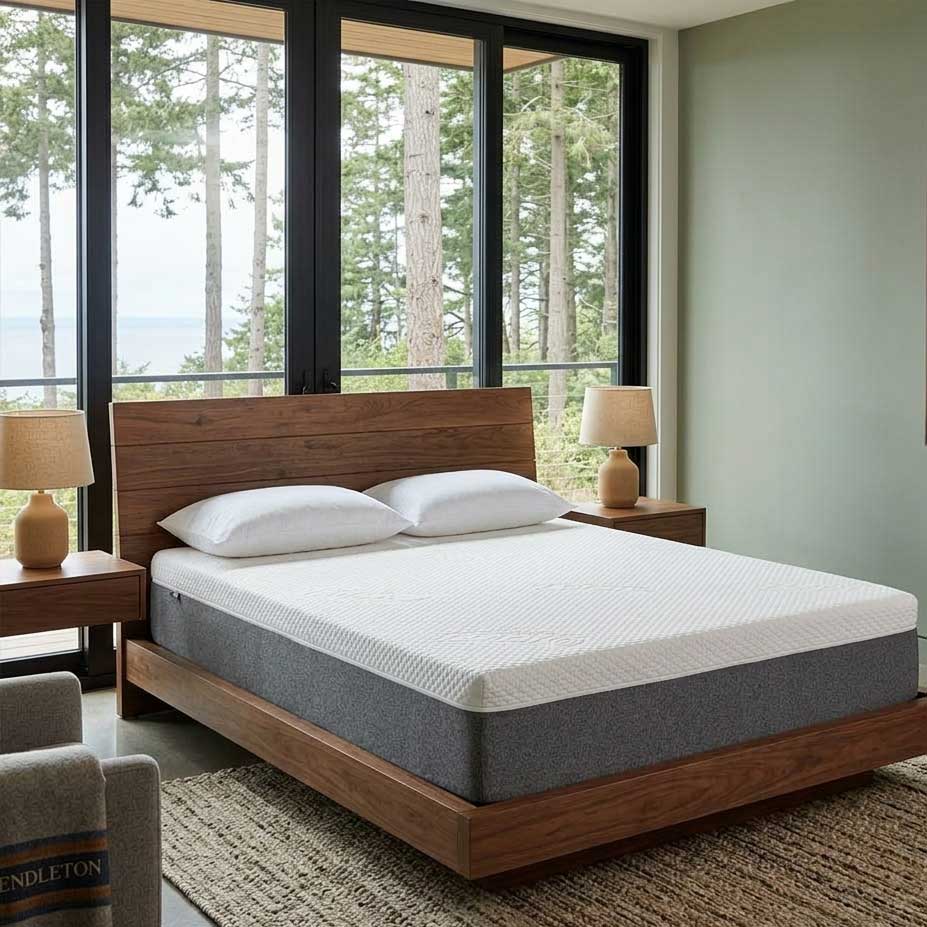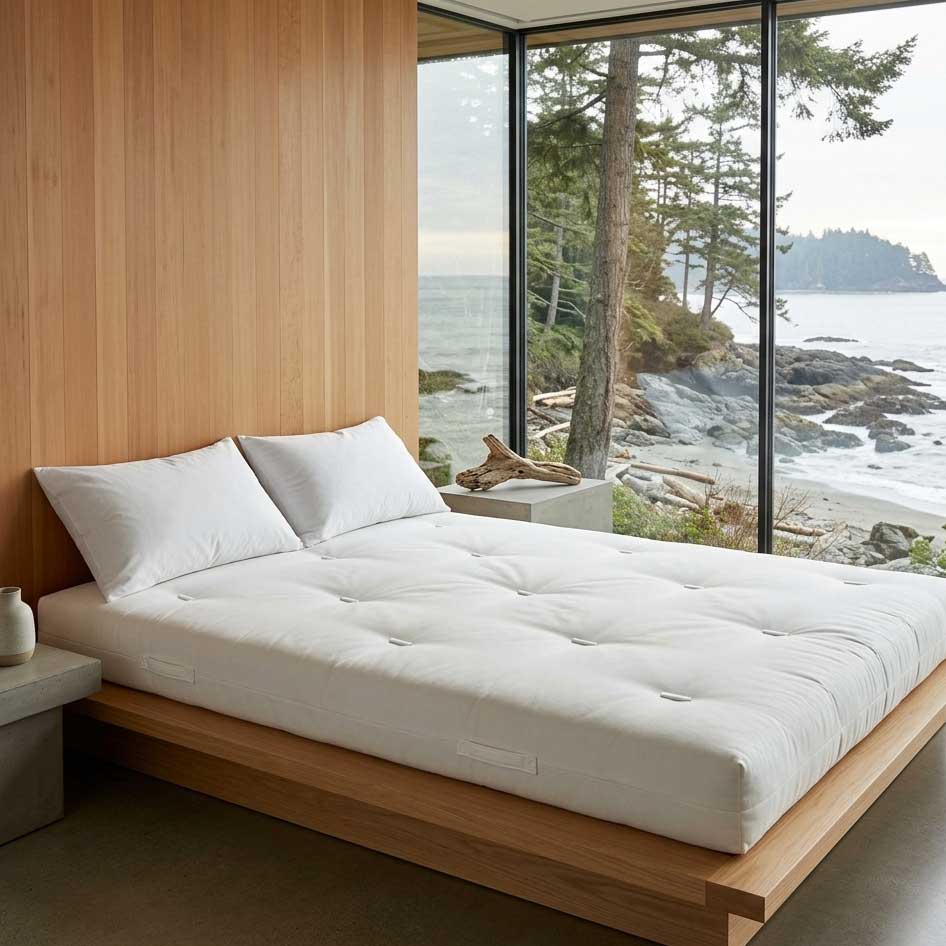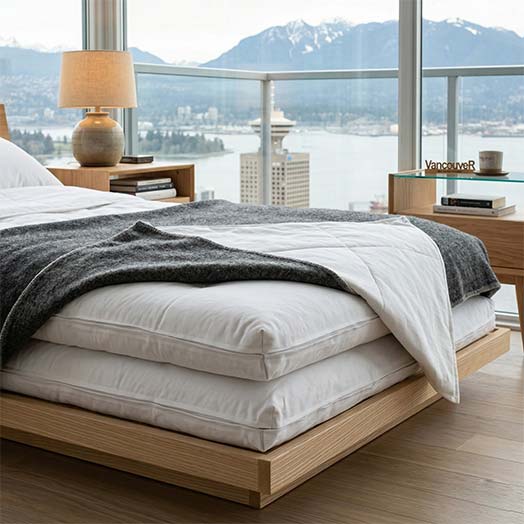
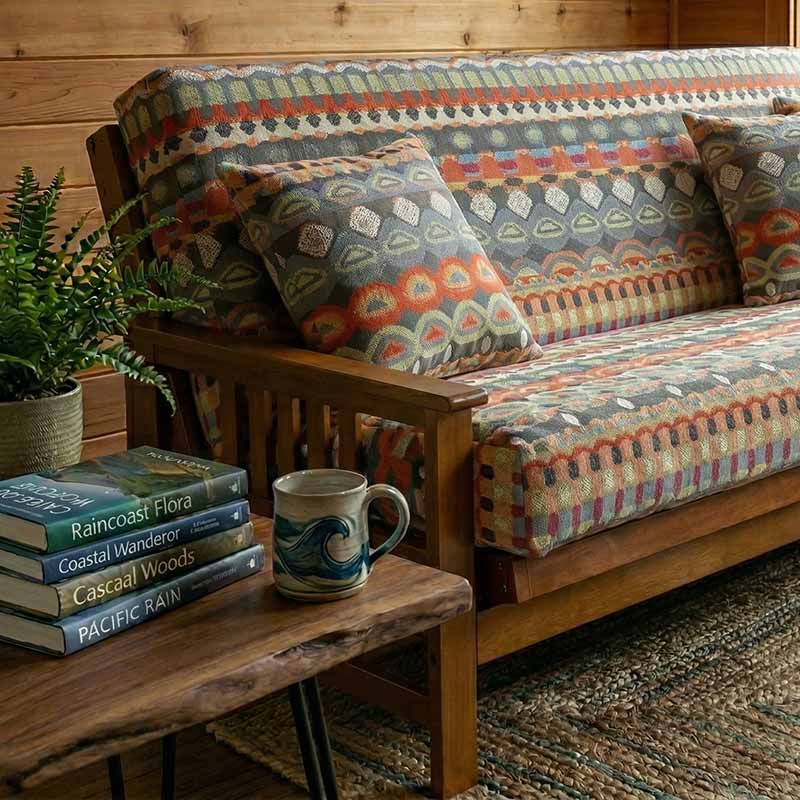
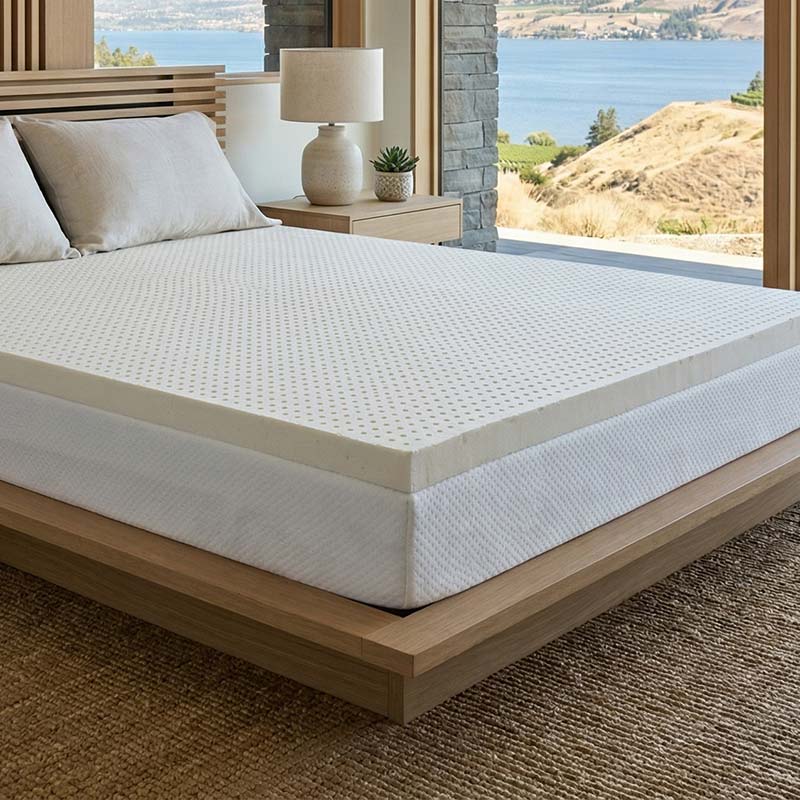
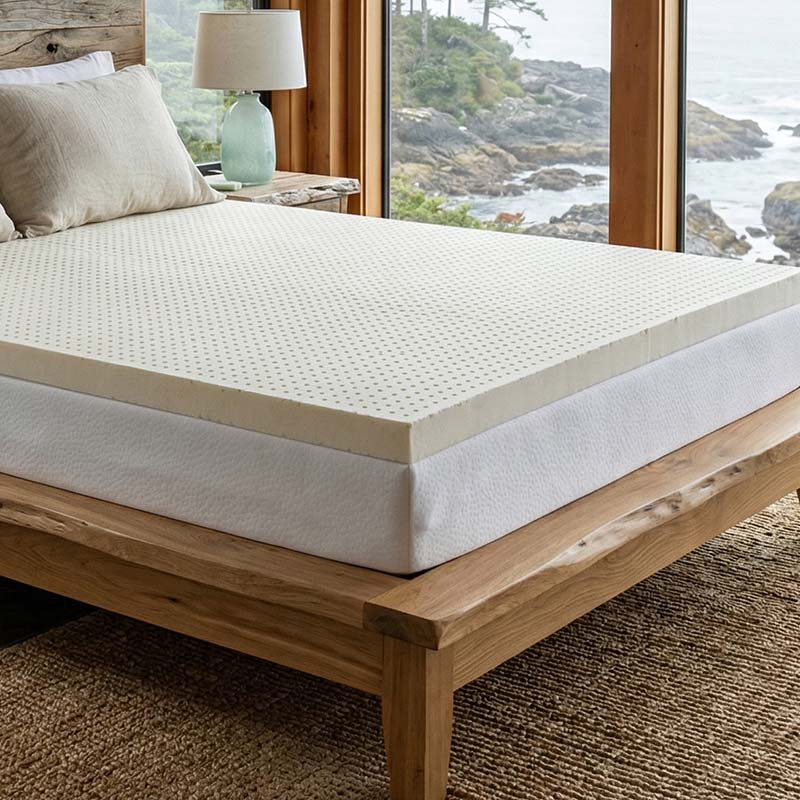
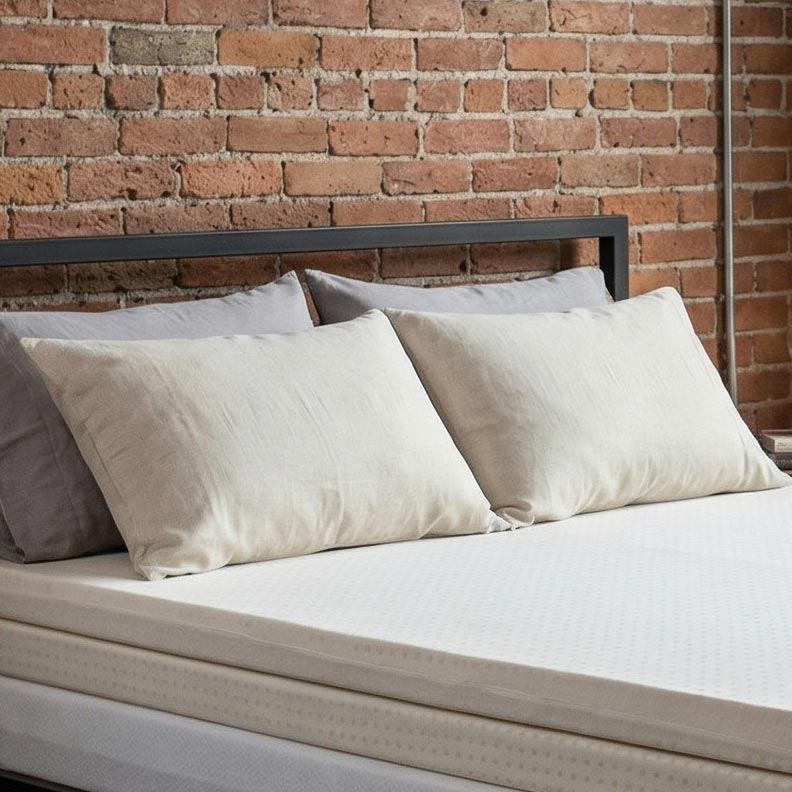
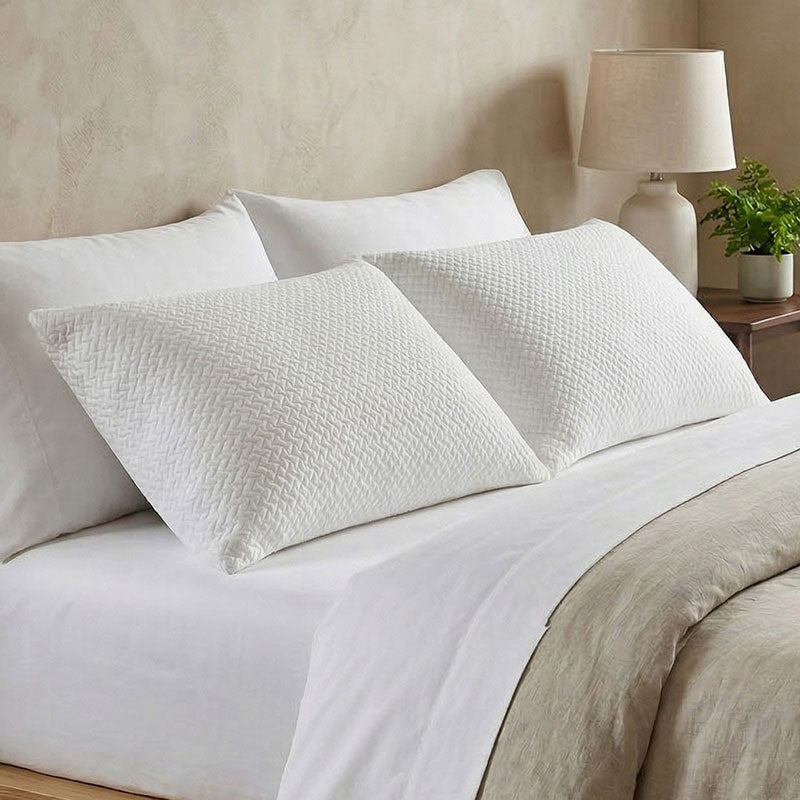
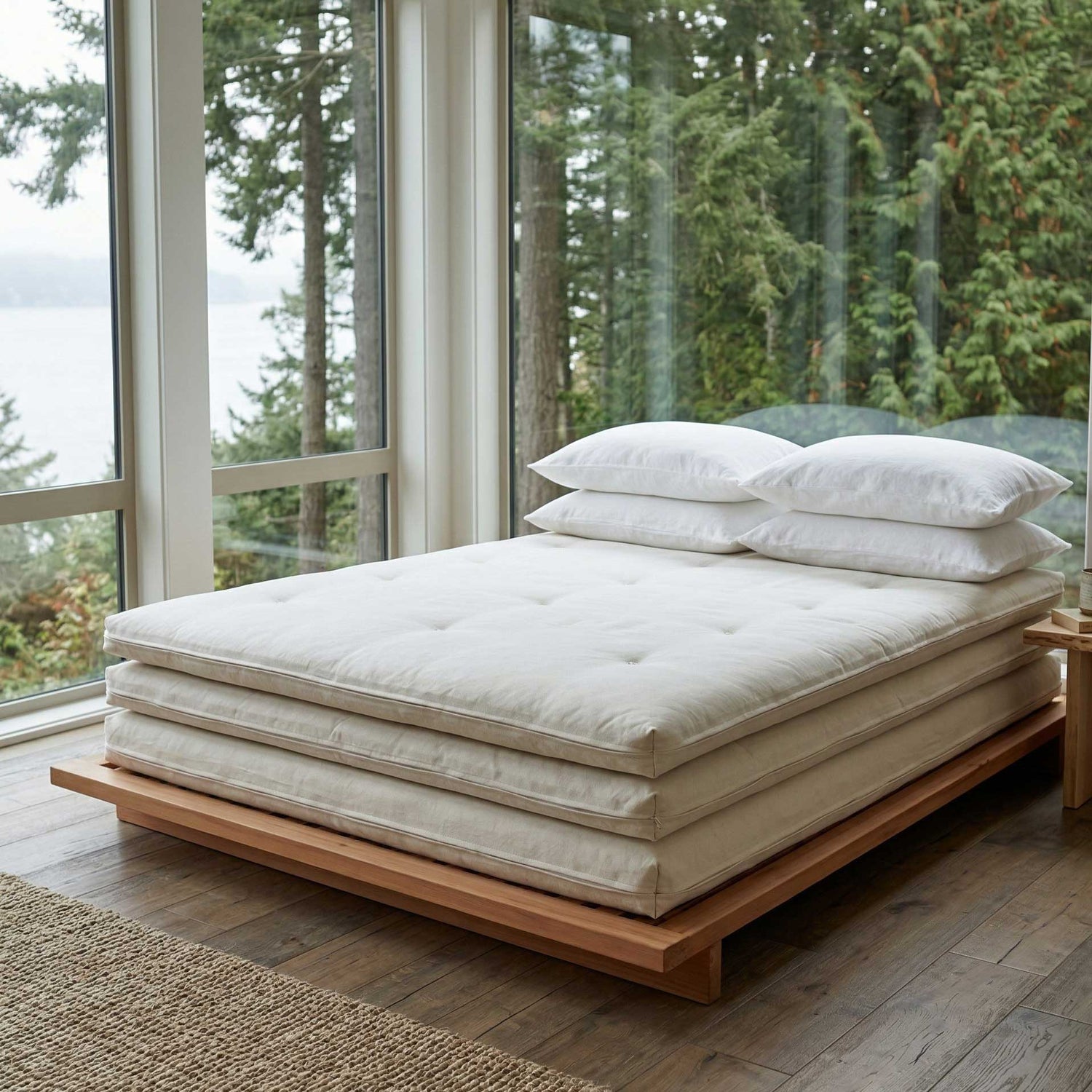
Biophilic design, the practice of bringing natural materials and living elements into the built environment, has moved steadily into Canadian bedrooms over the past several years. It shows up as exposed wood, natural linen, stone surfaces, and a deliberate shift away from synthetics. The idea is that proximity to natural materials affects how we feel in a space, and nowhere is that more relevant than where we sleep.
Most biophilic bedroom projects go well right up until the mattress. The sheets are organic cotton. The furniture is solid wood. The rug is jute. And underneath it all is a polyurethane foam mattress with a synthetic cover and chemical fire retardants. Sleep Majestic has been building organic latex mattresses with natural materials in Metro Vancouver since 1985.
What Biophilic Design Means for a Mattress
A biophilic bedroom is a set of material choices, not a look. Natural wood for furniture. Linen or organic cotton for bedding. Wool, jute, or cotton for textiles. Plants that add something living without overwhelming the space. The goal is a room where the materials are honest about what they're made from.
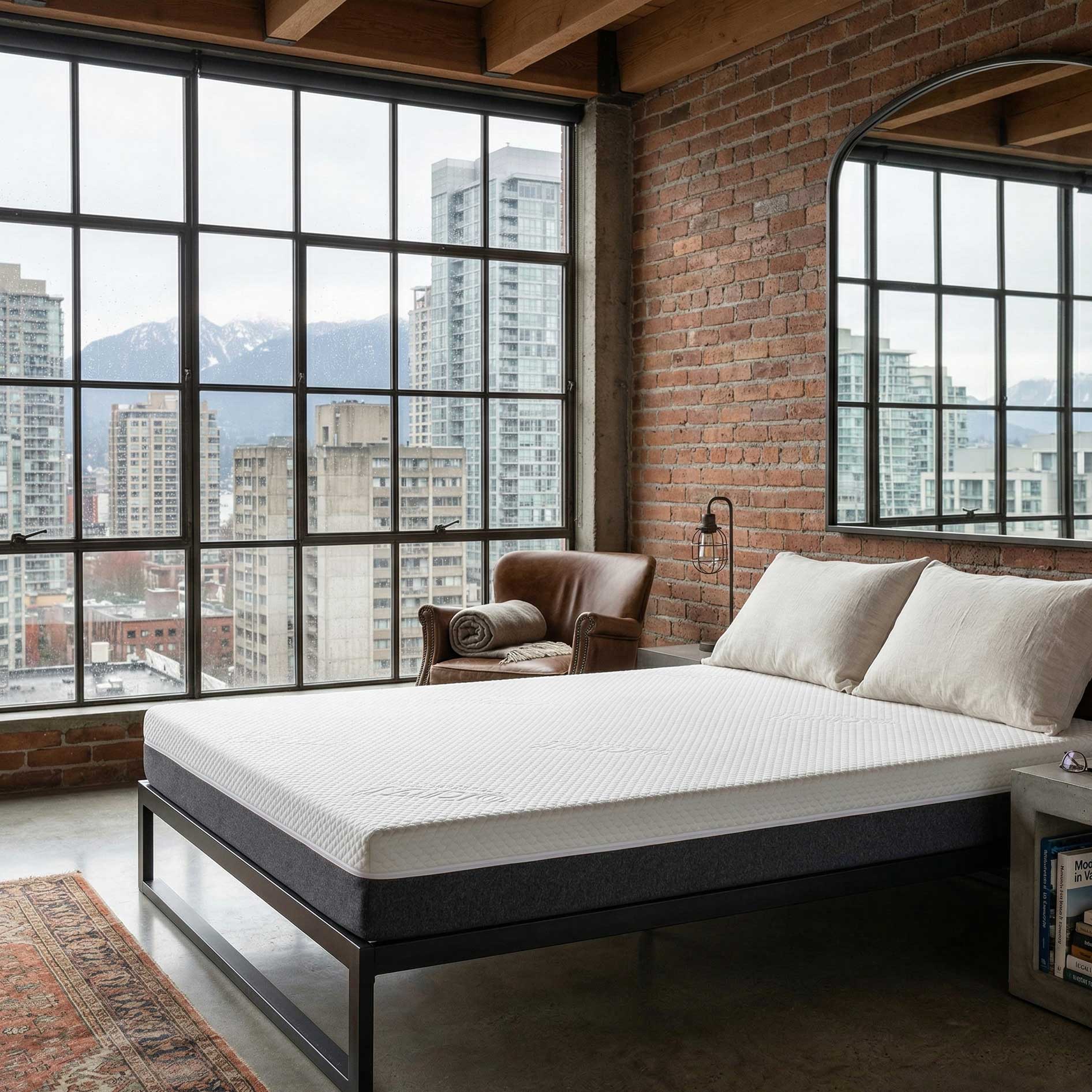
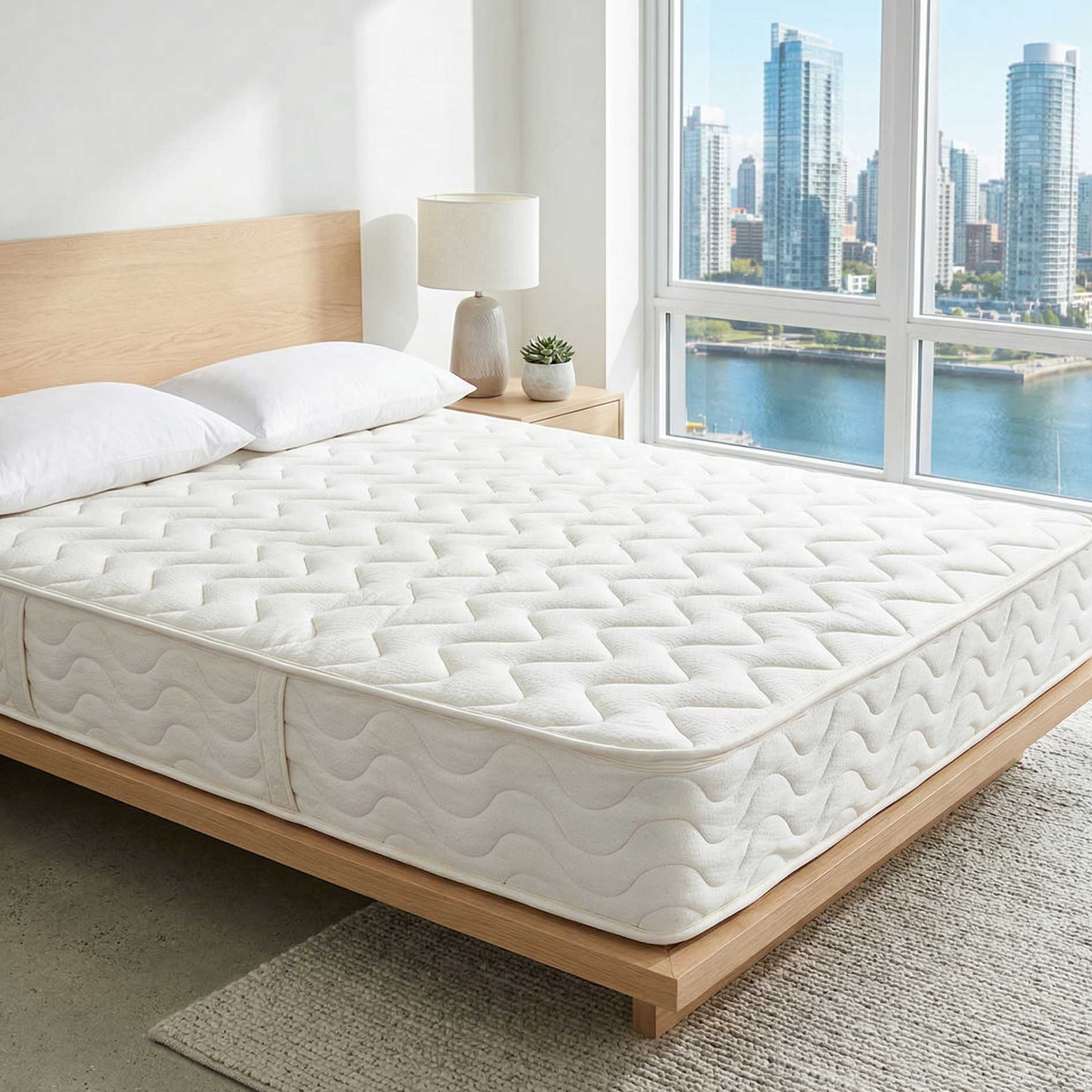
The mattress is the largest piece of material in the room and the hardest to get right. A GOLS-certified organic latex mattress closes that gap: the latex comes from rubber trees, the cover is organic cotton and wool, and there's no synthetic foam or chemical fire retardant in the build.
The Material Story: Latex, Wool, and Organic Cotton
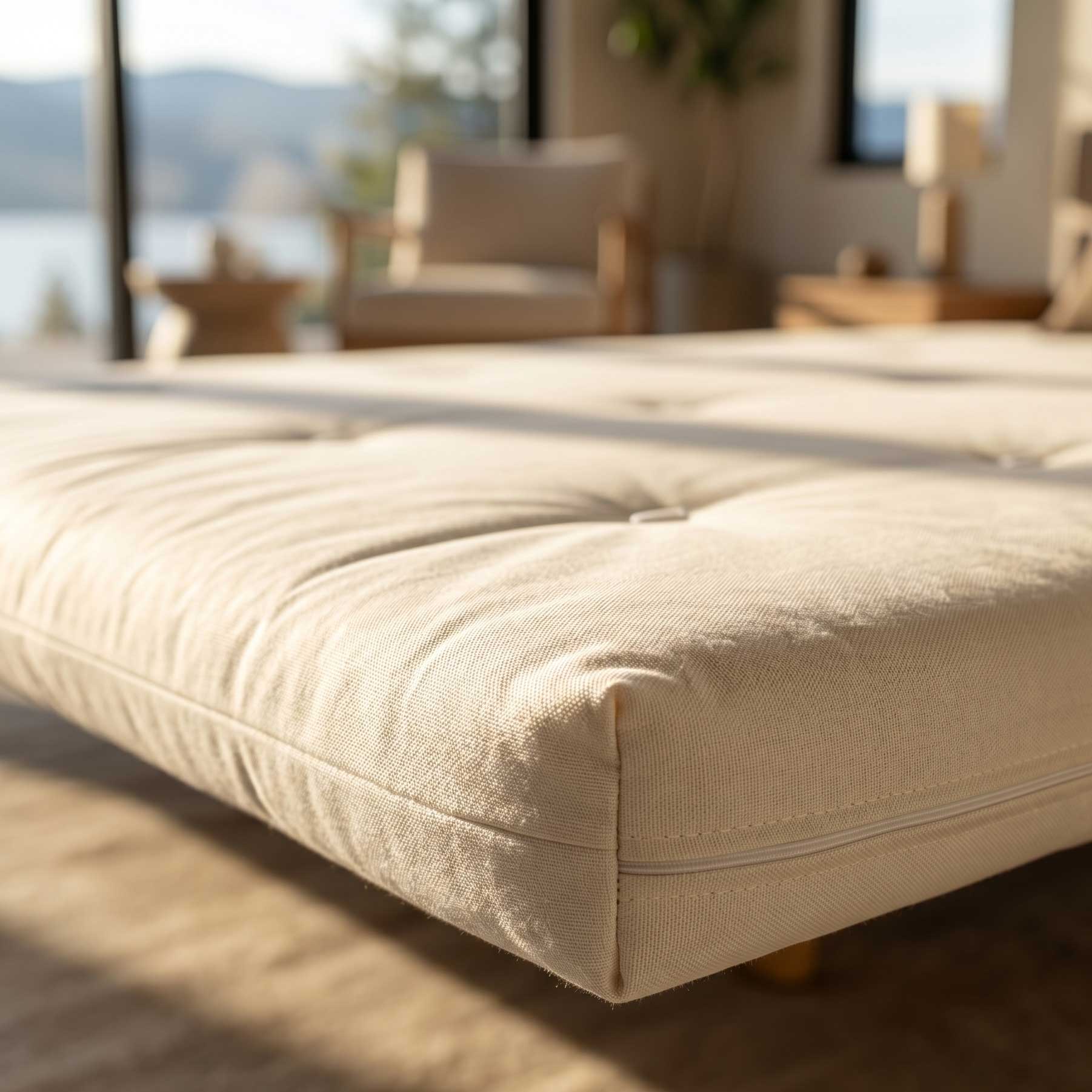
GOLS (Global Organic Latex Standard) requires at least 95% certified organic raw material in the latex and covers the full supply chain from plantation to finished product. The Organic Cotton and Wool cover uses wool as a natural fire barrier, which is the only fully natural way to meet Canadian fire safety requirements without chemical treatments. Both the cotton and the wool come from agricultural sources.
Latex does produce VOCs and has a natural rubber smell when new. What distinguishes GOLS-certified latex is that it's the most independently tested foam available and passes the most stringent air quality guidelines in the industry, verified by GOLS, Eco-Institut, and Oeko-Tex. The smell typically clears within a few days to two weeks of unpacking.
The Coir Bunkie Board: Completing the Natural Foundation
A biophilic bedroom that runs right up to a synthetic base panel on a metal frame has a gap in its material story. The Coir Bunkie Board is a natural coconut coir panel that sits across existing bed frame slats, giving a latex mattress the rigid, even surface it needs. Coir is a natural agricultural byproduct. The board contains no synthetic materials.
It's also the practical fix for any frame whose slat spacing doesn't meet the requirements for a latex mattress. Any frame can be brought up to standard with a Coir Bunkie Board, so you don't need to replace the frame to complete the setup.
Rounding Out the Room
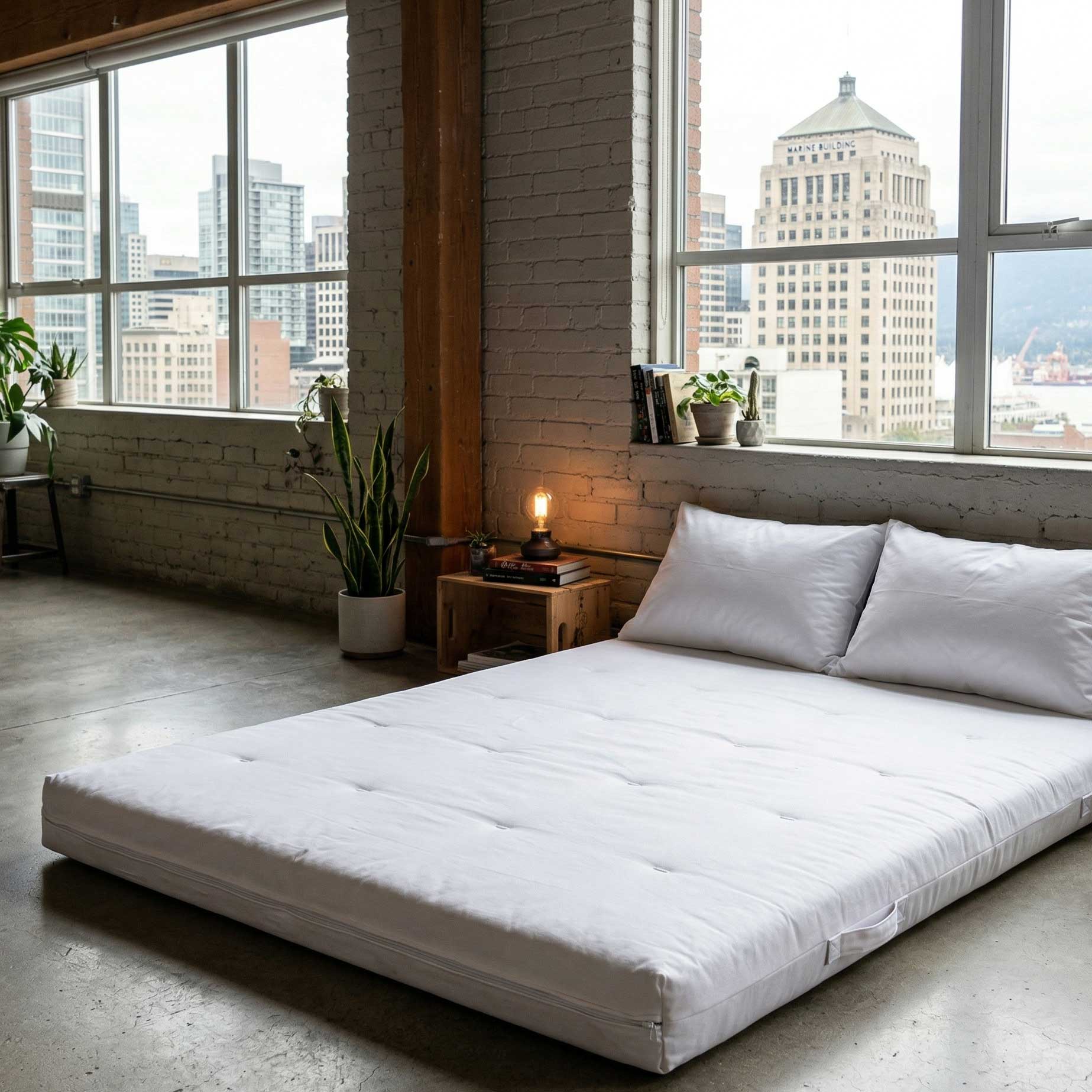
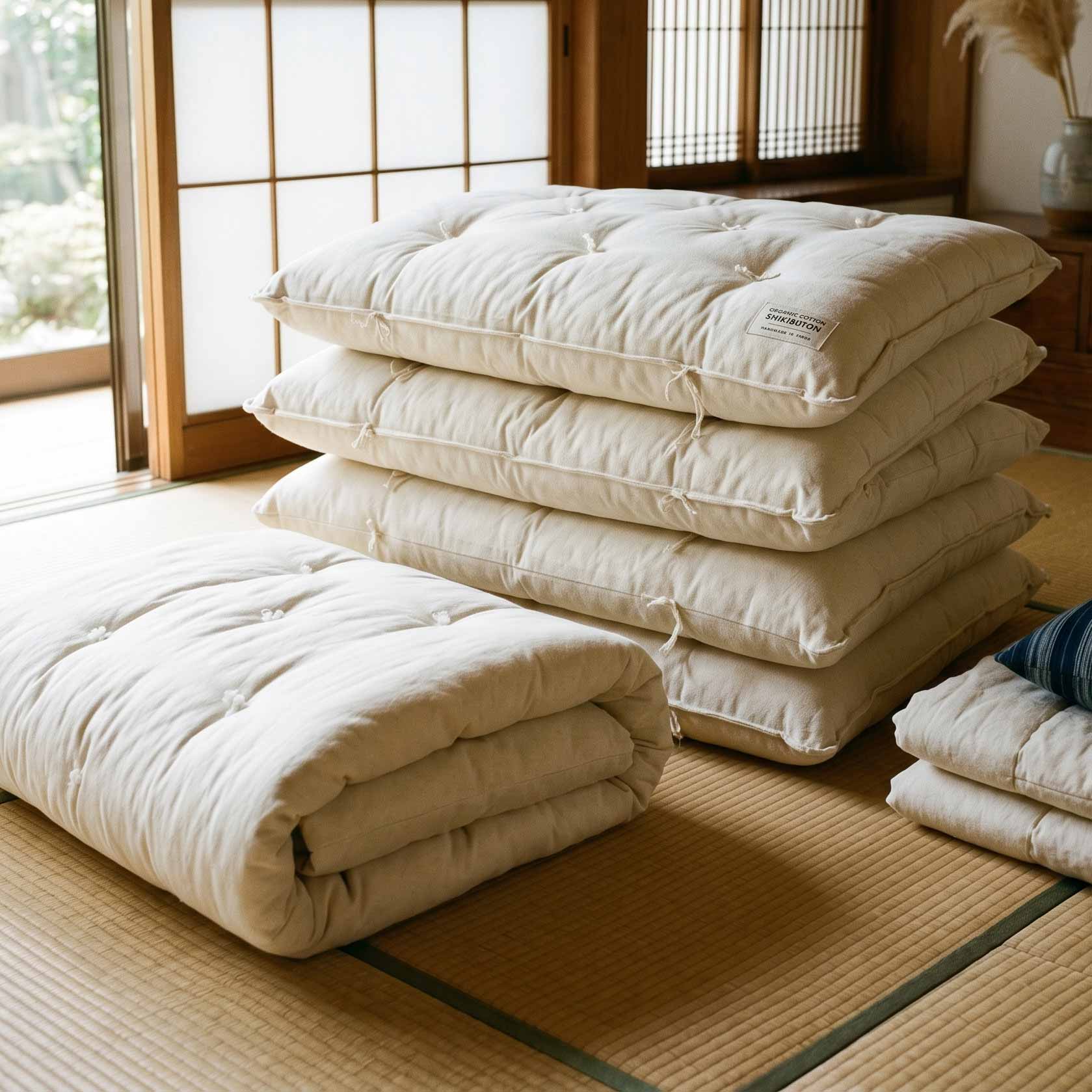
The Shredded Dunlop Latex Pillow with organic cotton cover fits the same material brief as the mattress and doesn't require researching a separate product category. For floor sleeping, a shikibuton on tatami connects to a Japanese biophilic tradition that's centuries old. Sleep Majestic makes both the Cotton Shikibuton and the Latex Shikibuton, each with an organic cotton cover and wool batting for natural fire protection.
A biophilic bedroom reaches its full expression when the mattress matches the material intent of the rest of the room. A GOLS-certified organic Dunlop latex mattress with an Organic Cotton and Wool cover, on a slatted frame with a Coir Bunkie Board where needed, is a complete natural sleeping setup. The 10" 100% Organic Dunlop Latex Mattress is a good starting point. Try it at the Delta showroom or book a phone fitting.